
Many readers come to JavaSense to check weton, then meet another word in the result: wuku. At first, both seem to speak about birth time. Both appear in the Javanese calendar. Both are connected with older ways of reading days.
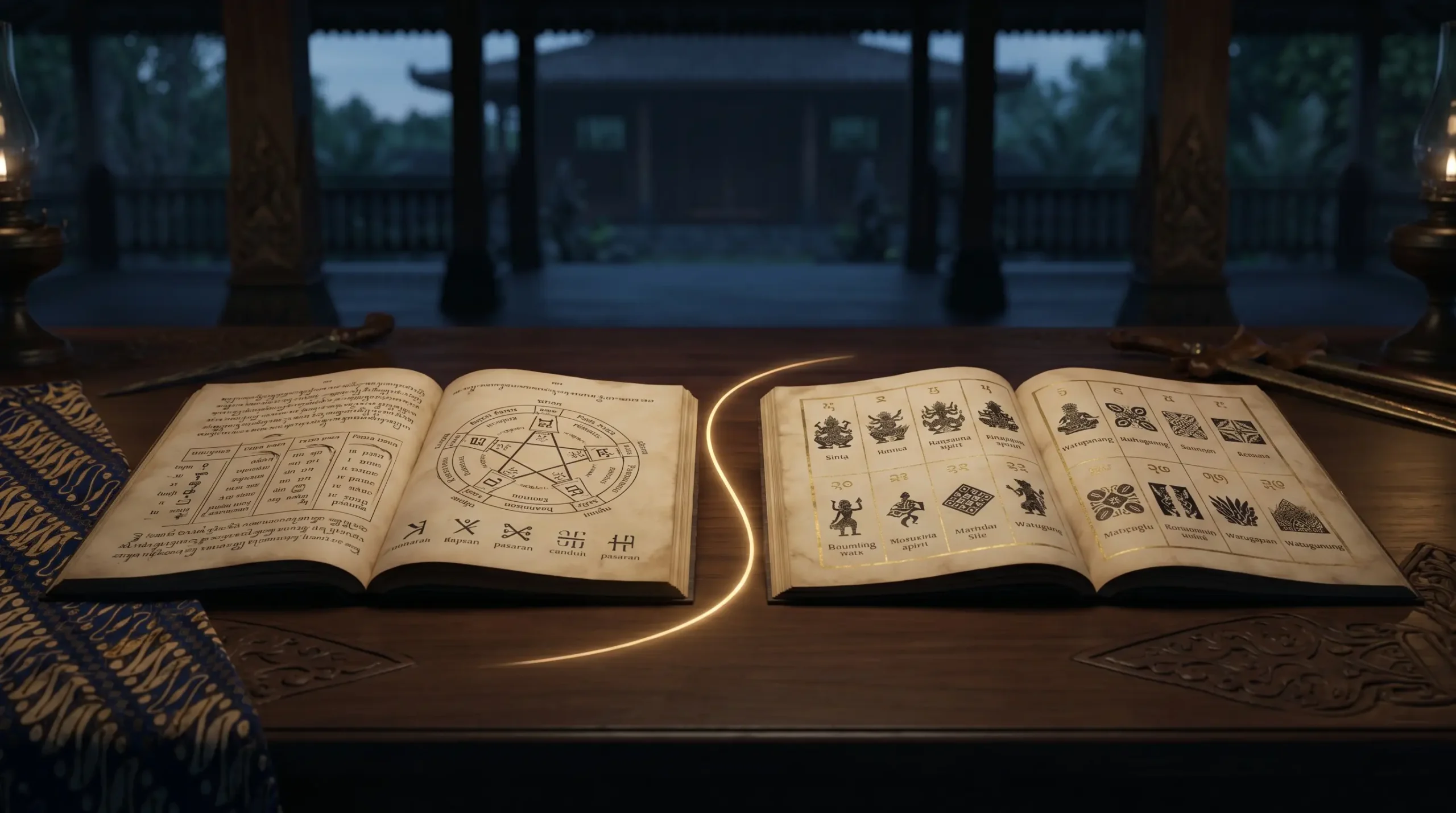
But Weton vs Wuku is not a small difference. Weton comes from the meeting of the seven-day weekday cycle and the five-day Javanese pasaran cycle. Wuku comes from the Pawukon cycle, which has 30 wuku, each lasting 7 days.
Understanding the difference helps readers avoid confusion. Weton and wuku can be read together as two cultural layers of time, but they should not be treated as the same thing or forced into the same formula.
Quick Answer: What Is the Difference Between Weton and Wuku?
The main difference between weton and wuku is their basis of reading. Weton is formed from a weekday and a Javanese pasaran, so it is connected with neptu values. Wuku belongs to the Pawukon cycle, which has 30 wuku, each lasting 7 days, making one full cycle of 210 days.
Weton helps identify birth weekday, pasaran, and neptu. Wuku gives another layer of time within Pawukon. They can be read together, but they should not be treated as the same thing.
- Weton comes from weekday and Javanese pasaran.
- Wuku comes from the Pawukon cycle.
- Weton uses neptu because weekday and pasaran have numerical values.
- Wuku does not use neptu in the same way weton does.
- Pawukon has 30 wuku and one full cycle lasts 210 days.
Quick Table: Weton vs Wuku
In simple terms, weton is the language of weekday and pasaran, while wuku is the language of Pawukon. The table below shows the difference more clearly.
| Aspect | Weton | Wuku |
|---|---|---|
| Basis of reading | The meeting of the seven-day weekday cycle and the five-day Javanese pasaran cycle. | The Pawukon cycle. |
| Number of combinations or units | 35 weton from 7 weekdays × 5 pasaran. | 30 wuku in one Pawukon cycle. |
| Examples | Monday Legi, Friday Kliwon, Saturday Pahing. | Sinta, Landep, Tolu, Wugu, Watugunung. |
| Main elements | Weekday, pasaran, and neptu. | Position in the Pawukon sequence. |
| Connection with neptu | Uses weekday neptu and pasaran neptu. | Does not use neptu in the same way weton does. |
| How to find it | Read from birth weekday and Javanese pasaran. | Read from the date’s position in the Pawukon cycle. |
| Cultural use | Reading birth day, pasaran, neptu, and self-reflection. | Reading a layer of time in the Pawukon cycle. |
To find weton from a birth date, use the JavaSense weton calculator. To understand the wuku cycle more deeply, read Pawukon and the 30 wuku cycle.
What Is Weton?
Weton is the meeting of a weekday and a Javanese pasaran. The seven weekdays are Sunday, Monday, Tuesday, Wednesday, Thursday, Friday, and Saturday. The five Javanese pasaran are Legi, Pahing, Pon, Wage, and Kliwon.
From the meeting of 7 weekdays and 5 pasaran, there are 35 weton combinations. Examples include Monday Legi, Tuesday Pahing, Wednesday Pon, Friday Kliwon, Saturday Wage, Sunday Pon, and others.
In Javanese culture, weton is often connected with neptu. Neptu is the numerical value of weekday and pasaran. For example, Monday has a value of 4 and Legi has a value of 5, so Monday Legi has a neptu of 9.
To understand weton more fully, read Javanese weton, Javanese pasaran, and neptu weton values.
What Is Wuku?
Wuku is a unit in the Javanese Pawukon cycle. Pawukon consists of 30 wuku, and each wuku lasts 7 days. Because of that, one full Pawukon cycle lasts 210 days.
Unlike weton, which comes from the meeting of weekday and pasaran, wuku follows the sequence of Pawukon. A person can have a certain weton and also belong to a certain wuku based on the birth date.
Wuku is not calculated with neptu in the way weton is. Wuku is read through its position in the Pawukon cycle. This is one of the most important differences between weton and wuku.
For the main explanation of this cycle, open Pawukon and the 30 wuku cycle.
Why Weton Uses Neptu but Wuku Does Not
Weton uses neptu because its two main elements, weekday and pasaran, each have numerical values. The weekday value and pasaran value are added to form neptu weton.
For example, Friday Kliwon has a neptu of 14 because Friday is 6 and Kliwon is 8. Monday Legi has a neptu of 9 because Monday is 4 and Legi is 5.
Wuku is different. Wuku is not calculated from weekday value plus pasaran value. It is read from its position in the Pawukon sequence. Because of that, it should not be forced into the same neptu formula as weton.
A common mistake is assuming that every Javanese calendar element must be calculated with neptu. In JavaSense, neptu is mainly explained through the relationship between weekday and pasaran in weton reading.
How Weton Connects with Pasaran and Neptu
Weton is closely connected with pasaran and neptu. Pasaran is the five-day Javanese cycle: Legi, Pahing, Pon, Wage, and Kliwon. Each pasaran has its own neptu value.
When a weekday and pasaran meet, their values are added to form the total neptu weton. This is why weton discussions often include pasaran values, neptu tables, and the method for calculating weton from a birth date.
For the complete reference, read the complete list of 35 Javanese weton. To learn the manual process, read how to calculate weton.
How Wuku Connects with Pawukon
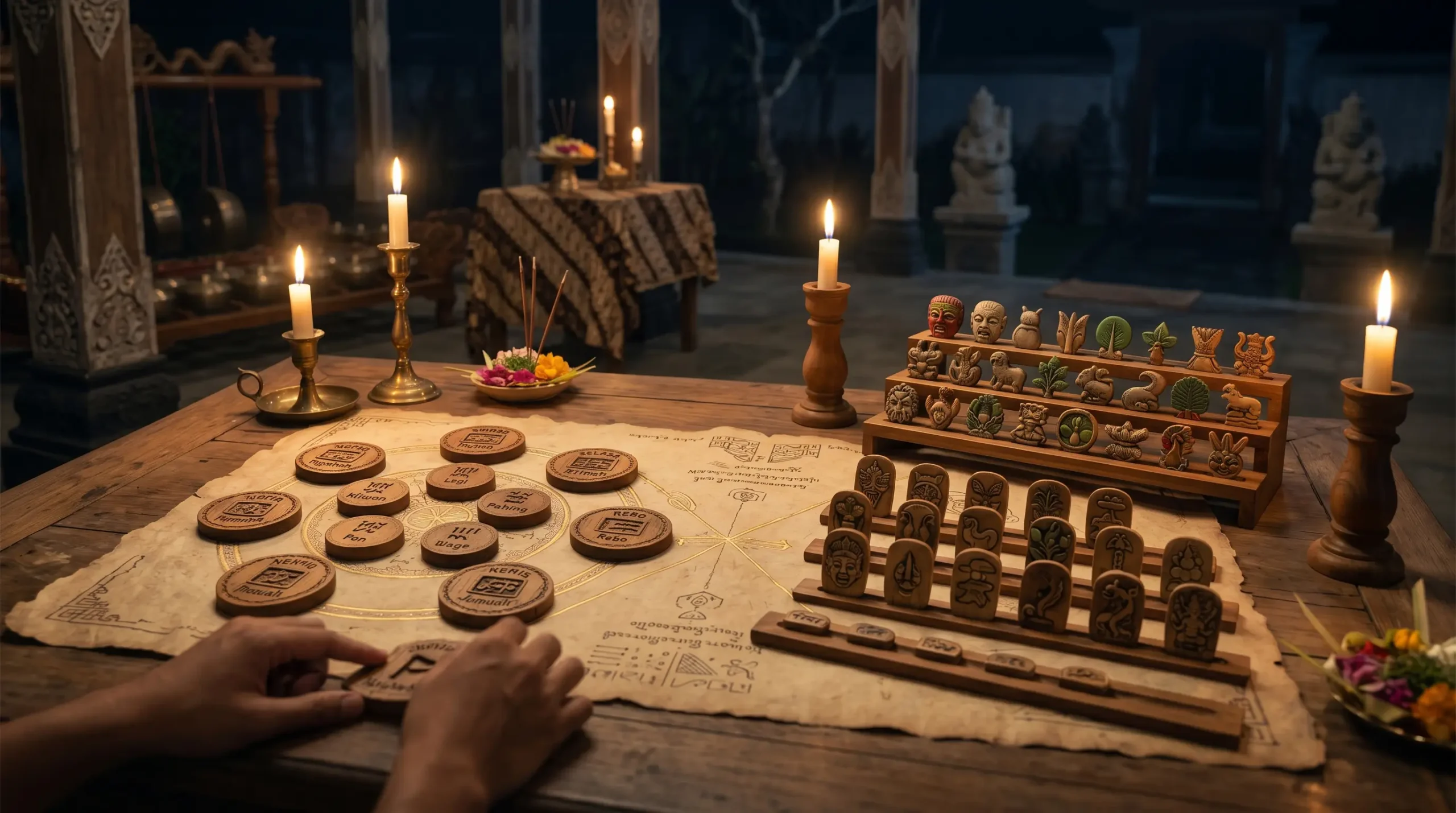
Wuku is different from weton because its foundation is Pawukon. Pawukon has 30 wuku, and each wuku lasts for 7 days.
The 30 wuku form a repeating cycle. This cycle gives Javanese time another layer beyond weekday and pasaran. If weton helps readers understand the meeting of weekday and pasaran, wuku helps readers understand where a date stands within the Pawukon rhythm.
This difference is important. Wuku should not be read as “another weton.” It is not a second weton, and it does not use the same neptu formula. It belongs to a different layer of Javanese time.
The 30 Wuku in the Pawukon Cycle
The table below shows the 30 wuku in the Pawukon sequence. This is a basic reference list, not a full explanation of each wuku’s symbolic meaning.
| Order | Wuku Name |
|---|---|
| 1 | Sinta |
| 2 | Landep |
| 3 | Wukir |
| 4 | Kurantil |
| 5 | Tolu |
| 6 | Gumbreg |
| 7 | Warigalit |
| 8 | Wariagung |
| 9 | Julungwangi |
| 10 | Sungsang |
| 11 | Galungan |
| 12 | Kuningan |
| 13 | Langkir |
| 14 | Mandhasiya |
| 15 | Julungpujud |
| 16 | Pahang |
| 17 | Kuruwelut |
| 18 | Marakeh |
| 19 | Tambir |
| 20 | Medangkungan |
| 21 | Maktal |
| 22 | Wuye |
| 23 | Manahil |
| 24 | Prangbakat |
| 25 | Bala |
| 26 | Wugu |
| 27 | Wayang |
| 28 | Kulawu |
| 29 | Dukut |
| 30 | Watugunung |
For a fuller reading of the cycle, its rhythm, and how it relates to the Javanese calendar, continue to Pawukon and the 30 wuku cycle.
Can Weton and Wuku Be Read Together?
Yes. Weton and wuku can be read together as two cultural layers that complement each other. Weton gives information about weekday, pasaran, and neptu. Wuku gives a Pawukon layer that moves through 30 wuku.
For example, someone may have the weton Friday Kliwon and also belong to Wuku Tolu. Weton gives a reading from weekday and pasaran, while wuku gives a reading from the Pawukon sequence. They are different, but both can become cultural reflection.
Still, a combined reading should not be treated as certainty about life. It is better placed as a way to understand time, self-awareness, and tradition more gently.
A Simple Case: Checking Weton and Seeing Wuku
Imagine someone using a weton tool to find their birth weekday and pasaran. They expect a result such as Monday Legi or Friday Kliwon. But in the result or calendar, they also see the word wuku.
This is where confusion often appears. Is wuku the same as weton? Does wuku have neptu too? Should both be calculated with the same formula?
The answer is no. Weton is read from weekday and pasaran. Wuku is read from the Pawukon cycle. Both can appear on the same date, but they come from different layers of time.
Once this difference is understood, there is no need to feel confused or afraid. Weton and wuku can become two doorways into Javanese time, each with its own place.
How to Find Weton and Wuku from a Birth Date
To find weton from a birth date, you need to know the birth weekday and Javanese pasaran. The most practical way is to calculate your weton from a birth date with JavaSense.
To understand wuku from a birth date, the date needs to be matched with the Pawukon cycle. Instead of forcing a manual formula into this article, JavaSense directs readers to the main Pawukon guide and the Javanese calendar.
If you want to see a daily calendar view that includes date, pasaran, weton, and wuku, use the JavaSense Javanese calendar.
Weton, Wuku, and the Javanese Calendar
Weton and wuku are both connected with the Javanese calendar. The calendar helps readers see how a Gregorian date meets weekday, pasaran, weton, wuku, and other cultural time elements.
In cultural reading, a calendar is not only a tool for seeing dates. It also helps people recognize the rhythm of time: what weekday appears, which pasaran accompanies it, what wuku is running, and how all of these can become material for reflection.
This is why the Javanese calendar is useful for readers who want to see weton and wuku together in one daily context.
Common Mistakes When Comparing Weton and Wuku
Several mistakes often make weton and wuku feel more confusing than they need to be.
First, treating weton and wuku as the same thing. Weton comes from weekday and pasaran, while wuku comes from Pawukon.
Second, assuming wuku uses neptu like weton. Neptu belongs to the calculation of weekday and pasaran in weton. Wuku is read from the Pawukon sequence.
Third, reading both as fixed fortune-telling. In JavaSense, weton and wuku are not used to frighten readers. They are read as cultural mirrors, not verdicts on life.
Fourth, making major decisions from one element alone. In relationships, family, work, or personal life, cultural reading may become reflection, but decisions still need reason, communication, and real-life context.
Weton, Wuku, and Relationship Reflection
In relationship discussions, weton is more commonly used because it is connected with neptu values from weekday and pasaran. The neptu of two people may be calculated as relationship reflection.
Wuku can add another cultural layer, but it should not replace communication, family blessing, responsibility, and emotional maturity in a relationship.
If you want a more structured relationship reading, use weton compatibility with care. Read the result as cultural reflection, not as a final verdict on a relationship.
Weton and Wuku Are Not Fixed Fortune-Telling
Neither weton nor wuku should be read as fixed fortune-telling. No weton or wuku makes someone certain to succeed, fail, match, separate, or face misfortune.
Both belong to Javanese cultural ways of reading time and the self. But life is still shaped by choices, effort, environment, education, communication, and maturity.
Ky Tutur’s reflection: Weton and wuku are not cages. Weton reads weekday and pasaran. Wuku reads the rhythm of Pawukon. See each doorway clearly, then read with feeling, reason, and responsibility.
To understand this boundary more deeply, read weton is not fortune telling.
Cultural Reference and Reading Notes
Weton and wuku are part of how Javanese society has arranged knowledge about time. For readers who want to see one modern discussion of the calculation structure behind Javanese calendar patterns, a supporting reference is the study on ethnoarithmetic in the Javanese calendar.
A reference like this does not replace family memory or lived cultural practice. It only helps modern readers see that Javanese time reckoning has structure, while its meaning still needs to be read with feeling, reason, and conduct.
Learn Weton and Wuku with JavaSense
If you want to understand the foundation of weton, read Javanese weton. If you want to find weton from a birth date, use the JavaSense weton calculator.
To understand wuku and the 30-wuku cycle, open Pawukon and the 30 wuku cycle. To see daily time elements, use the Javanese calendar.
For related learning, you can also read Javanese pasaran, neptu weton values, and the complete list of 35 Javanese weton.
To explore related resources in one place, open JavaSense cultural tools. For a broader cultural map, JavaSense can also be read as a Javanese cultural platform for weton, calendar, Primbon reflection, Pawukon, wuku, and Javanese script.
Closing: Two Doorways into Javanese Time
Weton and wuku are two doorways into Javanese time. Weton brings readers to birth weekday, pasaran, and neptu. Wuku brings readers into the longer Pawukon cycle.
They do not need to compete with each other. They also do not need to be feared. When read clearly, weton and wuku can help people understand culture, time, and life practice with more awareness.
So separate them calmly. Weton is the language of weekday and pasaran. Wuku is the language of Pawukon. Between the two, human life still moves through choices, effort, and wisdom.
To learn weton, wuku, the Javanese calendar, pasaran, neptu, and Javanese cultural wisdom in a lighter way, you can also open JavaSense on Google Play.
FAQ About Weton vs Wuku
What is the difference between weton and wuku?
Weton is the combination of weekday and Javanese pasaran, while wuku is part of the Pawukon cycle that consists of 30 wuku. Weton is connected with neptu, while wuku is read from the Pawukon sequence.
Are weton and wuku the same?
No. Weton relates to weekday, pasaran, and neptu. Wuku relates to the Javanese Pawukon cycle.
What is weton?
Weton is the meeting of a birth weekday and Javanese pasaran, such as Monday Legi, Friday Kliwon, Saturday Pahing, Wednesday Pon, or Sunday Wage.
What is wuku?
Wuku is a unit in the Javanese Pawukon cycle. There are 30 wuku, beginning with Sinta and ending with Watugunung.
Does wuku use neptu?
No. Neptu is connected with weton because it is calculated from weekday and pasaran values. Wuku is read through its position in the Pawukon cycle.
How is wuku related to Pawukon?
Wuku is part of Pawukon. One Pawukon cycle has 30 wuku, and each wuku lasts for 7 days.
How can I find weton and wuku from a birth date?
Weton can be found from the birth weekday and Javanese pasaran. Wuku can be found by matching the date with the Pawukon cycle or by using a Javanese calendar.
Do weton and wuku determine fate?
No. Weton and wuku should be read as cultural reflection, not as fixed fate or absolute predictions about life.