
Time is not always felt as a straight line. In Javanese tradition, time can also move in cycles: returning, carrying old signs in new forms, and inviting people to read life more slowly. This is where Pawukon becomes important.
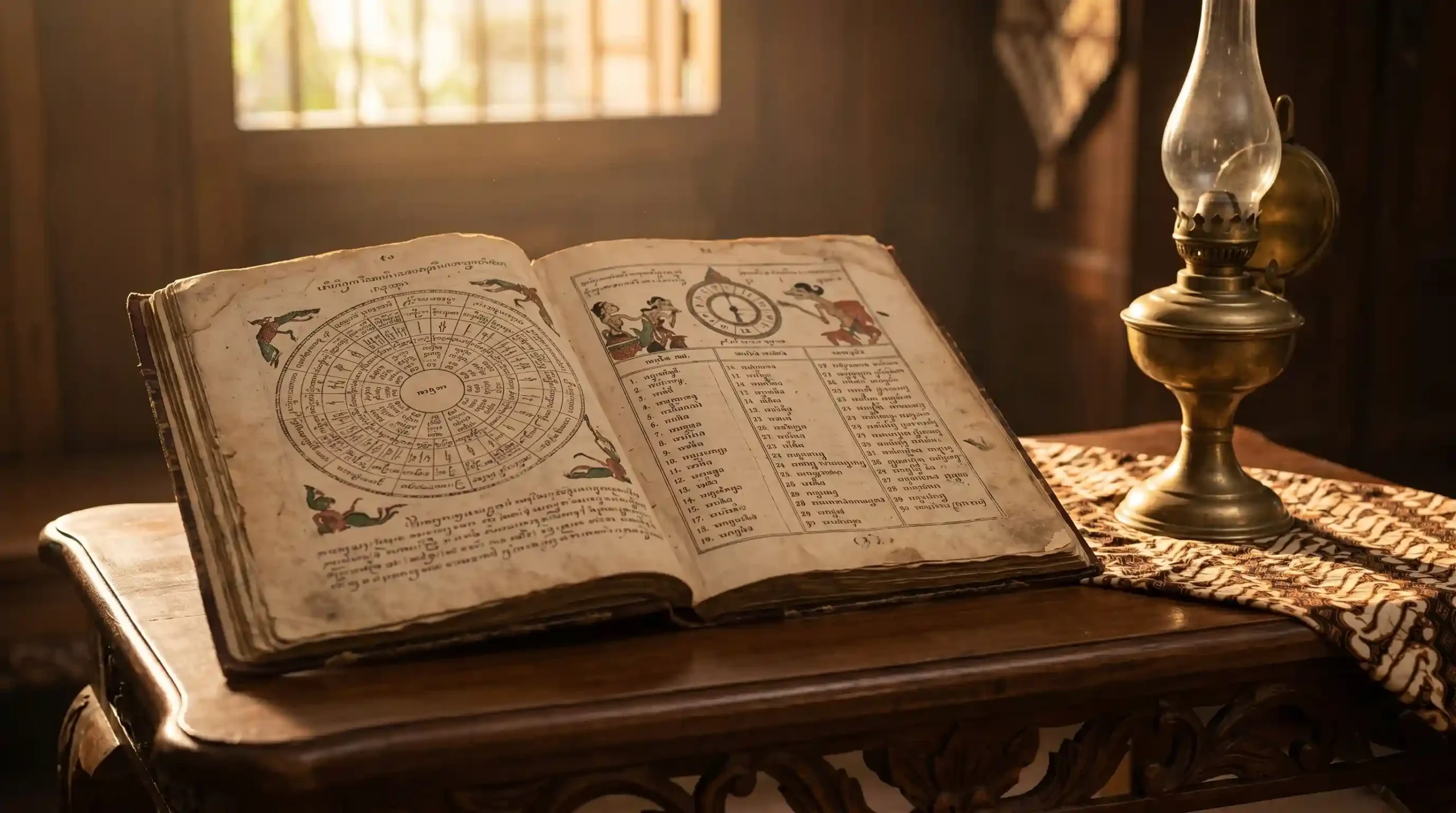
Pawukon is a traditional Javanese time cycle made of 30 wuku. Each wuku lasts seven days, so one full Pawukon cycle lasts 210 days. It is one of the cultural layers used to read time in the Javanese calendar.
JavaSense reads Pawukon as cultural reflection, not as a chain that locks human life. It can help readers understand rhythm, timing, symbolic teaching, and inner awareness, but it should not be used as a fixed prediction about fate.
Quick Answer: What Is Pawukon?
Pawukon is a traditional Javanese calendar cycle consisting of 30 wuku, with each wuku lasting seven days. Because 30 wuku are multiplied by seven days, one complete Pawukon cycle lasts 210 days. After Watugunung, the final wuku, the cycle returns again to Sinta.
In Javanese cultural reading, Pawukon is used to understand the quality of time. It relates to wuku, weton, pasaran, the Javanese calendar, good-day considerations, symbolic teachings, and personal reflection. In the JavaSense approach, Pawukon is best read as a cultural mirror, not as an absolute decision about someone’s life.
| Element | Explanation |
|---|---|
| System name | Pawukon |
| Number of wuku | 30 wuku |
| Duration of each wuku | 7 days |
| Full cycle | 210 days |
| Related to | Wuku, weton, pasaran, Javanese calendar, good days, symbolic time, and personal conduct |
| JavaSense reading | Cultural reflection and a mirror of time, not a fixed verdict on life |
What Is Pawukon in the Javanese Calendar?
The word Pawukon is closely related to wuku. In simple terms, Pawukon is a system of time built from 30 wuku. Each wuku lasts seven days, forming a complete 210-day cycle.
Unlike the Gregorian calendar, which is commonly organized around solar years, Pawukon emphasizes a repeating cycle of symbolic time. It does not only ask, “What date is this?” It also asks, “Which wuku is currently running?”
This question matters because each wuku carries a name, a position, a symbolic atmosphere, and in many traditions, a Bethara or symbolic divine figure associated with it.
For a practical calendar view, readers can use the JavaSense Javanese calendar. To check today’s wuku directly, read the Javanese wuku today guide.
Why Does Pawukon Have 210 Days?
Pawukon has 210 days because it contains 30 wuku, and each wuku lasts seven days. The calculation is simple:
30 wuku × 7 days = 210 days
After 210 days, the cycle returns to the first wuku, Sinta. This repeating pattern shows that Pawukon does not only treat time as a line moving forward. It also sees time as a cycle that returns with lessons, habits, opportunities, and reminders.
In modern life, people often chase time: faster, higher, more productive, more crowded. Pawukon offers another reminder. A good life is not only about moving quickly. It is also about reading the moment carefully.
Pawukon, Wuku, Weton, and Pasaran
To understand Pawukon clearly, readers need to separate several layers of Javanese time: weekday, pasaran, weton, and wuku. They are related, but they are not the same.
Saptawara: The Seven-Day Week
Saptawara refers to the seven common weekdays: Sunday, Monday, Tuesday, Wednesday, Thursday, Friday, and Saturday. In Javanese time reading, the weekday becomes one part of weton.
Pancawara: The Five-Day Pasaran Cycle
Pancawara refers to the five Javanese pasaran days: Legi, Pahing, Pon, Wage, and Kliwon. When a weekday meets a pasaran, weton is formed, such as Senin Legi, Rabu Pon, Jumat Kliwon, or Sabtu Pahing.
Wuku: The Thirty-Part Pawukon Cycle
Wuku is the 30-part cycle inside Pawukon. Each wuku lasts seven days and has its own name, position, symbolic reading, and often a Bethara association.
If weton comes from the meeting of weekday and pasaran, wuku gives another layer of time through the 210-day Pawukon cycle. A person may be born on a certain weton and also within a certain wuku.
To find weton from a birth date, use the JavaSense weton calculator. To understand today’s broader calendar frame, use the Javanese Calendar today guide.
The 30 Wuku in the Pawukon Cycle
In Pawukon, the 30 wuku move in order from Sinta to Watugunung. This list is the main map for understanding the cycle.
- Wuku Sinta
- Wuku Landep
- Wuku Wukir
- Wuku Kurantil
- Wuku Tolu
- Wuku Gumbreg
- Wuku Warigalit
- Wuku Wariagung
- Wuku Julungwangi
- Wuku Sungsang
- Wuku Galungan
- Wuku Kuningan
- Wuku Langkir
- Wuku Mandhasiya
- Wuku Julungpujud
- Wuku Pahang
- Wuku Kuruwelut
- Wuku Marakeh
- Wuku Tambir
- Wuku Medangkungan
- Wuku Maktal
- Wuku Wuye
- Wuku Manahil
- Wuku Prangbakat
- Wuku Bala
- Wuku Wugu
- Wuku Wayang
- Wuku Kulawu
- Wuku Dukut
- Wuku Watugunung
Ky Tutur’s reflection: A list of wuku is not only a list of names. It can become a quiet map for noticing when to move, when to pause, and when to clean the intention before taking the next step.
Table of 30 Wuku and Bethara Symbols
The following table summarizes the 30 wuku in Pawukon along with the Bethara figures often associated with them in JavaSense cultural reading. These names should be read as symbolic teachings, not as frightening forces.
| No. | Wuku Name | Bethara | Symbolic Feeling |
|---|---|---|---|
| 1 | Sinta | Yama / Yamadipati | Beginning of the cycle, justice, and clarified intention |
| 2 | Landep | Mahadewa | Sharpness, refinement, and healthy boundaries |
| 3 | Wukir | Mahayakti / Mahayekti | Mountain, foundation, and steadiness |
| 4 | Kurantil | Langsur | Early movement and courage to begin |
| 5 | Tolu | Bayu | Wind, movement, and strong inner drive |
| 6 | Gumbreg | Candra | Moon, calmness, and the feeling of protection |
| 7 | Warigalit | Asmara | Feeling, relationships, and emotional subtlety |
| 8 | Wariagung | Maharesi | Wisdom, maturity, and inner order |
| 9 | Julungwangi | Sambu | A fragrant beginning, opening, and impression |
| 10 | Sungsang | Gana Ganesa | Reversal, clarification, and learning from unusual directions |
| 11 | Galungan | Kamajaya | Inner victory and the ordering of desire |
| 12 | Kuningan | Indra | Nobility, illumination, and a clearer direction |
| 13 | Langkir | Kala | Boundary, time, and a point of awareness |
| 14 | Mandhasiya | Brahma | Creative force, inner fire, and courage to shape |
| 15 | Julungpujud | Guritna | Humility, refinement, and the practice of lowering the self |
| 16 | Pahang | Tantra | Inner force, self-control, and firmness of feeling |
| 17 | Kuruwelut | Wisnu | Preservation, endurance, and protecting what lives |
| 18 | Marakeh | Suranggana | Social movement, encounter, and learning from others |
| 19 | Tambir | Siwa | Change, cleansing, and releasing what is no longer needed |
| 20 | Medangkungan | Basuki | Support, safety, and protecting the foundation of life |
| 21 | Maktal | Sakri | Sharp force, energy, and courage to move |
| 22 | Wuye | Kowera | Provision, abundance, and managing what is given |
| 23 | Manahil | Citragotra | Image, origin line, and reading family traces |
| 24 | Prangbakat | Bisma | Struggle, discipline, and firmness in values |
| 25 | Bala | Durga | Testing, firmness, and courage in heavy phases |
| 26 | Wugu | Singajanma | Life force, renewal, and growing energy |
| 27 | Wayang | Sri | Life roles, prosperity, and understanding one’s part |
| 28 | Kulawu | Sadana | Provision, practice, and cared-for sufficiency |
| 29 | Dukut | Baruna | Water, depth, and feeling that needs to be understood |
| 30 | Watugunung | Anantaboga | End of the cycle, inner burden, and return to the beginning |
Bethara Symbols in the 30 Wuku
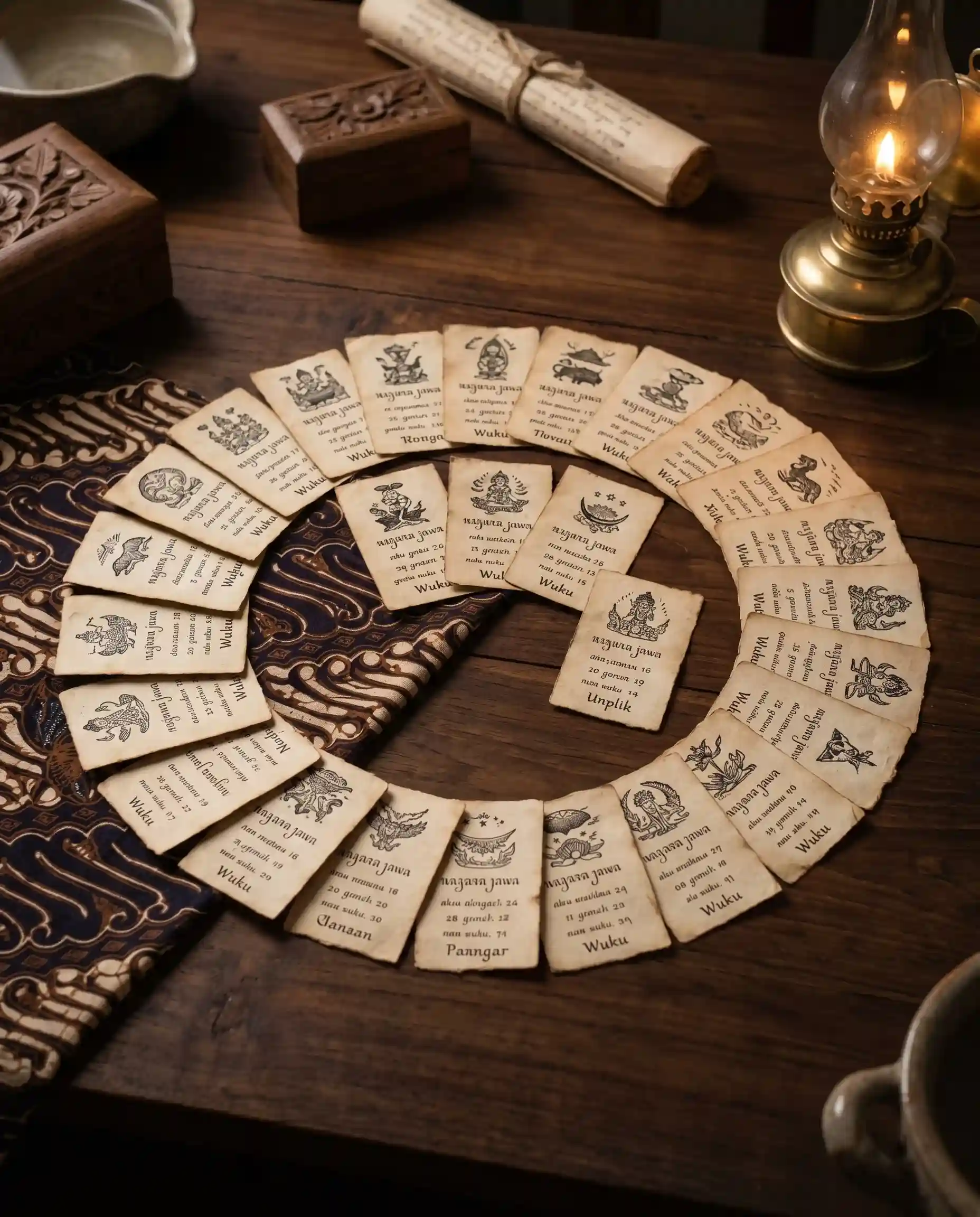
In Pawukon tradition, each wuku is often connected with a Bethara or symbolic divine figure. These figures should not be read as tools for frightening people. They are cultural language: a way to store teaching about time, conduct, awareness, and human character.
For example, a Bethara association may point to the need for patience, clarity, restraint, courage, humility, or care. The symbolic figure is not meant to lock a person into one fate. It helps readers pause and ask what kind of attitude is needed.
This is why JavaSense keeps the reading reflective. Bethara symbols can enrich cultural literacy, but they should not replace reason, responsibility, or personal growth.
How to Know Today’s Wuku and Birth Wuku
To know a wuku, a date needs to be placed into the Javanese calendar and the Pawukon cycle. Because each wuku lasts seven days and the cycle continues repeatedly, a Gregorian date must be checked through a calendar that supports Pawukon.
To check the current wuku, use the JavaSense Javanese calendar or read the Javanese wuku today guide.
To understand a birth date, use the JavaSense weton calculator. From a birth date, readers can begin to see weekday, pasaran, neptu, and the wider Javanese calendar frame.
How to Read Wuku as Cultural Reflection
Each wuku is more than a name. It carries story, symbol, mood, and teaching. In older traditions, wuku may be connected with character reading, good-day consideration, and personal conduct.
For example, Wuku Tolu may be read as a symbol of strong movement and the impulse to build or lead. But that does not mean every person connected with Wuku Tolu will be the same.
Wuku Watugunung, as the final wuku, may be read as the closing of a cycle and an invitation to reflect. But again, it should not be treated as a fixed prediction.
A healthier way is to read wuku as cultural reflection. If a reading feels supportive, use it with gratitude and care. If it feels heavy, use it as a reminder to slow down, prepare better, and improve conduct.
Pawukon and Good Days
In Javanese communities, Pawukon is often connected with good-day considerations. Important activities such as marriage, building a house, moving residence, starting work, or beginning a major plan may be considered through weekday, pasaran, neptu, and wuku.
But a good day should not be read as a guarantee. A culturally aligned day still needs preparation, family communication, budget readiness, health, location, and responsible action.
In this sense, good-day reading is not a promise that everything will be smooth. It is a form of carefulness. For a wider discussion, read Javanese good days in Primbon.
Pawukon and Inner Practice
Pawukon is also close to inner practice. Some moments may be read as suitable for quietness, prayer, reflection, restraint, or self-examination. The point is not to make life feel heavy, but to find balance.
Modern life often makes every day feel the same: wake up, work, open screens, chase targets, sleep, and repeat. Pawukon reminds readers that time has texture. There are moments to move outward and moments to return inward.
Inner practice does not always need to be a heavy ritual. It can be as simple as putting the phone down, breathing slowly, writing a reflection, or asking whether a decision comes from clarity or hurry.
Pawukon in Modern Life
Is Pawukon still relevant in the digital age? In JavaSense, the answer is yes, when it is read wisely. Not as fear. Not as an excuse to blame life. Not as a tool to judge others. But as a system of reflection that helps people notice rhythm.
Today, many people have digital calendars but lose their inner calendar. Schedules are full, but the heart may feel empty. Notifications are loud, but direction can become unclear.
Pawukon does not replace logic, data, planning, or responsibility. It complements them with pause, feeling, and awareness. It invites a person to ask: am I moving too fast? Do I need restraint? Is this decision born from calmness or pressure?
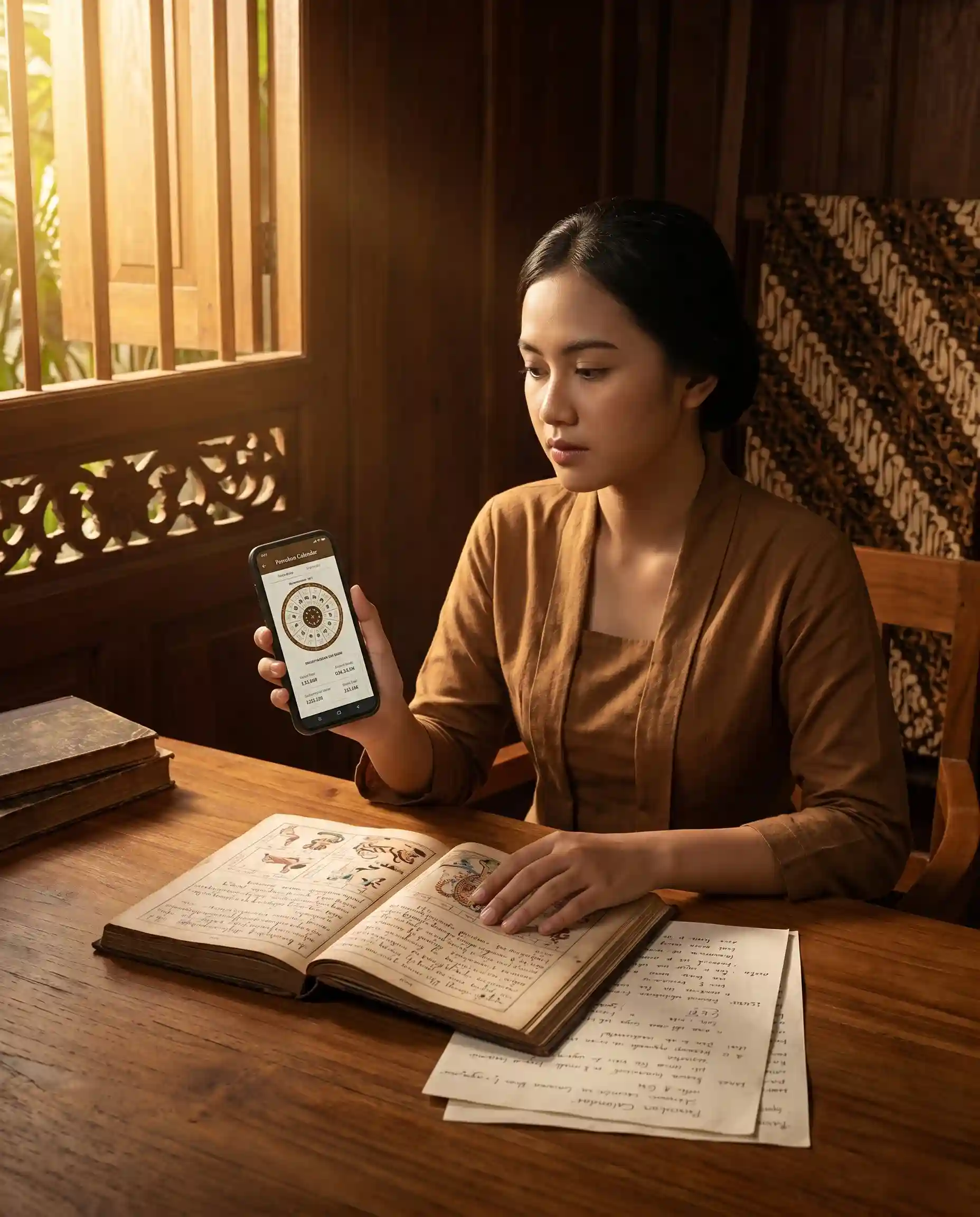
JavaSense and a Modern Way to Read Pawukon
JavaSense works as a bridge between Javanese cultural knowledge and modern readers. Many people want to understand weton, wuku, pasaran, the Javanese calendar, and Javanese script, but they do not always know where to begin.
An app or tool should not replace elders, teachers, books, or personal judgment. It should make the first doorway easier to enter.
Readers can start by using the JavaSense Javanese calendar, checking a birth date with the JavaSense weton calculator, or exploring relationship reflection through the JavaSense weton compatibility tool with care.
To explore the Javanese calendar, weton, Primbon, wuku, Pawukon, and Javanese script in one place, visit JavaSense as a Javanese cultural platform.
For a more practical mobile experience, readers can download the JavaSense Android app through Google Play.
Cultural References for Pawukon
Pawukon has many explanations across cultural sources and family traditions. For a general cultural overview, readers may see Budaya Indonesia’s Pawukon reference.
For the story context of the 30 wuku in Javanese tradition, readers may also see Museum Ullen Sentalu’s discussion of the 30 wuku. For general calendar context, see the reference on the Javanese calendar.
External references help provide context. JavaSense, meanwhile, presents Pawukon in practical and reflective language so modern readers can understand the structure without turning it into fear.
Closing Reflection: Pawukon as a Map of Time
In the end, Pawukon teaches that time is not an enemy. Time is not only something to chase. It can also become a map of feeling, a reminder to move with more awareness.
If a person lives only with a digital calendar, they may know the schedule but not always understand the self. Pawukon invites readers to listen to a slower rhythm: the rhythm of culture, family, memory, and inner life.
Still, Pawukon should not become a chain. Let it be a map. A map does not force the feet to walk in only one direction. It helps people move without losing awareness.
Read Pawukon with respect, clarity, and care. Take the wisdom, understand the limits, and use it to refine conduct, not to frighten yourself or others.
FAQ About Pawukon
What is Pawukon?
Pawukon is a traditional Javanese time cycle consisting of 30 wuku. Each wuku lasts seven days, so one full Pawukon cycle lasts 210 days.
How many wuku are in Pawukon?
There are 30 wuku in Pawukon. The sequence begins with Sinta and ends with Watugunung.
Why does Pawukon last 210 days?
Pawukon lasts 210 days because it consists of 30 wuku, and each wuku lasts seven days. Thirty multiplied by seven equals 210.
What is the relationship between wuku and weton?
Weton is formed from the combination of the seven-day week and the five-day Javanese pasaran cycle, while wuku is the 30-part cycle within Pawukon. They can be read together as different layers of Javanese time.
What is the difference between wuku and weton?
Weton is formed from weekday and pasaran, such as Jumat Kliwon or Sabtu Pahing. Wuku belongs to the 30-part Pawukon cycle, such as Sinta, Landep, Gumbreg, Wayang, or Watugunung.
What are the 30 wuku in Pawukon?
The 30 wuku in Pawukon are Sinta, Landep, Wukir, Kurantil, Tolu, Gumbreg, Warigalit, Wariagung, Julungwangi, Sungsang, Galungan, Kuningan, Langkir, Mandhasiya, Julungpujud, Pahang, Kuruwelut, Marakeh, Tambir, Medangkungan, Maktal, Wuye, Manahil, Prangbakat, Bala, Wugu, Wayang, Kulawu, Dukut, and Watugunung.
How can I know my birth wuku?
To know a birth wuku, a birth date needs to be checked through the Javanese calendar and the Pawukon cycle. The JavaSense calendar and weton tools can help readers begin that process.
Is Pawukon still relevant today?
Pawukon can still be relevant when read as cultural heritage and reflection. It can help modern readers notice rhythm, intention, and timing without treating the cycle as a fixed prediction.