
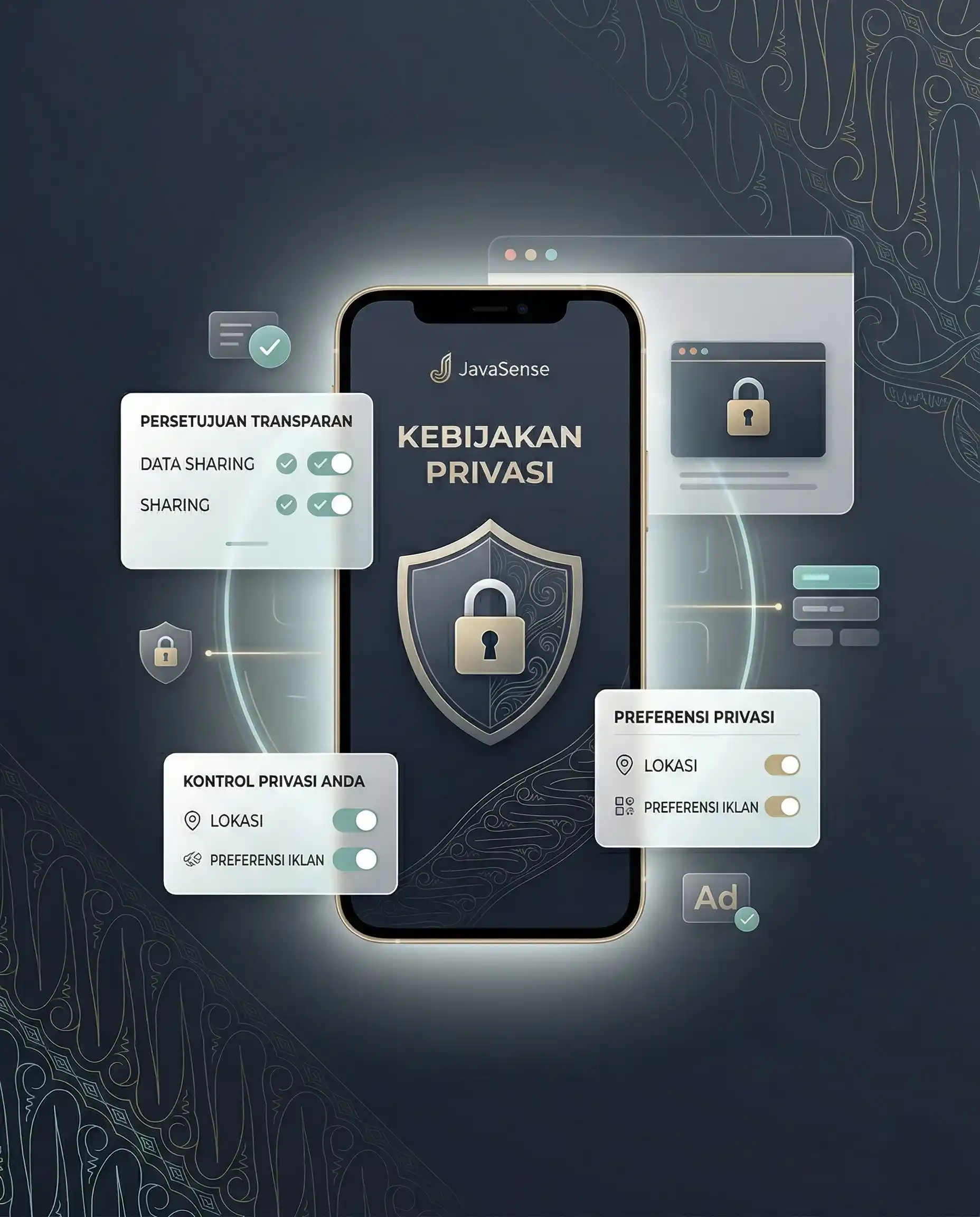
This page explains, in clear and simple language, what data may be processed, why it may be processed, how cookies and ads may work, what rights users may have, how data retention is handled, and how users can request data deletion where relevant.
JavaSense is designed as a Javanese cultural platform and digital utility for Weton, Weton Compatibility, the Javanese Calendar, Pawukon, and Javanese Script. Because of that, JavaSense aims to keep data practices limited, transparent, and proportionate to the features being used.
User data should be handled with care: enough to run the service, clear enough to understand, and removable through a reasonable request path where applicable.
Scope of This Privacy Policy
This privacy policy covers two main areas. First, the official JavaSense website. Second, the JavaSense Android app available through Google Play.
The free version of JavaSense may display third-party ads to support product development and maintenance. If premium or account-based features become available, those features may involve different settings, including possible ad-free access according to the applicable terms.
This policy does not control third-party websites, platforms, or services outside JavaSense control, except where those services are used by JavaSense as technology partners, such as advertising providers, app distribution platforms, privacy tools, or support services.
Data Processed by JavaSense
JavaSense processes data according to feature needs, service operation, communication, and app management. The type of data may differ depending on what feature or page a user opens.
1. Feature Inputs Entered by Users
JavaSense may process inputs that users enter into features, such as birth dates, paired dates for compatibility readings, language choices, or Latin text entered into Javanese Script tools.
These inputs are used to generate the requested output. For simple and offline-first features, JavaSense aims to process data locally on the user’s device where technically possible.
Basic inputs such as dates or script text are not meant to be collected excessively when they are only needed to run core app features.
2. Local Preferences on the Device
JavaSense may store local preferences such as app language, intro status, simple settings, or usage markers so that the app experience remains consistent when opened again.
Local data generally remains on the user’s device until the user clears app data, changes device settings, or uninstalls the app.
3. Website Data, Cookies, and Device Information
The JavaSense website may use cookies or similar technologies for basic website functions, security, user experience, simple measurement, or other reasonable technical needs.
Users can manage cookies through their own browser settings. However, some website features may not work optimally if cookies or certain local storage features are disabled.
On Android, some technical information may also be processed by the operating system, app distribution platform, or official technology partners used by JavaSense.
4. Advertising-Related Technical Data in the Free Version
If the free version of JavaSense displays ads through Google AdMob or another relevant advertising service, certain technical data may be processed by the ad provider according to applicable policies and consent settings.
This may include device information, advertising identifiers, basic technical signals, measurement information, frequency capping, ad abuse prevention, and other technical needs related to ad delivery.
JavaSense does not use ads to change Weton, compatibility, Javanese Calendar, Pawukon, or Javanese Script results. Ads in the free version are intended as one way to support app development, not as a factor in cultural readings.
5. Communications Sent to JavaSense
If users contact JavaSense through email or the Contact Us page, JavaSense may process information voluntarily provided by users, such as email address, message content, attachments, screenshots, and other relevant details.
This communication data is used to answer questions, follow up requests, review bug reports, receive corrections, or manage collaboration discussions.
6. Account or Premium Data If Available
If account-based, premium, or personalization features become available, JavaSense may process the minimum data needed to operate those features. This may include account email, nickname, language choice, premium entitlement status, or other settings needed to run the service.
If those features are active, JavaSense aims to explain related data use clearly on the relevant pages, including JavaSense Ads Premium.
Google AdMob, app-ads.txt, and Consent
In the free version, JavaSense may use Google AdMob to display ads that help support app development and maintenance.
If this integration is active, JavaSense may also follow the technical and policy mechanisms needed to support ad inventory verification, including app-ads.txt on the official developer website domain.
If required by user region, platform setup, or applicable privacy configuration, JavaSense may show a consent or privacy message flow for ads and measurement.
JavaSense does not ask users to click ads, does not reward ad clicks, and does not disguise ads as cultural reading results. More details are available on the JavaSense Ads Premium page.
Why JavaSense Uses Data
JavaSense uses data for legitimate, limited, and service-related purposes. These purposes may include:
- running app features such as Weton Calculator, Weton Compatibility, Javanese Calendar, Pawukon, and Javanese Script;
- storing basic preferences so users do not need to reset the same experience every time;
- displaying, measuring, and managing ads in the free version if ads are active;
- answering emails, bug reports, questions, correction requests, or support messages;
- managing account, premium, entitlement, or personalization features if available;
- maintaining security, preventing abuse, and meeting relevant legal or compliance needs.
JavaSense aims to use data only as needed. Data collection is not the main purpose of JavaSense. The main goal remains to provide a useful, lightweight, and trustworthy Javanese cultural platform.
User Rights and Privacy Controls
Users have the right to understand how JavaSense processes data related to website and app use. Users may also contact JavaSense to request explanation, correction, or follow-up regarding information they have previously sent.
For data stored locally on a device, users can control it by clearing app data, changing device settings, or uninstalling the app.
For communication sent by email or contact form, users may request review or deletion where the request is relevant and allowed by legal, security, or service administration needs.
If JavaSense uses ad consent mechanisms, users may view or adjust privacy preferences through the flow available in the app, device, or related ad platform.
Data Deletion and Account Removal
JavaSense provides the Delete Account JavaSense page as the official web path for account deletion, data deletion, or review requests related to JavaSense services.
At this stage, JavaSense free core features do not always require user account creation. For ordinary free use, the most direct data control is often on the user’s device, such as clearing app data or uninstalling the app.
However, if a user uses account-based, premium, personalization, or support communication features, the user may request a data review through the Delete Account JavaSense page or by contacting the official JavaSense email.
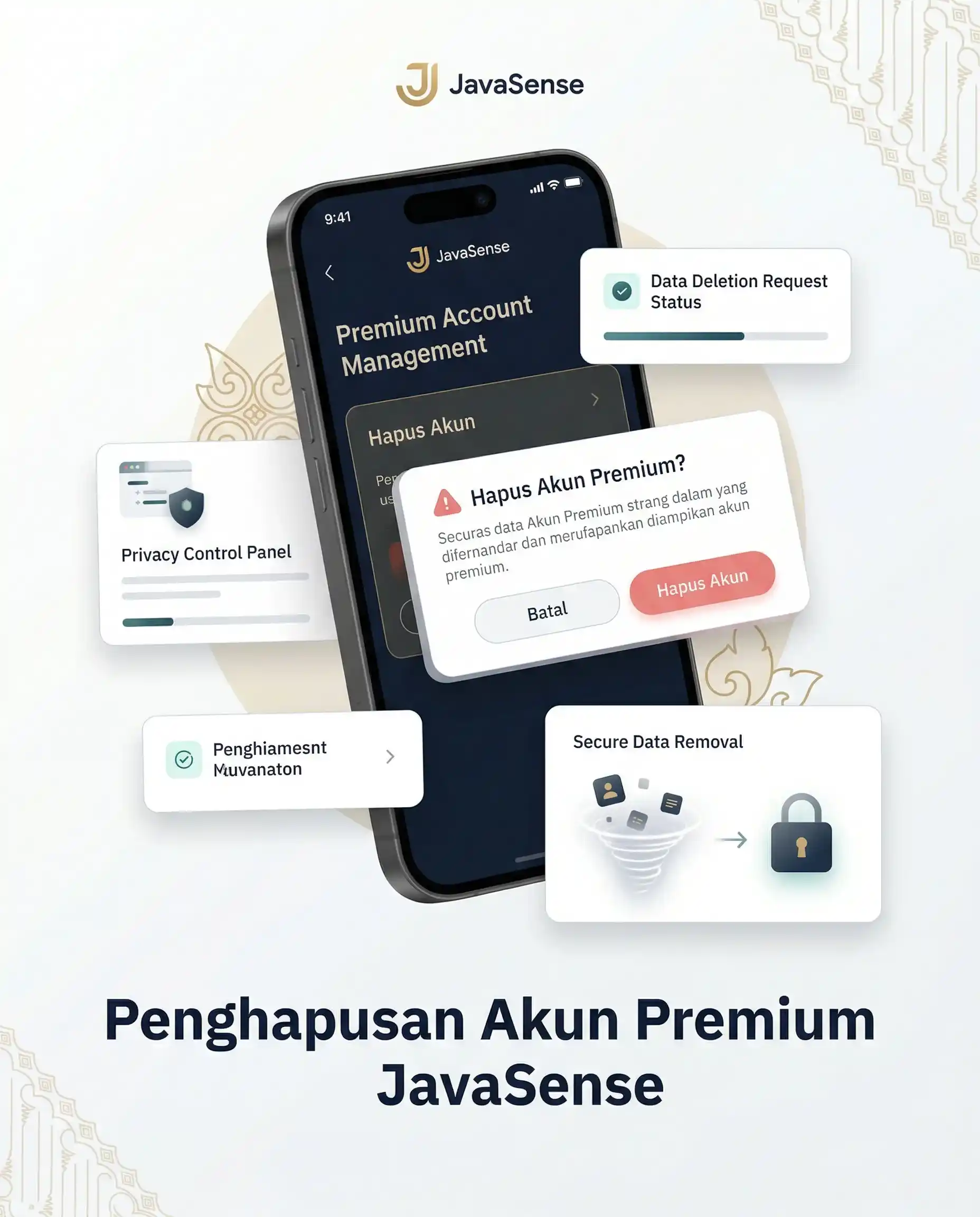
Certain data may be retained in limited form if needed for security, fraud prevention, transactions, legal compliance, or documentation that a deletion request has been processed.
Retention and Security
JavaSense aims to minimize data processing and keep data only for as long as reasonably needed for legitimate, relevant, and proportionate purposes.
Local app preferences may remain on the device until the user removes them. Support communications may be retained as long as reasonably needed to respond, troubleshoot, maintain administrative records, or meet applicable legal obligations.
JavaSense applies reasonable measures to help protect data from unauthorized access, use, disclosure, alteration, or destruction.
Even so, no method of data transmission or storage can be guaranteed to be completely secure. JavaSense continues to review technical settings as the service develops.
Children’s Policy
JavaSense is not specifically designed for children under 13. If JavaSense becomes aware that a child’s data has been sent without appropriate permission, JavaSense will take reasonable steps to review and delete it according to the relevant context.
JavaSense also aims to keep content, design, and monetization proportionate to its role as a general cultural app, not a service specifically designed for children.
Does JavaSense Sell User Data?
JavaSense does not treat the sale of user data as its service model. Data is used to run features, maintain the app experience, display ads if the free version uses ads, respond to communications, and meet relevant technical or legal needs.
If third-party services such as Google AdMob are used, data processing by those services follows their own policies and consent mechanisms.
Important Links and References
For related JavaSense documents, users may open the following pages:
- Terms and Conditions
- Disclaimer
- Contact Us
- Editorial Policy
- Delete Account JavaSense
- JavaSense Ads Premium
- Download App
- JavaSense Tools
For official references about app privacy, ads, and consent, users may also read:
- Google Play User Data Policy
- Google AdMob app-ads.txt verification
- Google UMP SDK for Android privacy messaging
Privacy Policy Updates and Contact
Privacy policy JavaSense may be updated from time to time to reflect feature changes, advertising use, account or premium plans, technology partner changes, or applicable legal requirements.
The latest version published on this page is the version that applies. If an important change is made, JavaSense may update the date below.
For privacy policy questions, data-related requests, or privacy concerns, contact JavaSense by email at hello@javasenseapp.com or through Contact Us.
Last updated: May 18, 2026
JavaSense Privacy Policy FAQ
What data does JavaSense process?
JavaSense may process feature inputs, local preferences, technical website or app data, advertising-related data if ads are active, and communications sent by users.
Does JavaSense use ads?
The free version of JavaSense may display ads through Google AdMob or another relevant ad service. Ads do not change Weton, compatibility, Javanese Calendar, Pawukon, or Javanese Script results.
Does JavaSense store Weton or script inputs?
Feature inputs are used to generate the output requested by the user. For simple and offline-first features, JavaSense aims to process inputs locally where technically possible.
How can I request data deletion?
Users can open the Delete Account JavaSense page or contact hello@javasenseapp.com to request review of data deletion or account removal related to JavaSense services.
Does JavaSense sell user data?
No. JavaSense does not treat selling user data as its service model. Data is used to run features, maintain the app experience, display ads if active, respond to communications, and meet relevant technical or legal needs.
How can I contact JavaSense about privacy?
Users can contact JavaSense by email at hello@javasenseapp.com or through the Contact Us page for privacy and data-related questions.