
Angger, my child…
There is a figure in Javanese wayang whose very posture feels like a teaching: Bima. He stands upright, strong, direct, and difficult to shake. Yet Bima is not merely a symbol of muscle, anger, or battle. When read more clearly, Bima becomes a mirror of honesty, steadfastness, courage, and strength used to protect, not to oppress.
Ky Tutur Summary
- Bima in Javanese wayang can be read as a symbol of honesty, courage, steadfast strength, protection, and upright conduct.
- Bima, also known as Werkudara, is not only the powerful Pandawa warrior. He is also a mirror for becoming oneself without losing responsibility.
- Bima’s strength should not be used as an excuse for harshness. It is a reminder that courage must still be guided by rasa, humility, and the intention to set things right.
- In JavaSense, Bima is read as a path of conduct: upright without arrogance, honest without cruelty, strong without oppression, and brave without losing the heart.
Ky Tutur Note: This article discusses Bima as a figure in Javanese wayang and cultural reflection. It is not a single final claim about every version of the story, because wayang traditions have many branches, interpretations, and styles of performance. Read this as a doorway into values, not as a slogan for becoming harsh or stubborn.
Bima is often remembered as large, powerful, and fearless. In the Pandawa stories, he is known as a strong brother, a brave fighter, and a protector who steps forward when justice needs to be defended. But if we see Bima only as a large-bodied warrior, we only see the outer shell.
Behind his strong body, there is a teaching about honesty. Behind his direct voice, there is loyalty to truth. Behind his courage in battle, there is the duty to protect the vulnerable. Behind his firm presence, there is a heart that does not easily sell its principles for praise.
To read Bima clearly is to go beyond physical strength. He needs to be read as an inner mirror. Bima asks us: are we brave enough to be honest? Can we still stand upright when the situation presses us down? Do we use our strength to protect, or do we use it to frighten others?
Bima as a Mirror of Honesty and Steadfastness
Bima is a mirror of steadfastness. In the language of rasa, being steadfast is not the same as being hard-headed. Steadfastness means having a clear inner stance after reading a situation honestly. A steadfast person is not easily turned by praise, not easily weakened by threat, and not easily tempted to sell a principle just to be accepted.
Bima is also a mirror of honesty. He is not a figure who hides intention behind sweet words. He is often described as direct, plain, and what-you-see-is-what-you-get. But this directness must be read with care. Bima is not a model for being rude. He is a reminder that truth should not be buried under polite words that only cover decay.
In daily life, many people are more afraid of seeming impolite than of betraying what is right. Many choose safe words, even when the heart knows something needs to be corrected. Bima reminds us that a person needs the courage to stand with truth, while still guarding intention so firmness does not become arrogance.
Bima’s honesty is not honesty that simply crashes into people. It is honesty born from a heart that does not want to pretend. This kind of honesty requires courage, because what is true is not always comfortable to say.
Bima, Werkudara, and Meaning in Javanese Wayang
In Javanese tradition, Bima is also known as Werkudara. He is one of the Pandawa brothers, alongside Yudhistira, Arjuna, Nakula, and Sadewa. His name, posture, and attributes carry many layers of meaning in the world of wayang.
Bima is often depicted with a large body, strong voice, upright stance, Kuku Pancanaka, and symbolic clothing. These are not merely visual decorations. In wayang, body shape, gesture, color, movement, and attributes often become symbolic language.
Werkudara is often understood as someone who can bear weight. He is not only strong enough to lift weapons, but also strong enough to face reality. He does not easily sink into over-polished diplomacy. He is closer to direct conduct: seeing what is wrong, then daring to face it.
Still, my child, we need a careful boundary. Each region and wayang style may emphasize different aspects of Bima. Some readings highlight his strength. Others highlight his inner journey. Some read him as a warrior, while others read him as a seeker of the true self.
For that reason, this article does not lock Bima into one rigid interpretation. It reads the values that remain most useful for conduct: honesty, steadfastness, protection, self-control, and the courage to be oneself.

Bima’s Honesty: Direct Without Losing Rasa
Bima’s honesty often appears as directness. He does not go in circles. He does not enjoy hiding what should be clear. If something is wrong, he tends to point it out. If someone needs to be defended, he moves forward. If danger comes, he is not busy finding excuses to step back.
But healthy directness still needs rasa. This is important. Bima should never be used as an excuse for cruel speech, insults, or careless behavior. Honesty without rasa can become a wound. Firmness without empathy can become pride.
In Javanese reflection, Bima reminds people to remain upright before wrongdoing, even when that wrongdoing comes from someone respected. But uprightness is not recklessness. Correction still needs clean intention, the right timing, and language that does not only seek to win.
Here, Bima meets the value of refined speech and tepa slira. Soft language should not become a mask for falsehood. Yet honesty should not forget the feeling of others.
Bima’s Strength: Protecting, Not Oppressing
Bima’s strength is best read as protective strength. He is not strong in order to show off. He is not large in order to make people afraid. He is not brave in order to humiliate the weak. His strength becomes meaningful because it is used to guard family, defend truth, and face injustice.
In modern life, strength does not always look like a large body or a weapon. Strength may appear as authority, money, knowledge, voice, network, influence, or the ability to make decisions. All of these can be used to protect. They can also be used to pressure others.
Bima reminds us that the measure of strength is not only how much power a person has, but what that power is used for. If strength makes a person more arrogant, it has lost rasa. If strength makes a person brave enough to protect the vulnerable, it becomes laku.
For that reason, Bima does not teach violence. He teaches courage. Sometimes courage means stepping forward against injustice. Sometimes courage means restraining oneself so things do not break further. Sometimes courage means yielding when winning would only create a deeper wound.
Kuku Pancanaka, Poleng, and Symbolic Language
In Javanese wayang, Bima is known through several distinctive attributes. One of them is Kuku Pancanaka. This nail is often understood as a symbol of power to cut, tear, or break through what is harmful. But in a JavaSense reading, a symbol like this should not stop at outer violence.
Kuku Pancanaka can be read as the courage to cut through falsehood within oneself. To cut laziness. To cut pretense. To cut the fear that keeps a person from being honest. Bima’s enemy is not only an outer opponent, but also the inner weakness that makes a person lose steadiness.
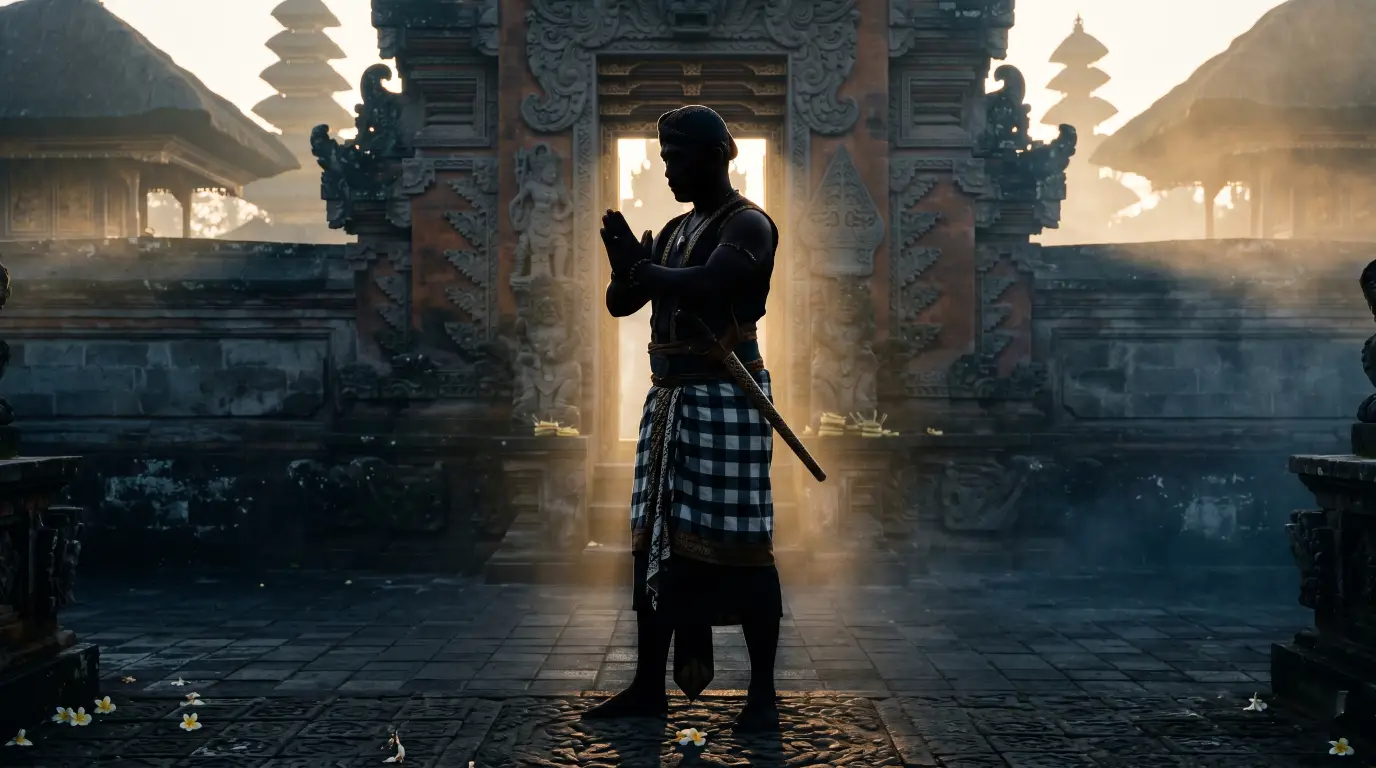
Another attribute often associated with Bima is poleng cloth. With its black and white pattern, poleng can be read as a reminder that life contains contrast: right and wrong, light and dark, courage and fear, desire and self-control. Human life is rarely perfectly clean, yet a person still needs to choose the better conduct.
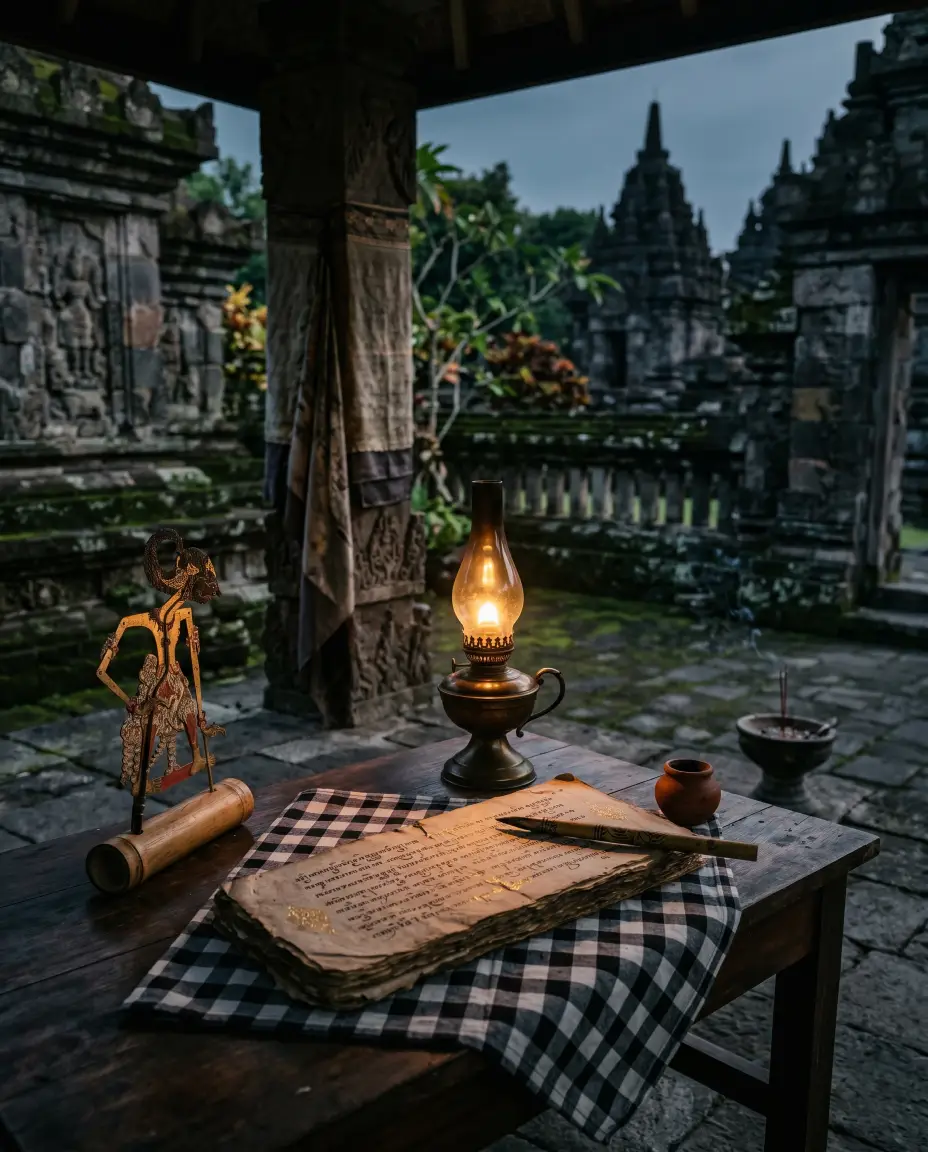
These symbols help us understand that wayang is not only performance. It is cultural language. The body, clothing, weapons, gestures, and stories become doors into reading the human inner life.
Bima Suci: The Inner Journey Toward the True Self
In some readings of the Bima Suci story, Bima undertakes an inner journey in search of sacred water or true knowledge. This journey is not merely physical. It is a journey inward.
The strong Bima must learn that outer strength is not enough. A person may win many battles and still lose to the self. A person may be brave before enemies, yet afraid of inner emptiness. A person may appear solid, yet still not know the direction of life.
Bima Suci is important because it reveals the more subtle layer of Bima. He is not only a warrior who defeats opponents. He is also a seeker of depth. He enters a realm that cannot be solved by muscle, but only by inner courage.
This remains relevant today. Many people look strong on the outside but are tired within. Many people are skillful at work but do not know the direction of their inner life. Many people are busy proving themselves, yet forget to ask: who am I when no one is judging me?
Bima invites people to return to the true self. Not the self built for display. Not the self created to be liked by everyone. But the self that is honest, aware, and willing to take responsibility.
Steadfastness Is Not Stubbornness
Bima’s steadfastness is often mistaken for stubbornness. Yet the two are different. Stubbornness refuses to listen because it is afraid to change. Steadfastness can still listen, but does not easily abandon what is right.
A stubborn person only wants to win. A steadfast person wants to remain true. A stubborn person closes the ear to advice. A steadfast person can receive input without losing inner ground. Stubbornness moves from ego. Steadfastness moves from value.
This is where Bima must be read carefully. Do not use Bima as a justification for refusing correction. In fact, Bima teaches the courage to stand with truth, including when the one who must be corrected is oneself.
This value is close to eling lan waspada. Eling helps a person remember intention. Waspada helps a person avoid being blinded by anger, pride, or the desire to look right all the time.
Bima in Modern Life
What is the use of reading Bima today? We are not living on the battlefield of Kurukshetra. We live in offices, streets, homes, social media, family rooms, workplaces, and a digital world full of pressure. Yet this is exactly where Bima’s value is still needed.
At work, Bima appears when someone dares to speak honestly without humiliating others. In family life, Bima appears when someone protects the vulnerable without becoming a small tyrant. On social media, Bima appears when someone does not sell their principles for applause.
Modern life often trains people to wear many faces. In front of others, they appear agreeable. Behind the scene, they carry resentment. Online, they appear wise. At home, they may wound others easily. Bima reminds us to become whole again: words, actions, and intention should not stand too far apart.
Still, Bima is not an invitation to become harsh. In the modern world, courage needs even more refinement. Be honest, but keep adab. Be firm, but do not belittle. Dare to be different, but do not assume you alone are always right.
Common Misunderstandings about Bima
There are several misunderstandings about Bima that need to be clarified.
First, Bima is often seen only as a symbol of physical strength. In Javanese culture, however, Bima also carries teachings about honesty, loyalty, self-control, protection, and inner searching.
Second, Bima is sometimes seen as rude. This is too shallow. Bima’s directness should not be used to justify harshness. What can be learned is the courage to be honest, not the habit of hurting others.
Third, Bima is considered not refined. Yet refinement does not always mean sweet words. There is refinement in clean intention, protective courage, and the willingness to carry risk for truth.
Fourth, Bima is sometimes treated as relevant only to Javanese people. The values he carries are wider: honesty, courage, protection, self-control, and becoming oneself without losing rasa.
Fifth, Bima is often turned into a hard slogan. But if read more deeply, Bima is not only about standing firm. He is also about keeping strength from being ruled by ego.
Practical Ways to Learn from Bima
Learning from Bima does not mean copying all of his outer style. There is no need to become harsh, explosive, or eager to appear brave. What matters is the value of his conduct.
First, train small honesty. Keep promises. Admit mistakes. Do not add stories just to appear better.
Second, stand on principle without lowering others. If something needs to be corrected, correct it with good intention.
Third, use strength to protect. If you have authority, use it to guard fairness. If you have knowledge, use it to help. If you have a voice, use it to speak for those who are not heard.
Fourth, control anger. Bima is not strong because he is angry all the time. He is strong because he knows when strength should be used.
Fifth, dare to be yourself. Do not keep wearing masks just to be liked by everyone. But being yourself must still come with responsibility, not ego.
A Brief Javanese Glossary
- Bima: a major Pandawa figure in Javanese wayang, often associated with strength, honesty, courage, and protection.
- Werkudara: another name for Bima, often read as a figure who can bear great physical and inner weight.
- Wayang: Javanese shadow-puppet and theatrical tradition that carries stories, symbols, and moral reflection.
- Laku: conduct, inner practice, or a disciplined way of living.
- Rasa: inner feeling, sensitivity, and refined awareness.
- Tepa slira: the ability to consider the feelings and position of others.
- Eling lan waspada: remembering one’s intention and staying aware of what may disturb clarity.
JavaSense and a Clearer Way to Read Wayang
JavaSense reads wayang as a living cultural inheritance. A figure like Bima is not read only as entertainment, but also as an inner mirror. Still, the reading needs clarity. Not every symbol should be forced into advice, and not every story should be treated as an absolute rule for life.
Bima is most helpful when he teaches us to ask better questions. How do we speak truth without cruelty? How do we stand firm without becoming stubborn? How do we use strength to protect instead of dominate? How do we remain ourselves without losing care for others?
As a general cultural reference, you may also explore collections and literacy resources through the National Library of Indonesia and the Indonesian Ministry of Culture archive. References like these help cultural reflection stay connected to learning, not only memory.
To learn Javanese culture in a lighter and more modern way, open the JavaSense app on Google Play: download JavaSense on Google Play.
Closing Reflection: Upright Without Losing the Heart
In the end, Bima teaches that a person needs to stand upright. But upright does not mean stiff. Honest does not mean cruel. Strong does not mean oppressive. Brave does not mean losing rasa.
Angger, my child, the world often pushes people to wear masks. Sometimes the mask is called politeness, when inside it is only fear of honesty. Sometimes the mask is called strength, when inside it is only pride. Sometimes the mask is called kindness, when it is used to hide dishonesty.
Bima invites us to remove those masks slowly. Stand more upright. Speak more honestly. Use strength to protect. Keep rasa so firmness does not become a wound. That is where Bima remains alive: not only on the wayang stage, but in the conduct of anyone brave enough to be true without losing the heart.
FAQ about Bima in Javanese Wayang
Who is Bima in Javanese wayang?
Bima is one of the Pandawa figures in Javanese wayang. He is known for strength, honesty, courage, steadfastness, and his role as a protector of family and truth.
What does Werkudara mean?
Werkudara is another name for Bima in Javanese wayang. It is often associated with a figure who carries great strength, deep life force, and the ability to bear both outer and inner weight.
What is the meaning of Kuku Pancanaka?
Kuku Pancanaka can be read as a symbol of courage to cut through falsehood, injustice, and inner weakness, not merely as a symbol of physical force.
Does Bima only represent physical strength?
No. Bima also represents honesty, steadfastness, courage, protection, self-control, and the inner search for the true self.
What does Bima teach about honesty?
Bima teaches that honesty needs courage. Yet honesty should still be guided by rasa, humility, and responsibility so it does not become harmful speech.
What is the meaning of Bima Suci?
Bima Suci can be read as an inner journey toward the true self. It reminds us that outer strength needs to be accompanied by inner depth.
How can Bima be relevant in modern life?
Bima is relevant today as a reminder to speak honestly, protect the vulnerable, control anger, stand by principle, and become oneself without losing care for others.
How should Bima be understood safely?
Bima should be understood as a cultural mirror and moral reflection, not as an excuse to become rude, stubborn, aggressive, or self-righteous.
Learning Bima More Clearly
Bima is not merely a symbol of strength. He is a Javanese wayang mirror for honesty, courage, steadfastness, and strength that protects without losing rasa. To explore Javanese wisdom, script, weton, calendar, and cultural heritage more easily, open JavaSense on Google Play.