


A date can look ordinary on a modern calendar. But in the Javanese weton calendar, the same date also carries weekday, pasaran, weton, neptu, and sometimes wuku within the Pawukon cycle.
This is why reading a date in Javanese culture is not only about knowing the number of the day. A date can also be read through the meeting of the seven-day weekday cycle and the five-day Javanese pasaran cycle. From that meeting, weton appears. From weton, neptu can be calculated.
Still, the Javanese weton calendar should not be treated as a machine for predicting fate. In JavaSense, it is read as cultural time knowledge: a way to understand date, rhythm, pasaran, weton, and wuku with clarity, not fear.
Quick Answer: What Is the Javanese Weton Calendar?
The Javanese weton calendar is a way to read a date through several layers of Javanese time: weekday, Javanese pasaran, weton, neptu, wuku, and Pawukon. Weton is formed from weekday and pasaran, while neptu is calculated by adding the weekday value and pasaran value.
Wuku belongs to the 30-wuku Pawukon cycle. Because of that, the Javanese weton calendar can help readers see one date more fully, not only as a Gregorian date, but also as part of Javanese cultural time.
- Weekday gives the seven-day calendar layer.
- Javanese pasaran gives the five-day cycle: Legi, Pahing, Pon, Wage, and Kliwon.
- Weton is the meeting of weekday and pasaran.
- Neptu is the numerical value of weekday plus pasaran.
- Wuku gives another time layer through the Pawukon cycle.
Quick Table: Elements in the Javanese Weton Calendar
The table below helps readers understand the main elements that often appear when reading the Javanese weton calendar.
| Element | Simple Meaning | Role in Reading |
|---|---|---|
| Weekday | Sunday to Saturday. | The first element that forms weton. |
| Javanese pasaran | Legi, Pahing, Pon, Wage, and Kliwon. | The second element that forms weton. |
| Weton | The meeting of weekday and Javanese pasaran. | Reads a birth day or a certain date in Javanese tradition. |
| Neptu | The value of weekday plus the value of pasaran. | A cultural calculation used in weton reading. |
| Wuku | A unit in the Pawukon cycle. | A Javanese time layer within the 30-wuku cycle. |
| Pawukon | The 30-wuku or 210-day cycle. | The larger cultural framework for reading wuku. |
| Javanese calendar | A calendar system that connects date, weekday, pasaran, and other Javanese time elements. | The practical map for reading Javanese time more fully. |
To see daily Javanese time directly, use the JavaSense Javanese calendar. To find weton from a birth date, use the JavaSense weton calculator.
What Is the Javanese Weton Calendar?
The Javanese weton calendar connects a Gregorian date with Javanese time elements, especially weekday, pasaran, weton, neptu, and in some readings, wuku and Pawukon.
Weton is formed from the meeting of the seven-day weekday cycle and the five-day Javanese pasaran cycle. Examples include Monday Legi, Friday Kliwon, Saturday Pahing, Sunday Wage, and Wednesday Pon.
From that combination, neptu can be calculated by adding the weekday value and the pasaran value. This makes the weton calendar useful for readers who want to understand a date beyond the modern calendar number.
To understand the foundation of weton itself, read Javanese weton.
Main Elements: Weekday, Pasaran, Weton, Neptu, Wuku
The Javanese weton calendar becomes easier to read when each element is understood separately. These elements are connected, but they do not all mean the same thing.
Weekday
The weekday is the familiar seven-day cycle: Sunday, Monday, Tuesday, Wednesday, Thursday, Friday, and Saturday. In weton reading, the weekday becomes one part of the weton name.
Javanese Pasaran
Javanese pasaran is the five-day cycle of Legi, Pahing, Pon, Wage, and Kliwon. A date cannot be fully read as weton from the weekday alone because the pasaran is needed too.
For example, if a date falls on Monday, the weton is still incomplete until the pasaran is known. Monday Legi and Monday Pon are different weton.
Weton
Weton is the combination of weekday and pasaran. Because there are 7 weekdays and 5 pasaran, there are 35 weton combinations.
Examples include Monday Legi, Tuesday Pahing, Friday Kliwon, Saturday Pahing, and Sunday Wage. To see the full reference table, open the complete list of 35 Javanese weton.
Neptu Weton
Neptu weton is the total value of weekday and pasaran. Each weekday has a value, and each pasaran also has a value. When both are added, the result is called neptu weton.
For example, Friday has a value of 6 and Kliwon has a value of 8, so Friday Kliwon has a neptu of 14.
Wuku and Pawukon
Wuku is a time unit inside the Pawukon cycle. Pawukon consists of 30 wuku, beginning with Sinta and ending with Watugunung. Each wuku lasts 7 days, so one full Pawukon cycle lasts 210 days.
Wuku is different from weton. Weton comes from weekday and pasaran, while wuku comes from the Pawukon cycle. Both can appear in the same calendar reading, but they should not be mixed as one formula.
To understand this layer more deeply, read Pawukon and the 30 wuku cycle, the difference between weton and wuku, and Weton, Wuku, and Pawukon.
How to Read the Javanese Weton Calendar Step by Step
The Javanese weton calendar is easier to read when the process is arranged step by step.
1. Start from the Gregorian Date
Begin with the Gregorian date you want to read. It can be today’s date, a birth date, a family event date, or another date that needs to be understood through Javanese time.
2. Check the Weekday
After the date is chosen, check the weekday: Sunday, Monday, Tuesday, Wednesday, Thursday, Friday, or Saturday. The weekday becomes half of the weton structure.
3. Find the Javanese Pasaran
The next step is to find the pasaran: Legi, Pahing, Pon, Wage, or Kliwon. Because pasaran follows a five-day cycle, the pasaran may differ even when the weekday is the same.
4. Combine Weekday and Pasaran into Weton
After the weekday and pasaran are known, combine them into weton. Friday plus Kliwon becomes Friday Kliwon. Monday plus Legi becomes Monday Legi.
5. Calculate Neptu Weton
Once the weton is known, neptu can be calculated by adding the weekday value and pasaran value. Friday Kliwon is Friday 6 plus Kliwon 8, so the total is 14.
6. Notice Wuku If Available
If the calendar also shows wuku, read it as a Pawukon layer. Wuku does not replace weton. It gives another cultural time layer that can be read together with weton.
7. Read the Result as a Cultural Time Map
The last step is to read the result calmly. The Javanese weton calendar is not a verdict on fate. It is better understood as a cultural map for recognizing time, cycles, and awareness.
Weekday Neptu Values
In the Javanese weton calendar, weekday values are used to calculate neptu. The table below shows the values commonly used in weton calculation.
| Weekday | Javanese / Indonesian Name | Neptu Value |
|---|---|---|
| Sunday | Minggu | 5 |
| Monday | Senin | 4 |
| Tuesday | Selasa | 3 |
| Wednesday | Rabu | 7 |
| Thursday | Kamis | 8 |
| Friday | Jumat | 6 |
| Saturday | Sabtu | 9 |
Javanese Pasaran Neptu Values
Besides weekdays, Javanese pasaran also has neptu values. These values are added to weekday values when calculating weton.
| Javanese Pasaran | Neptu Value |
|---|---|
| Legi | 5 |
| Pahing | 9 |
| Pon | 7 |
| Wage | 4 |
| Kliwon | 8 |
With these two tables, readers can understand the basic neptu calculation. For a fuller reference, read neptu weton values. For a practical result without manual calculation, use the JavaSense weton calculator.
Example: Reading Friday Kliwon and Monday Legi
For a simple example, imagine a date falls on Friday Kliwon. The weekday is Friday, the pasaran is Kliwon, and the weton is Friday Kliwon.
Friday Kliwon = Friday 6 + Kliwon 8 = 14.
This means Friday Kliwon has a neptu of 14. In Javanese culture, this number may be used as part of traditional reading. But it should not be treated as certain fate.
Another example is Monday Legi. Monday has a neptu value of 4, and Legi has a neptu value of 5.
Monday Legi = Monday 4 + Legi 5 = 9.
In this way, the Javanese weton calendar helps readers see the relationship between date, weekday, pasaran, and neptu more clearly.
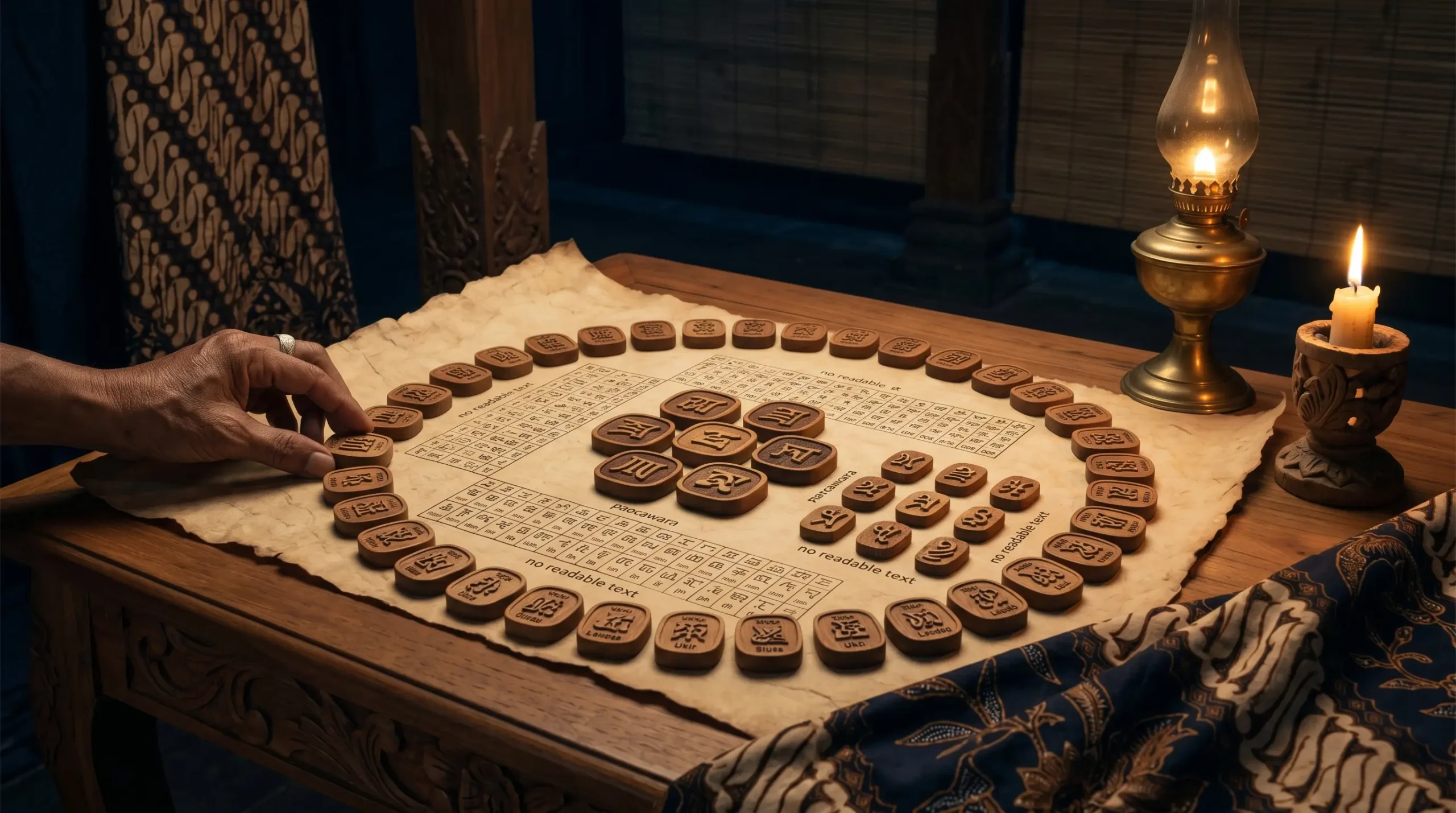
Javanese Calendar vs Weton Calendar vs Weton Calculator vs Pawukon
Many readers mix up the Javanese calendar, the weton calendar, the weton calculator, and Pawukon. They are connected, but they do not serve exactly the same purpose.
| Term | Main Function | When to Use It |
|---|---|---|
| Javanese calendar | Reads dates through Javanese time elements such as date, weekday, pasaran, weton, wuku, and related cycles. | When you want a fuller daily or monthly Javanese time view. |
| Javanese weton calendar | Reads a date through weekday, pasaran, weton, neptu, and sometimes wuku. | When you want to understand weton inside calendar context. |
| Weton calculator | Finds weton from a birth date in a practical way. | When you want to know someone’s birth weton. |
| Pawukon or Wuku | Reads the 30-wuku cycle as another Javanese time layer. | When you want to understand the wuku that accompanies a certain date. |
If you want a wider calendar view, check the Javanese calendar. If you want to know birth weton, calculate your weton from a birth date. If you want the Pawukon layer, continue to Pawukon and the 30 wuku cycle.
How the Weton Calendar Connects with Today’s Javanese Date
The Javanese weton calendar can help readers understand a daily date. When someone asks about today’s Javanese date, they may want to know the pasaran, weton, neptu, and wuku that are running on that day.
For practical use, the JavaSense Javanese calendar is the safest doorway. It helps readers see date, weekday, pasaran, weton, and wuku in a more organized way.
In this article, the focus is not to list today’s date. The focus is to help readers understand what the elements mean when they appear in a calendar result.
How the Weton Calendar Connects with Wuku and Pawukon
The Javanese weton calendar can also become a bridge toward Wuku and Pawukon. Weton reads weekday and pasaran. Wuku reads position within the Pawukon cycle.
Because of that, readers who already understand weton can continue toward wuku. This helps them see Javanese time more fully: from weekday, pasaran, weton, and neptu to Wuku and Pawukon.
To understand the relationship more clearly, read Weton, Wuku, and Pawukon.
The Javanese Weton Calendar Is Not a Tool for Fear
The Javanese weton calendar should not be used to make people afraid. Weekday, pasaran, neptu, and wuku are not absolute signs of fortune, relationship fate, health, livelihood, or a person’s value.
In the JavaSense reading, the weton calendar helps people understand time. Life is still shaped by choices, effort, environment, communication, family dialogue, and maturity.
Ky Tutur’s reflection: A calendar is not only a row of dates. It becomes meaningful when it helps people notice time, arrange their steps, and read tradition with a clear heart.
To understand this boundary more deeply, read weton is not fortune telling and Javanese weton myths.
Common Mistakes When Reading the Weton Calendar
Several mistakes often happen when someone reads the Javanese weton calendar. These mistakes should be avoided so cultural reading does not turn into fear.
- Assuming certain days or pasaran are automatically bad. JavaSense does not use days or pasaran to frighten readers.
- Thinking large neptu is always better than small neptu. Larger neptu is not automatically superior, and smaller neptu is not a bad sign.
- Mixing up weton and wuku. Weton comes from weekday and pasaran, while wuku comes from Pawukon.
- Making major decisions only from the calendar. Cultural reading may become reflection, but it should not replace reason and real-life conditions.
- Reading the calendar as a verdict. The calendar is healthier as a reminder for arranging time, not as a tool for judging yourself or others.
Weton Calendar and Relationship Reflection
In Javanese culture, weton is often used in relationship reflection. Usually, the neptu values of two people are calculated to read compatibility as cultural reflection.
Still, weton compatibility should not be read as an absolute decision. Human relationships are shaped by communication, family blessing, responsibility, shared values, and emotional maturity.
If you want to read compatibility more carefully, use weton compatibility with care. Use the result as reflection, not as a verdict on love or marriage.
Cultural References on the Javanese Calendar
The Javanese weton calendar belongs to the wider space of the Javanese calendar. As a general reference on this calendar system, readers may see the overview of the Javanese calendar.
For a more technical discussion of Javanese calendar calculation, pasaran, wetonan, and Pawukon, readers may explore An ethnoarithmetic excursion into the Javanese calendar. For visual and symbolic context around Pawukon, readers may also see Kajian Simbol Visual Pawukon from Institut Seni Indonesia Surakarta.
External references help readers see broader context. JavaSense presents the same cultural space in a more practical, reflective, and reader-friendly way.
Use JavaSense to Read Javanese Time
To read a date directly, use the JavaSense Javanese calendar. It is the main doorway for reading calendar time in the JavaSense ecosystem.
To know birth weton, use the JavaSense weton calculator. To understand Wuku and Pawukon, read Pawukon and the 30 wuku cycle. To read relationship compatibility as cultural reflection, use the JavaSense weton compatibility tool.
For wider learning, continue with Javanese weton, Javanese pasaran, neptu weton values, and the difference between weton and wuku.
To explore related resources in one place, open JavaSense cultural tools. For a broader cultural map, JavaSense can also be read as a Javanese cultural platform for weton, calendar, Primbon reflection, Pawukon, wuku, and Javanese script.
Closing: Reading the Calendar with Awareness
The Javanese weton calendar teaches that time is not only a number. There are weekday, pasaran, weton, neptu, Wuku, and cultural cycles moving together.
But none of this needs to make people afraid. A calendar read clearly can help people become more aware: aware of time, aware of steps, and aware that life still needs wisdom.
So read the Javanese weton calendar calmly. Respect the tradition, understand its limits, and use it as a cultural map for arranging life with more care.
To learn weton, pasaran, neptu, compatibility, the Javanese calendar, and script in a lighter way, you can also open JavaSense on Google Play.
FAQ About the Javanese Weton Calendar
What is the Javanese weton calendar?
The Javanese weton calendar is a way to read a date through weekday, Javanese pasaran, weton, neptu, and sometimes wuku within the Pawukon cycle.
How do you read the Javanese weton calendar?
Start from the Gregorian date, check the weekday, find the Javanese pasaran, combine weekday and pasaran into weton, then calculate neptu if needed.
What is the difference between a Javanese calendar and a weton calculator?
The Javanese calendar gives a wider view of dates, pasaran, weton, wuku, and related time elements. A weton calculator is used more specifically to find weton from a birth date.
What is the difference between weton and wuku?
Weton comes from the meeting of weekday and Javanese pasaran, while wuku comes from the Pawukon cycle of 30 wuku. They are different, but they can complement one another in Javanese cultural reading.
How do you calculate neptu weton?
Neptu weton is calculated by adding the weekday value and the pasaran value. For example, Friday Kliwon is Friday 6 plus Kliwon 8, so the neptu is 14.
How is the weton calendar connected with the Javanese calendar?
The weton calendar belongs to the wider Javanese calendar. The Javanese calendar helps connect date, weekday, pasaran, weton, neptu, wuku, and other time elements.
Does the Javanese weton calendar determine fate?
No. The Javanese weton calendar should be read as cultural time knowledge and reflection, not as fixed fate or an absolute prediction about life.
Where can I read the Javanese calendar online?
You can use the JavaSense Javanese calendar to read weekday, pasaran, weton, neptu, wuku, and Javanese date information more practically.