


Javanese date today means the date currently running within the Javanese calendar system. It is usually read together with the Gregorian date, common weekday, Javanese pasaran, weton, neptu, and sometimes wuku from the Pawukon cycle.
Because daily calendar data changes, this page does not write the actual current Javanese date manually. To see the live result for today, use the JavaSense Javanese calendar as the main doorway.
Some readers only want to know today’s date. Others want to understand why the Javanese date is often read together with pasaran, weton, neptu, and wuku. This guide helps separate those terms clearly so the calendar does not become confusing.
Ky Tutur’s reflection: A date is not only a number. It becomes more useful when it helps us notice time, understand the rhythm of a day, and arrange our steps with a calm heart.
Quick Answer: What Is the Javanese Date Today?
The Javanese date today is the current date read through the Javanese calendar system. It is commonly read with the Gregorian date, weekday, pasaran, weton, neptu, and sometimes wuku.
In the JavaSense approach, the Javanese date should be read as cultural time knowledge, not as a fixed decision about fate. It may help readers understand tradition and timing, but it should not replace reason, responsibility, or real-world context.
Check the Javanese Date Today Directly
To see the current Javanese date, open the JavaSense Javanese calendar. The tool helps readers view the Javanese date, pasaran, weton, neptu, and wuku more practically.
If the question is about birth weton, use the JavaSense tool to calculate weton from a birth date. Today’s Javanese date and a person’s birth weton are related to the calendar, but they are not the same.
| What You Want to Check | Best Direction |
|---|---|
| What is the Javanese date today? | Open the JavaSense Javanese calendar and read the current date result. |
| What is today’s pasaran? | Read the pasaran section: Legi, Pahing, Pon, Wage, or Kliwon. |
| What is today’s weton? | Read the combination of the common weekday and Javanese pasaran. |
| What is today’s neptu? | Read the value of the weekday plus the value of the pasaran. |
| What is today’s wuku? | Read the wuku or Pawukon section in the Javanese calendar. |
Summary of the Javanese Date Today
- Javanese date today shows today’s position within the Javanese calendar system.
- Gregorian date is the common date used as the first reference point.
- Javanese pasaran consists of Legi, Pahing, Pon, Wage, and Kliwon.
- Weton today is formed from the combination of today’s weekday and pasaran.
- Neptu today is calculated from the value of the weekday plus the value of the pasaran.
- Wuku today comes from the Pawukon cycle and becomes another cultural layer in the Javanese calendar.
Quick Table of Today’s Javanese Date Elements
The following table helps readers distinguish the elements that often appear when reading today’s Javanese date.
| Daily Element | Short Meaning | Useful Next Step |
|---|---|---|
| Javanese date today | The current date in the Javanese calendar system. | Use the JavaSense Javanese calendar. |
| Gregorian date | The common date used in daily life. | Use it as the starting point before reading the Javanese date. |
| Pasaran today | Legi, Pahing, Pon, Wage, or Kliwon on the current date. | Read the pasaran result in the calendar. |
| Weton today | The combination of common weekday and Javanese pasaran today. | Read the weekday-pasaran combination. |
| Neptu today | The numerical value of the weekday plus the pasaran. | Learn more about Javanese neptu. |
| Wuku today | The current position in the Pawukon cycle. | Read Pawukon and the 30 wuku cycle. |
| Birth weton | Weton based on a person’s birth date. | Use the JavaSense weton calculator. |
What Is the Javanese Date Today?
The Javanese date today is the current date in the Javanese calendar system. It is usually read together with the Gregorian date, common weekday, pasaran, weton, neptu, and other Javanese calendar elements.
This helps readers see that one day can be read through more than one layer: the common calendar used in daily life and the Javanese calendar that still lives in cultural memory.
For a broader daily reading, use the Javanese Calendar today guide or open the Javanese calendar with pasaran and wuku.
Javanese Date and Gregorian Date: What Is the Difference?
The Gregorian date is the common date used in daily administration, school, work, and modern life, such as January 1, August 17, or December 31.
The Javanese date belongs to the Javanese calendar system. It is read together with Javanese months, pasaran, weton, neptu, and sometimes wuku or Pawukon.
Because the systems are different, the Javanese date does not always match the Gregorian date directly. That is why readers should use the JavaSense Javanese calendar to check the Javanese date for a specific day.
What Can You Read from Today’s Javanese Date?
When reading today’s Javanese date, several elements are often noticed. Each element has a different function, so they should not be mixed as if they mean the same thing.
- Gregorian date, the common date used in daily life.
- Javanese date, the date within the Javanese calendar system.
- Common weekday, such as Monday, Tuesday, Wednesday, Thursday, Friday, Saturday, or Sunday.
- Javanese pasaran, one of Legi, Pahing, Pon, Wage, or Kliwon.
- Weton, the combination of common weekday and Javanese pasaran.
- Neptu, the numerical value of the weekday and pasaran.
- Wuku, part of the 30-wuku Pawukon cycle.
These elements help readers understand the Javanese calendar more clearly. Still, they should be read as cultural knowledge, not as the only basis for major decisions.
How to Check the Javanese Date Today
The most practical way to check the Javanese date today is to use a calendar tool that shows the Javanese date, weekday, pasaran, weton, neptu, and wuku.
- Open the JavaSense Javanese calendar. Use the page that shows the Javanese date, common weekday, pasaran, weton, neptu, and wuku.
- Check the date being read. Make sure the displayed date is today or the date you want to study.
- Read the Javanese date. This shows the day’s position in the Javanese calendar system.
- Read the pasaran and weton. Pasaran helps form weton when combined with the common weekday.
- Read neptu when available. Neptu comes from the value of the weekday plus the value of the pasaran.
- Read wuku when needed. Wuku comes from the Pawukon cycle and is different from weton.
If the purpose is to find weton from a birth date, use the JavaSense weton calculator. To understand the daily calendar context, read the Javanese Calendar today guide.
Javanese Date Today vs Birth Weton
The Javanese date today and birth weton are often confused. The Javanese date today follows the current date, while birth weton follows someone’s birth date.
| Term | Basis of Reading | When It Is Used |
|---|---|---|
| Javanese date today | The current date or selected calendar date. | Used to see today’s Javanese date, pasaran, weton, neptu, and wuku. |
| Birth weton | A person’s birth date. | Used to find a person’s birth weekday, pasaran, weton, and neptu. |
For birth weton, use the JavaSense weton calculator. To understand the foundation, read more about neptu in the Javanese calendar.
Neptu Values for Weekdays and Pasaran
Neptu is the numerical value used in weton reading. It is obtained by adding the value of the common weekday and the value of the Javanese pasaran.
These are the weekday neptu values commonly used in Javanese weton reading:
| Javanese / Indonesian Day | English Day | Neptu |
|---|---|---|
| Minggu | Sunday | 5 |
| Senin | Monday | 4 |
| Selasa | Tuesday | 3 |
| Rabu | Wednesday | 7 |
| Kamis | Thursday | 8 |
| Jumat | Friday | 6 |
| Sabtu | Saturday | 9 |
These are the pasaran neptu values commonly used in weton reading:
| Javanese Pasaran | Neptu |
|---|---|
| Legi | 5 |
| Pahing | 9 |
| Pon | 7 |
| Wage | 4 |
| Kliwon | 8 |
These two tables help readers understand the basis of neptu. Still, neptu should be read as a cultural symbol, not as a measure of someone’s value.
Example of Reading Today’s Javanese Date
The following examples are only illustrations to help readers understand how to read a Javanese calendar result. For the actual current data, use the JavaSense Javanese calendar.
For example, if a date falls on Rabu Pon, the common weekday is Rabu, the pasaran is Pon, and the weton is Rabu Pon.
Rabu Pon = Rabu 7 + Pon 7 = 14
Another example: if a date falls on Sabtu Wage, the common weekday is Sabtu, the pasaran is Wage, and the weton is Sabtu Wage.
Sabtu Wage = Sabtu 9 + Wage 4 = 13
From these examples, readers can see that Javanese date, weekday, pasaran, weton, and neptu are connected within the Javanese calendar.
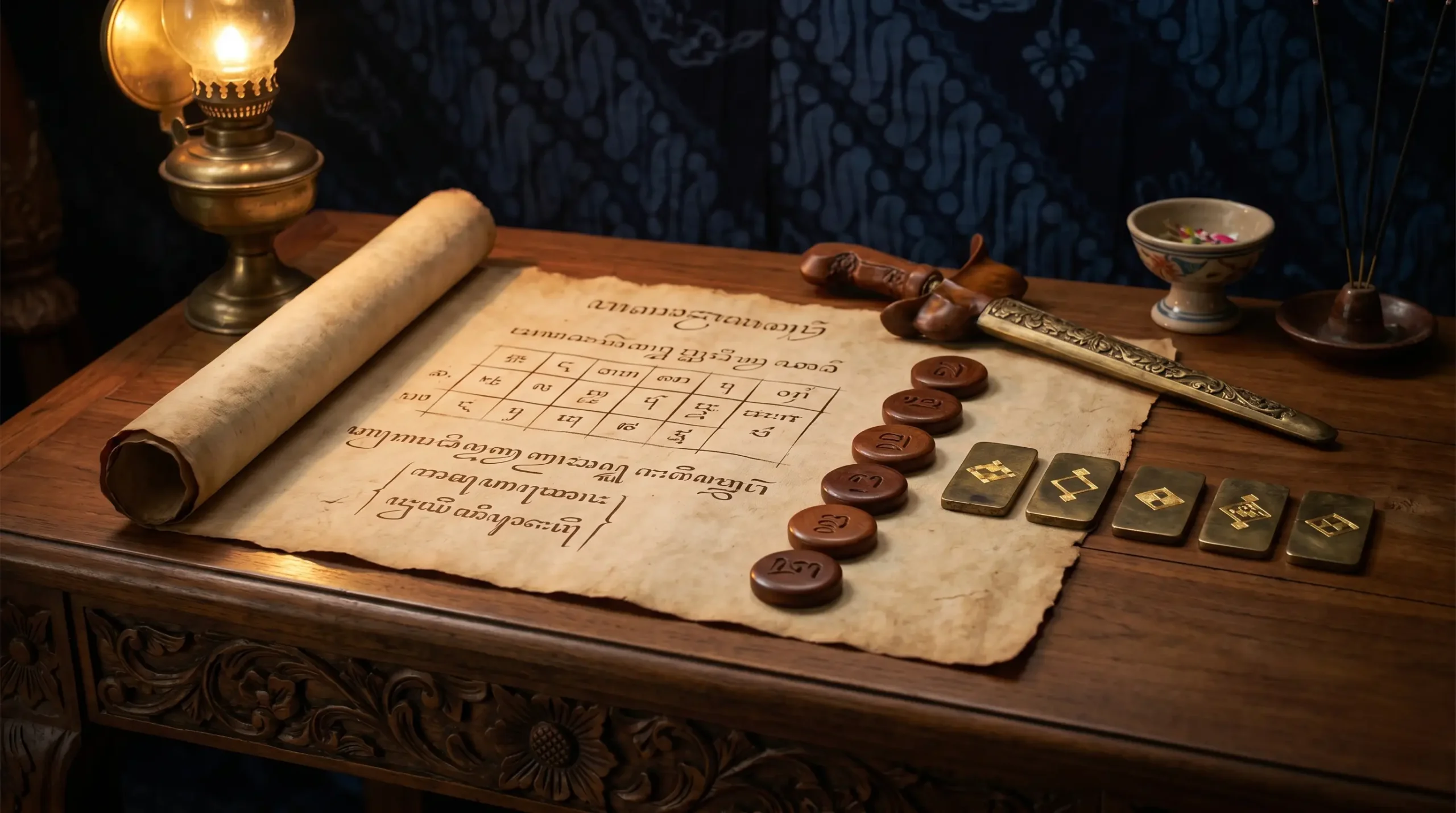
How Today’s Javanese Date Relates to Pasaran
Javanese date and pasaran are connected layers in the calendar. Today’s pasaran shows whether the current day falls on Legi, Pahing, Pon, Wage, or Kliwon.
Pasaran is often searched because it helps form weton. To check it directly, use the JavaSense Javanese calendar.
How Today’s Javanese Date Relates to Weton
Javanese date and weton are related, but they are not the same. The Javanese date shows the date’s position in the calendar system, while weton shows the combination of common weekday and Javanese pasaran.
To understand today’s weton more clearly, read the Javanese Calendar today guide. To find birth weton from a specific date, use the JavaSense weton calculator.
How Today’s Javanese Date Relates to Wuku
Besides weekday, pasaran, and weton, the Javanese calendar can also relate to wuku. Wuku comes from the Pawukon cycle, which consists of 30 wuku.
Wuku is different from weton. Weton comes from weekday and pasaran, while wuku comes from the Pawukon cycle. Both can be read together as different cultural layers of time.
To understand wuku more clearly, read Pawukon and the 30 wuku cycle.
The Javanese Date Today Should Not Create Fear
Javanese date today should not be read as a tool for confirming the future. Javanese date, pasaran, weton, neptu, and wuku are not fixed decisions about fortune, relationships, health, or someone’s fate.
In the JavaSense approach, the Javanese date helps people understand time and tradition. Life is still shaped by choices, effort, environment, communication, maturity, and responsibility.
If a date feels culturally heavy, treat it as a reminder to prepare more carefully, not as a reason to fear the day.
Common Mistakes When Reading the Javanese Date
Several mistakes often happen when people read the Javanese date. These should be avoided so the calendar does not become a source of fear.
- Assuming the Javanese date is an absolute sign. The Javanese date is part of a cultural calendar system, not a tool for confirming the future.
- Mixing Javanese date, weton, and wuku. Javanese date belongs to the calendar system, weton comes from weekday and pasaran, while wuku comes from Pawukon.
- Assuming a certain pasaran is always bad. In JavaSense, Legi, Pahing, Pon, Wage, and Kliwon are read as cultural time elements, not labels for judging people.
- Making a major decision only from a date. Cultural reading can become reflection, but it should still be accompanied by reason and real conditions.
- Confusing today’s Javanese date with birth weton. Today’s Javanese date follows the current day, while birth weton follows a person’s birth date.
Cultural References for the Javanese Calendar
For general background, readers may see the reference on Javanese calendar.
For a more academic discussion of the Javanese calendar, pasaran, wetonan, and Pawukon, readers may also see An ethnoarithmetic excursion into the Javanese calendar. For Pawukon visual-symbolic context, see the Pawukon visual symbol study from Institut Seni Indonesia Surakarta.
External references help provide general and scholarly context. JavaSense, meanwhile, presents this topic in practical, reflective language for modern readers.
Use the JavaSense Javanese Calendar
To see the Javanese date today directly, use the JavaSense Javanese calendar. It is the main doorway for reading Javanese date, pasaran, weton, neptu, and wuku in the JavaSense ecosystem.
To find birth weton, use the JavaSense weton calculator. To read wuku and Pawukon, explore the 210-day Pawukon cycle.
To explore the Javanese calendar, weton, Primbon, wuku, Pawukon, and Javanese script in one place, visit JavaSense as a Javanese cultural platform.
For a more practical mobile experience, readers can download the JavaSense Android app through Google Play.
Closing Reflection: Reading Dates with More Awareness
The Javanese date teaches that time is not only a number. Inside it are weekday, pasaran, weton, neptu, and sometimes wuku as part of how Javanese culture reads life.
Still, none of this needs to make people afraid. When read clearly, the calendar helps people become more aware: aware of time, aware of conduct, and aware that life still needs to be lived with wisdom.
So read the Javanese date calmly. Honor the tradition, understand its limits, and use it as a cultural map for arranging life with more care.
FAQ About the Javanese Date Today
What is the Javanese date today?
The Javanese date today is the current date in the Javanese calendar system, usually read together with the weekday, pasaran, weton, neptu, and sometimes wuku.
How do I check the Javanese date today?
The easiest way is to use the JavaSense Javanese calendar to see today’s Javanese date, pasaran, weton, neptu, wuku, and related calendar elements.
What is the difference between Javanese date and Gregorian date?
Javanese date and Gregorian date come from different calendar systems. Because of that, the Javanese date does not always match the Gregorian date directly and should be checked through the Javanese calendar.
What is the difference between Javanese date and weton?
The Javanese date shows a date’s position within the Javanese calendar system, while weton is the combination of common weekday and Javanese pasaran.
How is the Javanese date related to pasaran?
Pasaran is the five-day Javanese cycle of Legi, Pahing, Pon, Wage, and Kliwon. It is often read together with the Javanese date.
How is the Javanese date related to wuku?
Wuku is part of the Pawukon cycle. It is different from weton, but both can be read together as cultural layers of Javanese time.
Does the Javanese date determine fate?
No. The Javanese date should be read as a cultural time map and reflection, not as a fixed decision about fate.
Where can I check weton from a birth date?
Readers can use the JavaSense weton calculator to find weton, pasaran, and neptu from a birth date.