
Angger, my child…
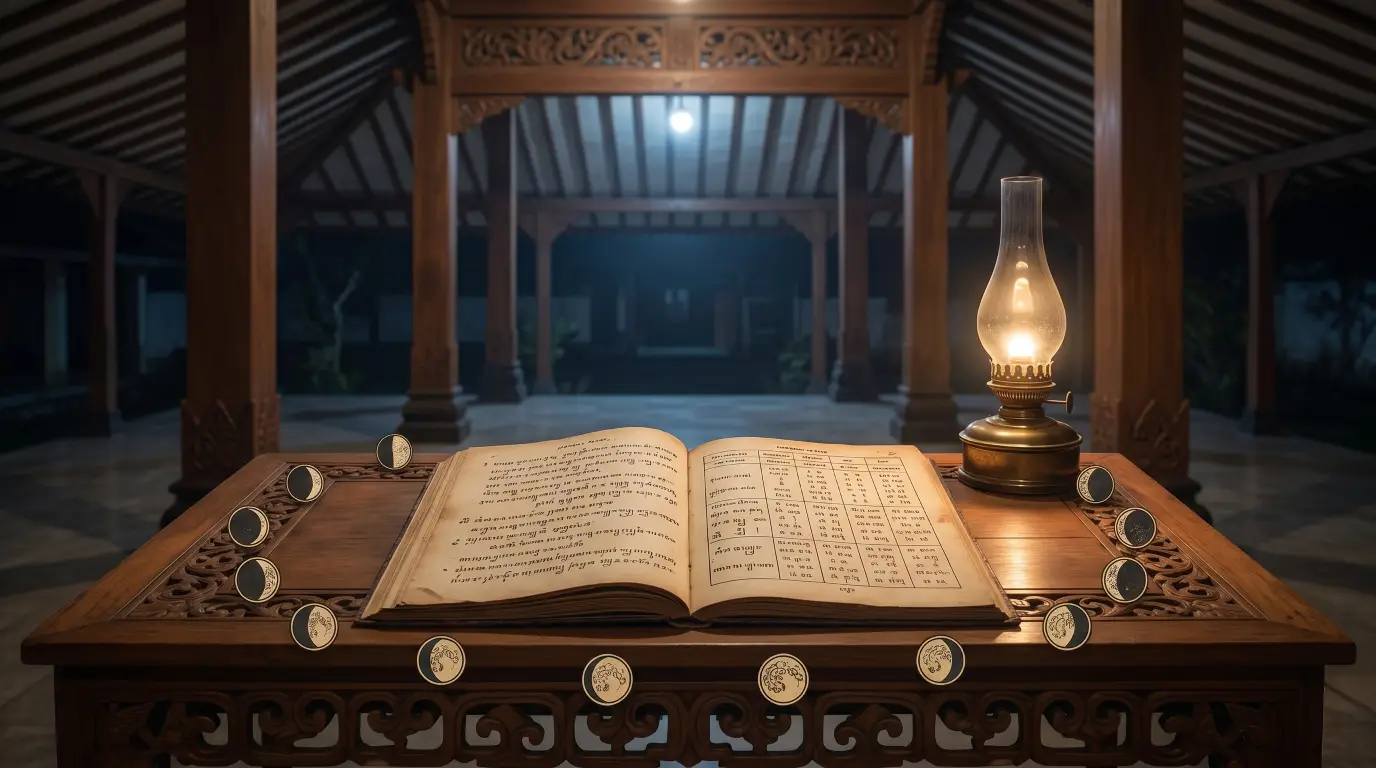
There is time that is read only as a date. But there is also time that is read as rhythm. In Javanese culture, sasi Jawa is not merely a list of month names. It is a sign of changing atmosphere, tradition, prayer, social season, and cultural guidance so human beings do not walk without rasa.
Ky Tutur Summary
- Sasi Jawa refers to the months in the Javanese calendar, each carrying names, order, tradition, and cultural meaning.
- The names of sasi Jawa include Sura, Sapar, Mulud, Bakda Mulud, Jumadilawal, Jumadilakir, Rejeb, Ruwah, Pasa, Sawal, Sela, and Besar.
- Sasi Jawa should not be read as a fixed character prediction or a fate verdict, but as a rhythm of time that helps people arrange conduct.
- In JavaSense, sasi Jawa is read as cultural heritage, a marker of tradition, and a life mirror that still needs common sense.
Ky Tutur Note: This article discusses sasi Jawa as cultural heritage and traditional calendrical knowledge. Readings about Javanese months, tradition, weton, or the rhythm of time are not meant as absolute prophecy, fate judgment, or a replacement for rational decisions. Use them as mirrors for conduct, not as chains around life.
Sasi Jawa is often mentioned when people discuss the Javanese calendar, weton, the month of Sura, nyadran before Pasa, or the celebration of Mulud. Yet many people still understand it only as an old list of month names. Others read it too narrowly as a list of character traits, fortune, or a fixed destiny.
This is where the reading needs to be made clear. Sasi Jawa is not merely a month name. It is a Javanese way of marking time. Within it are traces of history, religion, agriculture, prayer, kinship, communal rituals, and the way society adjusts conduct to the rhythm of shared life.
So, my child, sasi Jawa should not be read with fear. Do not read it like a prophecy that locks life. Read it as a map of rhythm: when people are invited to step aside, when to strengthen relationships, when to cleanse intention, when to share, and when to begin again with a clearer heart.
What Is Sasi Jawa?
Sasi Jawa means the month names in the Javanese calendar. In Javanese, the word sasi means month. In everyday speech, sasi may refer to a month as a marker of time, not only the moon seen in the night sky.
The Javanese calendar known today has a long relationship with many historical layers. There are influences from the Saka calendar system, Hindu-Buddhist traditions, the growth of Islam in Java, and reforms during the period of Islamic Mataram. Because of this, Javanese month names are close to Hijri month names, but they live with a distinctly Javanese cultural rasa.
Sasi Jawa does not stand alone. It is connected with days, pasaran, weton, wuku, seasons, and communal traditions. In society, certain months may become markers for selamatan, nyadran, sekaten, fasting, holidays, bersih desa, or certain forms of inner conduct.
In other words, sasi Jawa is a doorway into how Javanese society arranges time. It is not only a calendar, but also a way of remembering, praying, gathering, and caring for relationships with family, ancestors, nature, and community.
Names of the Sasi Jawa Months in the Javanese Calendar
There are twelve sasi, or months, in the Javanese calendar. The commonly known order is:
- Sura
- Sapar
- Mulud
- Bakda Mulud
- Jumadilawal
- Jumadilakir
- Rejeb
- Ruwah
- Pasa
- Sawal
- Sela
- Besar
Some of these names are close to the names of months in the Hijri calendar. For example, Mulud is related to Rabiulawal, Rejeb to Rajab, Ruwah to Sha’ban, Pasa to Ramadan, Sawal to Shawwal, and Besar to Dzulhijjah. Yet their Javanese forms carry a cultural taste that is not merely linguistic.
These names do not live only as sequence. In society, each sasi may carry certain memories. Sura is often connected with reflection and inner restraint. Mulud is close to the commemoration of the Prophet’s birth. Ruwah is close to nyadran and ancestral remembrance. Pasa is close to fasting. Sawal is close to kinship and mutual forgiveness. Besar is close to sacrifice and togetherness.
To understand sasi Jawa, then, is to understand time as cultural space. Each month carries context, not merely a number.
Sasi Jawa as the Rhythm of Time
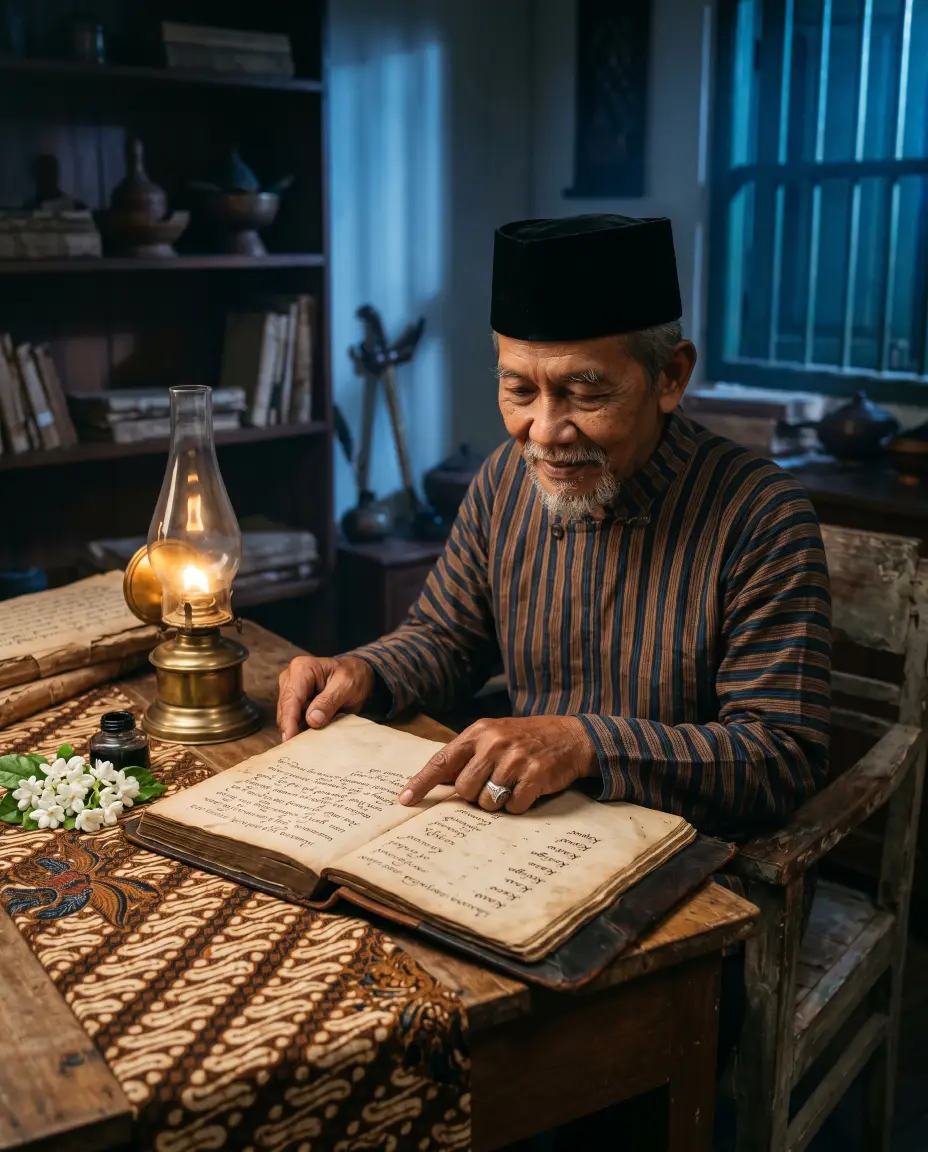
Sasi Jawa becomes clearer when read as the rhythm of time. Each month gives a marker of atmosphere, tradition, and different invitations for conduct. But this rhythm is not absolute law. It is not a prison of destiny. It only helps human beings become more sensitive to when they need to arrange themselves, gather, or guard their steps.
In Javanese culture, time is often understood as something alive. There is a time suitable for stepping aside. There is a time to cleanse relationships. There is a time to strengthen prayer. There is a time to gather and share. There is also a time to plant new intention.
This way of reading is close to agrarian life. Farmers understand that soil, rain, heat, and season cannot be forced. They read signs, then adjust their conduct. So it is with the inner life. Not everything should be forced at the same time. There is a season to plant, a season to care, a season to harvest, and a season to let the self rest.
Sasi Jawa teaches human beings not to live without rhythm. In a fast age, this teaching feels important. Modern people often feel that everything must be finished now, everything must be productive, and everything must succeed quickly. Yet life also needs pauses.
Sura, Sapar, and Mulud: The Beginning of the Cycle
Sura is the first month in the Javanese calendar. Many Javanese people regard Sura as a month that should be lived with more stillness. Some perform tirakat, prayer, cleansing of heirlooms, or restraint from certain festivities. Yet Sura does not need to be read as a frightening month. It is safer to understand it as a month of reflection, intention-setting, and self-restraint.
Sapar is often connected with prayers for safety, including in communities that know the tradition of Rebo Wekasan. In cultural reading, Sapar reminds human beings to stay alert, care for themselves, and strengthen togetherness. This alertness is not blind fear, but an eling attitude so people do not act carelessly.
Mulud is connected with the commemoration of the birth of Prophet Muhammad. In Java, this month is often close to sekaten, religious gatherings, selamatan, and social-religious activities. Its meaning is not only celebration, but also remembering noble conduct, compassion, and kinship.
After Mulud comes Bakda Mulud, which can simply be understood as the month after Mulud. In some communities, it becomes a time to continue the atmosphere of togetherness after celebration. It may not always be ritually crowded, but it remains part of the social rhythm of the Javanese calendar.
Jumadilawal, Jumadilakir, and Rejeb: The Middle Path
Jumadilawal and Jumadilakir can be read as months in the middle of the cycle. In the inner life, the middle often teaches consistency. After the excitement of the beginning has passed, human beings are tested: can they still keep direction?
These two months are not always as popular as Sura, Mulud, Ruwah, Pasa, or Besar. Yet there is a lesson there. Not all time needs to be crowded. Some months teach quiet work, care, and perseverance without applause.
Rejeb is related to Rajab, which in Islamic tradition is often linked with Isra Mi’raj. In Javanese culture, Rejeb can be read as an invitation to reflect on the inner journey, improve the quality of the self, and arrange the relationship between human beings and the Divine.
Still, all of these meanings should not be used to judge people born in certain months. A month is not a final label. It is only symbolic space that helps human beings take a lesson.
Ruwah, Pasa, Sawal, Sela, and Besar: Prayer, Fasting, and Togetherness
Ruwah is often close to nyadran, pilgrimage, cleaning graves, and prayers for ancestors. The word Ruwah is often associated with ancestral spirits. In social conduct, this month becomes a reminder of origin, family, mortality, and the importance of cleansing relationships before entering Pasa.
Pasa is related to the fasting month. It teaches self-restraint, discipline, empathy, and the ability to hold back desire. Pasa is not only about holding hunger, but also training speech, thought, and habit.
Sawal is close to Eid al-Fitr, mutual forgiveness, homecoming, kinship, and renewal of relationships. In cultural rasa, Sawal teaches that after restraint, human beings need to cleanse relationships.
Sela stands between Sawal and Besar. In some traditions, this month is read as quieter. It can become a space of pause before entering the larger month connected with sacrifice and pilgrimage.
Besar is related to Dzulhijjah, Eid al-Adha, sacrifice, pilgrimage, and sharing. In cultural reading, Besar reminds human beings that life is not only about having, but also about releasing, giving, and caring for social compassion.
Sasi Jawa Is Not a Character Prediction
One misunderstanding that needs to be corrected is reading sasi Jawa as an absolute character prediction. For example, someone is born in a certain month and immediately labeled: surely like this, surely like that, fortune must be this way, partnership must be that way. Such a reading is too narrow.
In the JavaSense reading, sasi Jawa is not used to lock human beings. It is not a personality verdict. It does not determine the future. It should not be used to look down on anyone.
A healthier way is to read sasi Jawa as a mirror. If someone is born in a month traditionally close to reflection, they may take guidance about arranging themselves. If someone is born in a month close to togetherness, they may take guidance about kinship. If someone is born in a month close to sacrifice, they may take a lesson about giving and releasing.
A mirror does not force the face to change. It only helps human beings see themselves more clearly. After that, it is still the human being who determines conduct through choice, effort, prayer, and responsibility.
The Relationship Between Sasi Jawa, Weton, and Pawukon
Sasi Jawa is part of the wider ecosystem of the Javanese calendar. It does not stand alone. In Javanese culture, time is also read through the day, pasaran, weton, wuku, and other cycles. Because of this, sasi is only one layer of reading time.
Weton combines the seven-day week and the five-day pasaran cycle. Pawukon reads the cycle of thirty wuku in 210 days. The Javanese calendar helps people see dates, months, pasaran, and other time markers in a wider arrangement.
If you want to read Javanese dates, pasaran, and month names more easily, use the JavaSense Javanese calendar. If you want to know your birth weton, open the weton calculator and read it wisely as cultural reflection.
If your interest also reaches written heritage, you can explore the JavaSense Javanese script tool. In this way, sasi Jawa is not read separately, but as part of a fuller cultural map of time.
Communal Traditions: Nyadran, Sekaten, Selamatan, and Bersih Desa
Sasi Jawa is not only a private matter. It also arranges the social rhythm of community. Many Javanese traditions take place in certain months, not merely because of dates, but because society reads the month as shared space.
Nyadran, for example, is often practiced before Pasa, especially in Ruwah. This tradition is not only about pilgrimage. It also remembers origin, cleans ancestral graves, strengthens family bonds, and renews kinship.
Sekaten is close to Mulud. It becomes a space for celebration, cultural preaching, people’s markets, gamelan, and togetherness. Here, sasi Jawa is not merely a calendar. It becomes a social stage.
Selamatan and bersih desa are also often connected with certain times. These traditions teach that safety is not only a private hope, but also a shared prayer. People gather, pray, share food, and care for guyub.
In this way, sasi Jawa helps society maintain a shared rhythm. There is a time to gather, a time to remember ancestors, a time to share, and a time to cleanse the living space.
Sasi Jawa in Modern Life
Is sasi Jawa still relevant today? Yes, when read clearly. It does not need to be used to frighten people. It does not need to be forced into prophecy. But the value inside it can help modern people become more sensitive to the rhythm of life.
Among notifications, fast work, targets, and social pressure, people often lose their sense of time. Every day feels the same. Every month becomes only a deadline. Yet the inner life needs markers for stopping, reflecting, cleansing, celebrating, and beginning again.
Sasi Jawa can become a reminder. Sura reminds us of the need for stillness. Ruwah reminds us of origin and family. Pasa reminds us of discipline. Sawal reminds us of forgiveness. Besar reminds us of sacrifice and sharing.
This kind of reading does not contradict modern life. It can become a balance. Technology makes human beings move quickly. Culture helps human beings not lose direction.

Practical Ways to Read Sasi Jawa Today
There are several simple practices that can be carried from the reading of sasi Jawa.
First, read the month as a reminder, not as a verdict. If a certain month is close to reflection, use it to arrange intention. If it is close to kinship, use it to repair relationships.
Second, connect time with real action. Do not stop at saying “this month is good” or “this month is heavy.” Ask instead: what should I do more consciously this month?
Third, do not force everything to finish in one season. Life has rhythm. There is a time to plant, a time to care, a time to wait, a time to harvest, and a time to cleanse again.
Fourth, care for relationships with family and the surrounding environment. Many sasi Jawa teachings emphasize togetherness. Do not let tradition become only a story. Bring its value into greeting, apologizing, helping, and sharing.
Fifth, keep common sense. Tradition is a mirror, not a chain. If there are important decisions about health, law, finance, family, or work, still use data, mature consideration, and relevant advice.
This value is close to eling lan waspada. Eling keeps us from forgetting direction. Waspada keeps us from easily believing readings that frighten or trap people.
Sasi Jawa and Javanese Pitutur
Sasi Jawa is close to Javanese pitutur, because both invite human beings to read life more gently. Pitutur does not stop at beautiful words. It needs to descend into conduct.
In Sura, the guidance may be stillness and self-restraint. In Ruwah, it may be remembering origin. In Pasa, it is discipline. In Sawal, it is forgiveness. In Besar, it is releasing and sharing.
If you want to read inner conduct that moves in the same direction, reflect on tirakat as the discipline of rasa. If you want to understand how to keep the inner life from becoming too noisy, reflect on hening as a space for clarity.
In this way, sasi Jawa is not only a list of month names. It becomes a way to ask: what do I need to practice this month? Which relationship needs care? Which intention needs cleansing? Which step should be slowed down or begun?
JavaSense and a Clearer Way to Read the Javanese Calendar
JavaSense reads sasi Jawa as cultural heritage that should be cared for with common sense. It is not a tool for frightening people. It is not a prophecy that locks life. Its most important value is helping human beings recognize time as a space for conduct.
If you want to read Javanese dates and months more easily, open the JavaSense Javanese calendar. If you want to understand its relationship with weton, use the weton calculator wisely. If you want to explore Javanese letters as part of cultural heritage, use the Javanese script tool.
As a broader public cultural reference, readers may also visit the National Library of Indonesia. References like this help cultural reflection stay connected to learning and public knowledge.
The same principle applies throughout JavaSense: culture may become a mirror, but life decisions still need reason, effort, prayer, and responsibility.
Closing Reflection: Bringing Home the Rhythm of Time
In the end, sasi Jawa teaches that life has rhythm. Not all time is the same. Not every step should be forced. There is a month for arranging the self, a month for remembering ancestors, a month for fasting, a month for forgiveness, and a month for sharing.
Angger, my child, do not turn sasi Jawa into a list of fears. Make it a reminder. Do not turn a birth month into a stamp of destiny. Make it a mirror. Do not stop at old names. Bring home the guidance into today’s conduct.
If time is read with eling, human beings are not easily swept away by haste. If tradition is read clearly, culture does not become a burden, but a source of wisdom. That is where sasi Jawa finds its breath again: not only as a calendar, but as a way for human beings to guard rasa in the journey of life.
To learn Javanese culture in a lighter and more modern way, you can download JavaSense on Google Play.
FAQ About Sasi Jawa
What is sasi Jawa?
Sasi Jawa means the month names in the Javanese calendar. It is not only a time marker, but also carries cultural meaning, tradition, and guidance for conduct.
What are the names of the months in the Javanese calendar?
The names of the months in the Javanese calendar are Sura, Sapar, Mulud, Bakda Mulud, Jumadilawal, Jumadilakir, Rejeb, Ruwah, Pasa, Sawal, Sela, and Besar.
What is the difference between sasi Jawa and Gregorian months?
Gregorian months belong to the common solar calendar, while sasi Jawa belongs to the Javanese calendar system connected with tradition, Hijri month names, pasaran, and Javanese cultural timekeeping.
Does sasi Jawa determine someone’s character?
No. Sasi Jawa should not be read as a fixed character prediction. It is better understood as a cultural mirror and material for reflecting on conduct.
How is sasi Jawa connected with the Javanese calendar?
Sasi Jawa is part of the Javanese calendar. It marks the month, while the Javanese calendar also includes dates, days, pasaran, weton, and other calendrical elements.
How is sasi Jawa connected with weton?
Sasi Jawa and weton are both part of how Javanese culture reads time. Both should be used as cultural reflection, not as a fixed prophecy of fate.
What traditions are related to sasi Jawa?
Traditions related to sasi Jawa include malam Sura, nyadran in Ruwah, sekaten in Mulud, fasting in Pasa, kinship and forgiveness in Sawal, and sacrifice-related traditions in Besar.
How should sasi Jawa be read safely today?
Read sasi Jawa as cultural heritage and guidance for conduct. Use it to arrange rasa, understand tradition, and read the rhythm of life, not to frighten people or lock destiny.
Learn Sasi Jawa with Clearer Awareness
Sasi Jawa is not a fate prediction. It is a Javanese way of reading months, tradition, rhythm of time, and guidance for conduct. To explore the Javanese calendar, weton, script, and daily heritage in a simpler way, open JavaSense on Google Play.