
Angger, my child…
Before the heroes speak, before the gamelan opens the air, before the dalang carries the story across the kelir, there is one form that stands quietly in the middle of the stage. It is not a knight. It is not a giant. It does not speak many words. Yet its presence tells us when a lakon begins, when a scene shifts, and when the story must return home. That form is called gunungan, or in many traditions, kayon.
Ky Tutur Summary
- Gunungan wayang meaning is not only about decoration, but also about stage function, Javanese symbolism, and life reflection.
- In wayang kulit, gunungan is used to open, close, and mark transitions between scenes, moods, or spaces within a lakon.
- Symbolically, gunungan is often read as a compact world: peak, middle, root, tree, forest, living beings, gate, and order.
- Gunungan should be read as cultural symbol literacy, not as fixed prophecy, fear, or an absolute verdict about life.
Ky Tutur Note: This article discusses gunungan wayang as cultural symbol, stage language, and reflective guidance. Interpretations may differ across regions, wayang styles, dalang lineages, workshops, and local traditions. Read it as cultural literacy and a mirror of conduct, not as one fixed mystical claim or absolute doctrine.
Gunungan wayang meaning can be read through two clear lenses: stage function and inner symbolism. On the wayang stage, gunungan works as a marker. It appears when a lakon opens, when a scene changes, when the atmosphere shifts, and when the story closes. In symbolic reflection, its tall form is often read as a map of life: upper world, middle world, lower world; root, trunk, peak; forest, creatures, human life, and order.
Because of that, gunungan is not merely an ornament. It is a gate. Like the entrance of a house, it does not need to speak loudly, but it helps organize what enters and what leaves. It marks that one condition has ended and another will begin.
In daily life, this message is simple but deep: human beings also need to know when to open a chapter, when to close a chapter, and when to pause before taking the next step.
Wayang itself has been recognized as an important cultural heritage. UNESCO describes Wayang Puppet Theatre as a rich form of storytelling, music, performance, and puppet artistry. Readers may explore UNESCO on Wayang Puppet Theatre. Within that wider cultural ecosystem, gunungan becomes part of stage language, symbolic language, and rasa.
What Is Gunungan Wayang?
Gunungan is an important symbolic object in wayang kulit. Its form resembles a mountain or a large tree filled with detailed carving and visual motifs. Inside it, one may find nature, animals, fire, water, leaves, a gate, guardian figures, and layered ornamental patterns.
The details can differ according to regional style, workshop tradition, and performance lineage. Still, in many readings, gunungan gives the impression of a small world condensed into one visual form.
The name kayon is often associated with tree or life. In symbolic reading, a tree is not merely a plant. It becomes a sign of life: roots that hold, trunk that stands, branches that expand, leaves that receive light, and fruit that gives benefit.
Human life also resembles this. If the roots are weak, the peak easily shakes. If values are unclear, actions become scattered. If daily habits are not cared for, noble ideals become difficult to live.
In the hands of the dalang, gunungan is not passive. It can stand in the middle of the kelir. It can be moved to represent forest, fire, wind, sea, danger, transition, or symbolic space. It can mark that the story has not yet begun, is shifting, or has come to a close.
The Function of Gunungan on the Wayang Stage
The first function of gunungan is to open a lakon. When gunungan appears at the beginning of a performance, the audience is invited to enter the story world. Ordinary space is left for a while. The kelir becomes a small universe. The gamelan, the voice of the dalang, and the shadows begin to arrange the journey.
The second function is to close a lakon. After the figures walk, conflicts rise, and values are tested, gunungan returns as a sign of completion. It is like a door being closed with order. A story does not only need a beginning. It also needs a proper ending.
The third function is to mark transitions. In performance, gunungan helps the audience feel that the situation is changing: from palace to forest, from calm to danger, from light to uncertainty, from conflict to pause. A good transition often needs a marker. Without a marker, change can feel like chaos.
This is one of the quiet lessons of gunungan. Life also becomes clearer when we learn to mark transition: before starting, before shifting, before ending, and before beginning again.
Gunungan as the Gate of a Lakon
A lakon is not only a sequence of events. It is a journey of rasa. There are openings, conflicts, turning points, pauses, and endings. Gunungan helps shape that rhythm.
At the beginning, gunungan gathers attention. It says: a world is about to open. During transition, it says: the mood is changing. At the end, it says: return, settle, close.
This gate function is important because human beings need rhythm. A story without rhythm becomes tiring. A life without rhythm becomes scattered.
Many people today know how to start, but do not know how to close. Messages are left hanging. Work is left without summary. Wounds are left unnamed. The mind keeps many open tabs, and the heart becomes tired from carrying too many unfinished things.
Gunungan reminds us that closing is not failure. Sometimes closing with awareness is the first step toward a clearer beginning.
The Structure of Gunungan Wayang
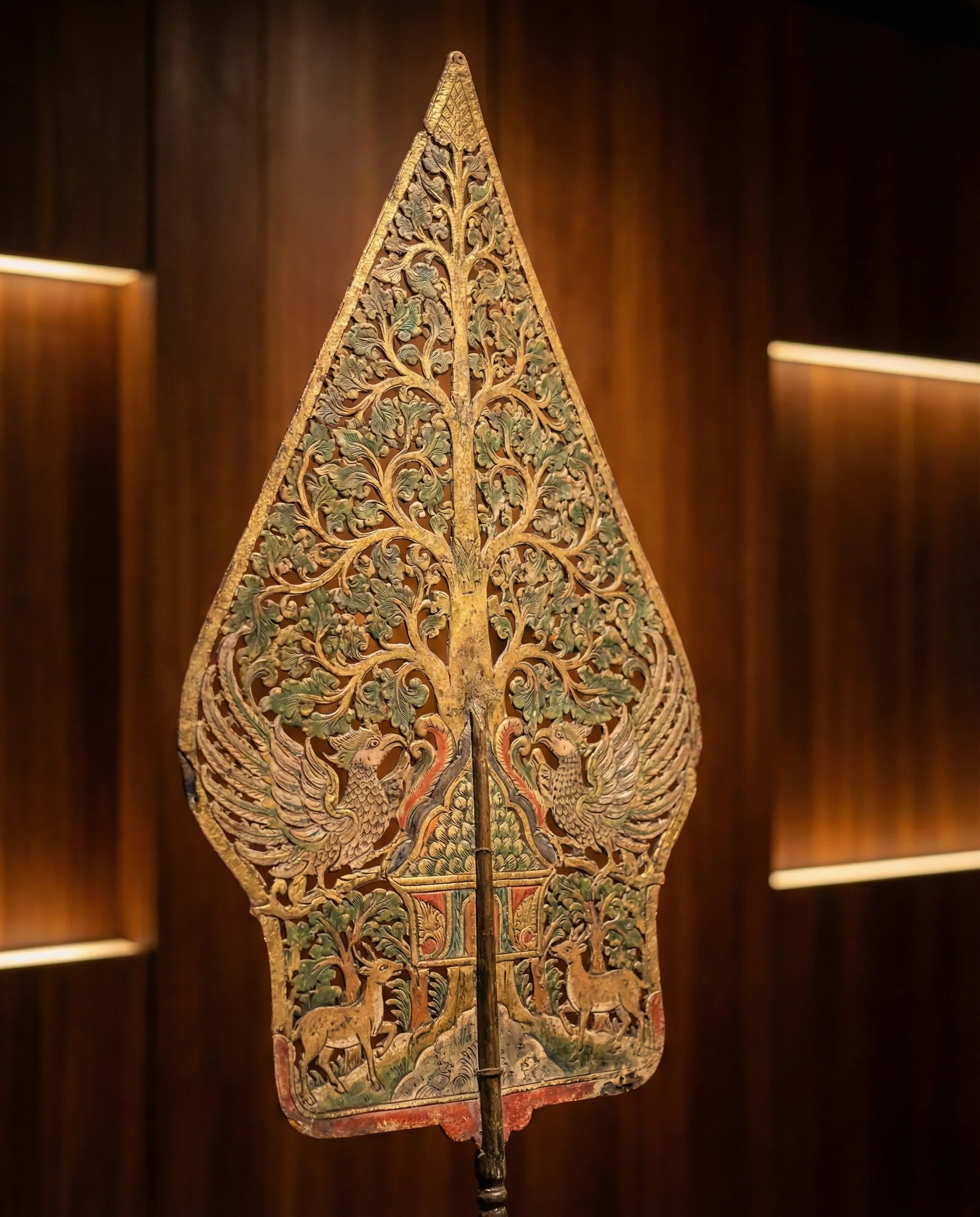
The structure of gunungan is often read in three broad parts: peak, body, and base. The peak points upward. It is often understood as values, ideals, awareness, stillness, or higher order. The body holds the moving territory of life: tree, forest, creatures, leaves, and the living world. The base becomes foundation: roots, earth, gate, or guardian figures.
But, my child, this reading should not be forced as if every gunungan must carry one identical meaning. Wayang lives in many styles: Surakarta, Yogyakarta, Banyumasan, coastal traditions, Balinese forms, Lombok traditions, and many local visual languages.
So the safer language is this: gunungan is often read in this way, not always and not universally. Respecting a symbol does not mean locking all meaning into one final explanation.
Precisely because gunungan lives in a long tradition, it gives room for many readings. It may be viewed as stage equipment, visual art, cosmic symbol, tree of life, transition marker, or a mirror for human conduct.
Gunungan, Kayon, and the Tree of Life
One important motif in many readings of gunungan is the tree of life. A tree teaches the relationship between root and peak. Roots work quietly. The trunk holds the path upward. Branches spread. Leaves receive light. Fruit gives benefit. Every part supports another.
In human life, roots can be read as daily habits. The trunk is the path we walk. Branches are choices. The peak is the value we aim toward. If the peak says honesty but the roots are full of excuses, life becomes unstable. If the peak says peace but daily speech is full of anger, the inner life remains divided.
This is why gunungan wayang meaning is not only something to see. It is something to reflect on. It asks human beings to align value, action, and habit.
That alignment does not happen once and finish. It grows through small repeated conduct. A good life is not only built by large declarations. It is shaped by small roots that are cared for every day.
Gunungan as a Symbol of Cosmos
In many Javanese readings, life is not seen as scattered pieces. Human beings, nature, time, living creatures, ancestors, and the sacred are understood through relationship. Gunungan gathers that sense of connection into one form.
Its upward shape invites the eye to move from base to peak. From forest to order. From movement to stillness. From root to direction. In inner reflection, this can be read as the human journey: from raw impulse toward awareness, from confusion toward order, from scattered living toward a more integrated life.
But this must be stated clearly: this is symbolic language, not a scientific claim about the physical universe. Gunungan does not need to explain cosmology in the scientific sense. It is better understood as a cultural way of arranging experience: human beings need roots, direction, balance, and order.
This is how Javanese symbols should be read with care. They can be deep without becoming absolute. They can be sacred for some people without being used to frighten others. They can guide reflection without replacing reason.
Gunungan, Blencong, and the Light of Awareness
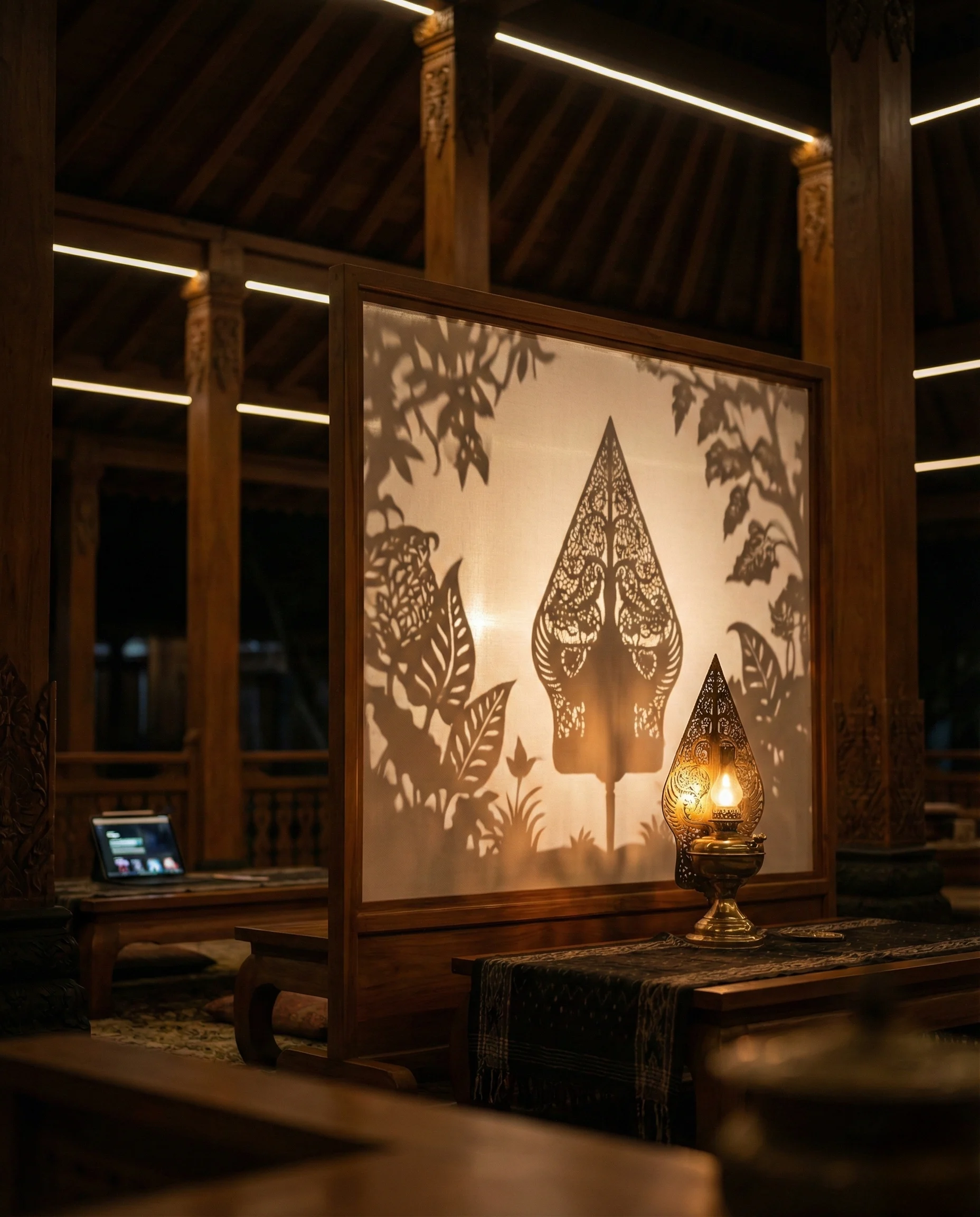
Wayang kulit lives through light. In older traditions, blencong, the lamp, becomes the source of light that allows shadows to appear on the kelir. Without light, the puppets cannot be seen. Without the screen, the shadow cannot be read. Without the dalang, the movement loses direction.
Here, gunungan gives a subtle lesson. Meaning does not arise from an object alone. Meaning appears from how we shine light upon experience.
Meaning is not born only from form, but also from the inner light used to read it.
One person may look at gunungan and feel fear if it is framed as dark certainty. Another may look at the same symbol and feel calm if it is read as reflective guidance. The difference is not only the object. The difference is the light: mindset, framing, intention, and purpose.
That is why reading gunungan needs two eyes: the eye of rasa and the eye of reason. Rasa helps us honor cultural depth. Reason protects symbols from being used to frighten or trap human life.
Not Klenik, but Symbol Literacy
In modern times, Javanese symbols are sometimes quickly labeled klenik or superstition. On the other side, some people treat every symbol as automatically magical and beyond question. Both attitudes are incomplete.
The first attitude dismisses too quickly. The second attitude absolutizes too easily.
Gunungan is healthier when read as symbol literacy. Like novels, theatre, poetry, or film, wayang carries language about human life: ambition, loyalty, anger, love, mistake, conduct, and consequence. A symbol is not meant to replace reason. It helps human beings reflect on things that are not always easy to explain with plain instruction.
In the JavaSense direction, cultural symbols are read with respect and clarity. Respect keeps us from cutting the roots. Clarity keeps the roots from becoming chains. A living culture should strengthen human beings, not shrink them through fear.
Gunungan as a Modern Transition Marker
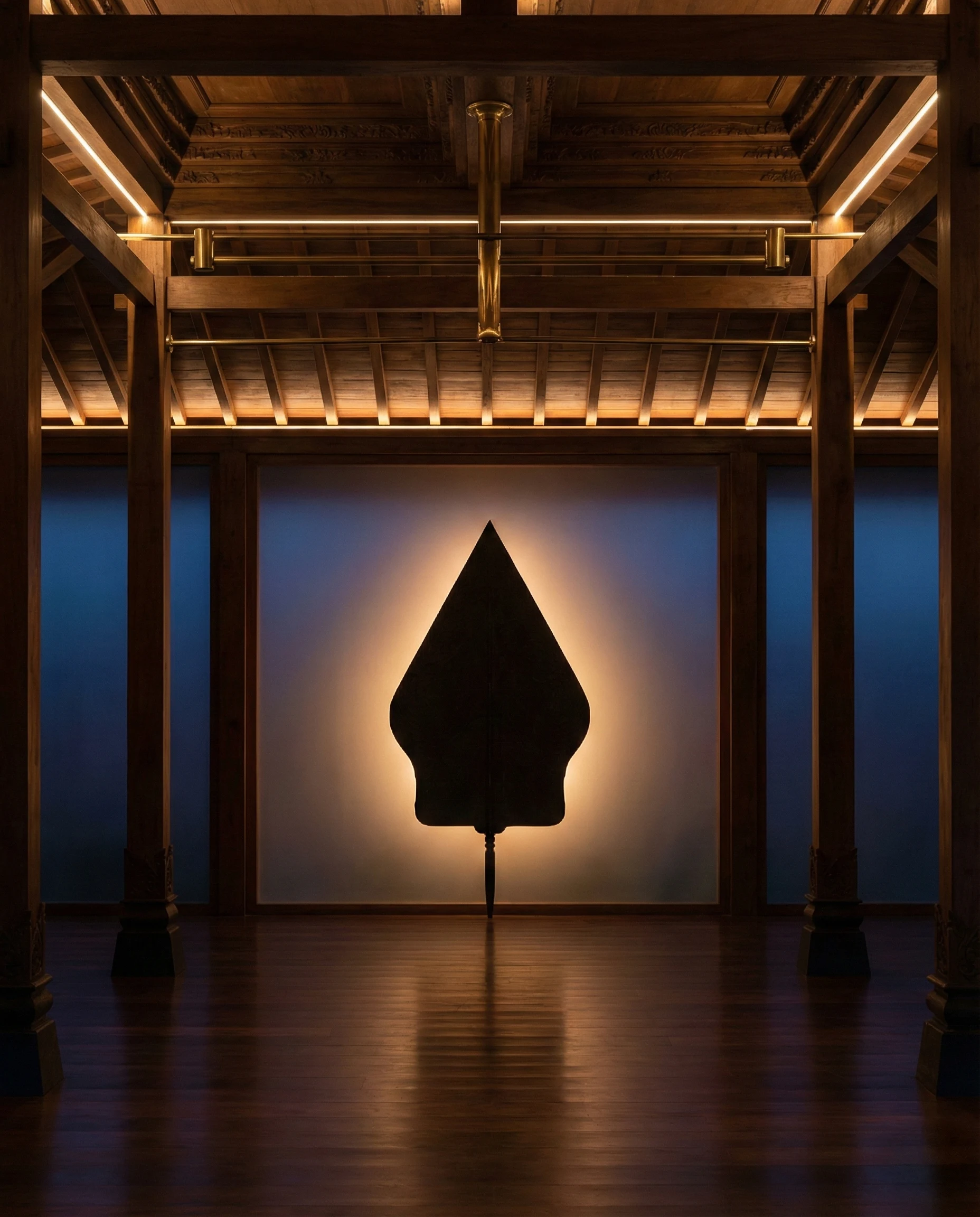
In modern language, gunungan can be understood as a transition marker. In a system, there are different states: opening, active process, transition, pause, and closure. When the state changes, the flow changes too.
Human life also has states. There is the state of beginning. The state of working. The state of conflict. The state of healing. The state of ending. The state of beginning again.
The problem is that many people move from one state to another without awareness. Already tired, yet still forcing. Already finished, yet not closing. Already needing change, yet still delaying. Already needing apology, yet choosing silence. Life becomes like a lakon without pause.
Gunungan teaches the importance of marking phases. Before a major decision, pause. Before closing the day, see what is complete and what remains open. Before beginning a new chapter, make sure the previous chapter is not still dragging the step.
How to Use Gunungan Meaning in Daily Life
First, use gunungan as a practice of opening with intention. Every morning, ask yourself: what value do I want to guard today? Keep the answer simple. Honesty. Patience. Order. Compassion. Focus. A small clear intention is often stronger than a large vague plan.
Second, use gunungan as a practice of closing. Before sleeping, write two lines: what did I finish today, and what should continue tomorrow? This is not to judge yourself. It is to give a proper closing to the day you have lived.
Third, use gunungan as a practice of recognizing transition. When moving from work to home, pause. After a meeting ends, breathe before entering another task. After conflict, do not pretend everything is fine too quickly. Give space to close the wound with more awareness.
Fourth, use gunungan as a reminder of integrity. Align peak, middle, and base: value, action, and habit. If you want to live honestly, keep small habits from becoming full of excuses. If you want to live peacefully, guard your words so they do not easily wound.
Gunungan, Wayang, and Javanese Pitutur
Gunungan sits close to many values in Javanese pitutur. It teaches pause, order, and awareness of phase. When human beings can pause, they become more capable of eling lan waspada. When they can close a chapter properly, they become more capable of living calmly. When they can see the relation between parts, they become more capable of keeping harmony.
In the world of wayang, gunungan also stands among figures that carry life lessons. To read the wisdom of ordinary people in wayang, you may continue with Semar as Javanese wisdom and firm compassion. To read cultural memory and storytelling, see Babad Jawa as Javanese chronicles and cultural memory. To understand historical legacy and symbolism, explore Majapahit history, legacy, and living lessons.
If your interest is inner pause, the article on Hening as Javanese inner quiet and clarity can become a natural companion to this reading.
JavaSense and a Clearer Way to Read Javanese Symbols
JavaSense reads Javanese culture as a mirror, not a verdict. Weton, the Javanese calendar, script, primbon, wayang, babad, and symbols like gunungan should not make people afraid or locked into rigid claims. They are better used as doors of learning.
If you want to read the rhythm of days in Javanese tradition, open the JavaSense Javanese calendar. If you want to understand weton as cultural reflection, use the JavaSense weton calculator wisely. If you want to explore written heritage, try the JavaSense Javanese script tool.
As a broader public cultural reference, readers may also visit the National Library of Indonesia. References like this help cultural reading stay connected with learning and public knowledge.
The JavaSense path is simple: honor heritage, but keep clear reason. Read symbols, but do not turn them into fear. Carry pitutur into conduct, so culture becomes useful.
Closing Reflection: Gunungan as a Saving Pause
In the end, gunungan wayang meaning is not only about a beautiful form standing on the kelir. It is a reminder that life needs gates. There is a time to open. There is a time to walk. There is a time to shift. There is a time to close.
Without that awareness, human beings are easily dragged from one matter to another without ever being truly present.
Angger, my child, gunungan stands silently, yet from its silence we learn. Not everything important needs to speak loudly. Not every change needs to be noisy. Not every closing is a loss. Sometimes a proper closing becomes the path toward a clearer beginning.
If life feels noisy today, imagine a small gunungan in your inner world. Place it there for a moment. Stop. Look at your current phase. What needs to be opened? What needs to be closed? What needs to be aligned again between value, action, and habit?
To learn Javanese culture in a lighter and more modern way, you can download JavaSense on Google Play.
FAQ About Gunungan Wayang Meaning
What is gunungan in wayang kulit?
Gunungan is a symbolic wayang object often used to open, close, and mark transitions between scenes, moods, or spaces in a lakon.
What does gunungan wayang mean?
Gunungan wayang can be read as a symbol of cosmos, the gate of a lakon, and a mirror of life. It gathers ideas of peak, root, tree, nature, living beings, and order.
Why is gunungan also called kayon?
Gunungan is often called kayon because it is associated with tree or life symbolism. In many readings, the tree represents roots, trunk, branches, growth, and direction.
What is the function of gunungan on the wayang stage?
Its function is to mark the beginning of a lakon, the end of a lakon, scene transitions, mood changes, and sometimes symbolic spaces such as forest, fire, wind, or other conditions.
Is gunungan meaning the same in every tradition?
No. Motifs and interpretations may vary across regions, dalang lineages, workshop styles, and wayang traditions. It is safer to read the meaning as layered and contextual.
Is gunungan a mystical symbol?
Some people may experience it as sacred, but sacred does not always mean mystical. Gunungan can also be understood as a cultural symbol for rhythm, transition, order, and awareness.
How can gunungan meaning be used for daily reflection?
It can be used as a mirror for pausing, opening the day with intention, closing work properly, recognizing life phases, and aligning values, actions, and habits.
Does this article replace professional advice?
No. This article is cultural literacy and reflection. For medical, legal, financial, or professional matters, consult qualified professionals or relevant authorities.
Learn Javanese Symbols with Clearer Awareness
Gunungan is not merely a wayang ornament. It is a mirror of pause, gate, order, and the courage to close an old chapter. To explore weton, the Javanese calendar, script, and cultural heritage more easily, open JavaSense on Google Play.