
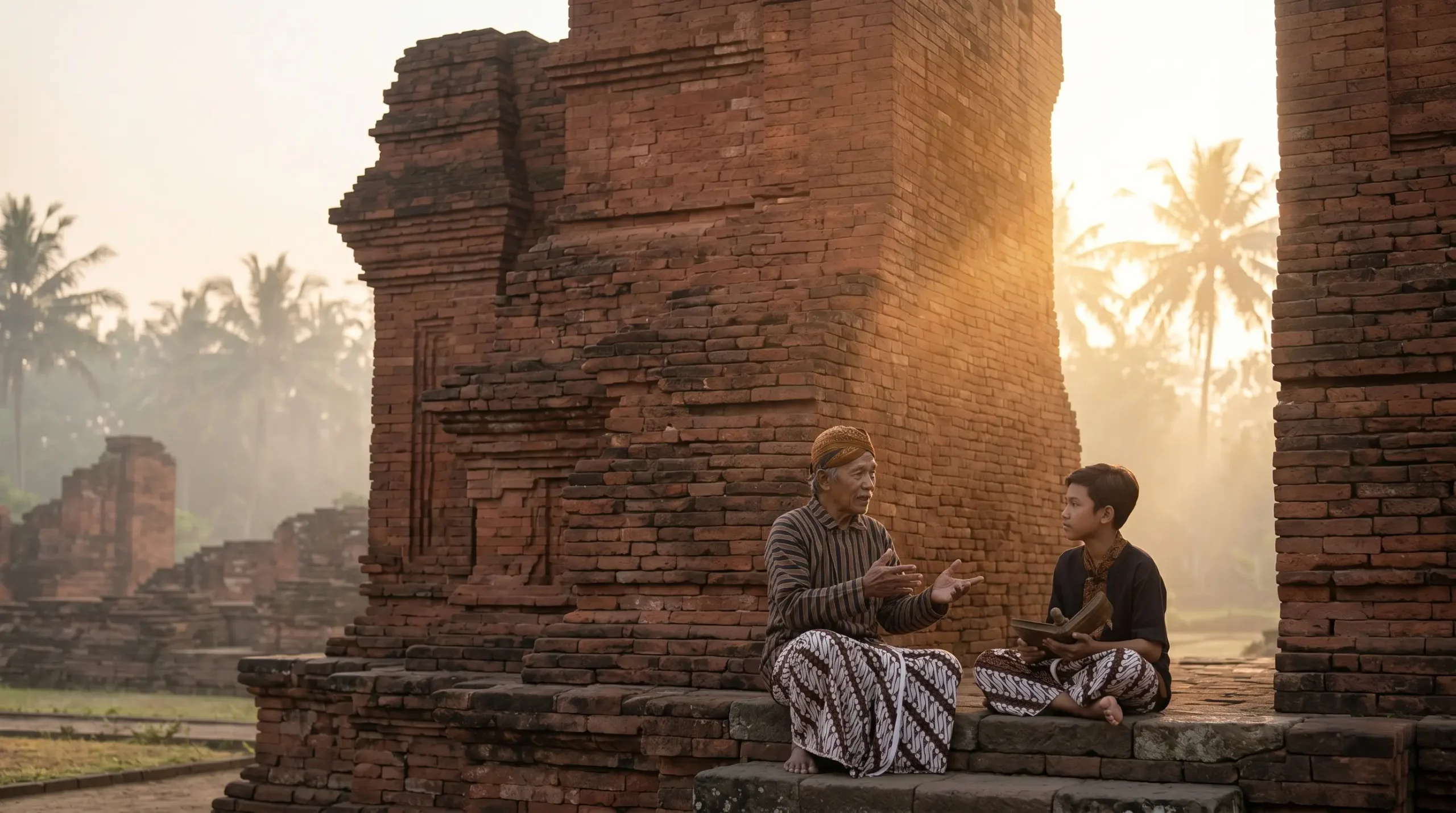
Angger, my child…
There are names that immediately carry the mind toward red-brick gates, kings, vows, old roads, and the shadow of a great civilization. One of those names is Majapahit. But do not read it too quickly only as past glory. The deeper question is this: what lesson can still be carried into life today?
Ky Tutur Summary
- Majapahit can be read as a kingdom, a cultural memory, a symbol of diversity, and a mirror for modern life.
- Majapahit matters not only because of its remembered influence, but also because of its legacy in literature, politics, architecture, trade, and ideas of living together.
- Bhinneka Tunggal Ika from Kakawin Sutasoma is one of the important values connected with the Majapahit cultural world and still lives in modern Indonesia.
- Majapahit should be read clearly: with respect for heritage, but without excessive romanticism or turning the past into an empty myth.
Ky Tutur Note: This article discusses Majapahit as cultural literacy, popular historical reflection, and life guidance. It is not a complete academic history, not a single final historical claim, and not an invitation to romanticize the past. For deeper study, readers should still consult historical, archaeological, philological, and academic sources.
Majapahit is often remembered as one of the great kingdoms of Java and Nusantara. Its name appears in history books, oral stories, old manuscripts, archaeological discussions, and cultural symbols today. Yet when Majapahit is read only as a symbol of past greatness, it can become an empty slogan.
In the JavaSense reading, Majapahit is better approached through three layers: history, symbol, and life lesson. As history, it needs sources and caution. As symbol, it carries memory about diversity, power, order, and civilization. As life lesson, it invites human beings to ask: how do we build something meaningful without losing roots, ethics, and responsibility?
Britannica describes Majapahit as a kingdom based in eastern Java that existed from the late 13th to the early 16th century. Trowulan is also listed by UNESCO as the former capital city of the Majapahit Kingdom. These references help readers approach Majapahit not only as legend, but as part of historical and cultural heritage. Readers may explore Britannica on the Majapahit Empire and UNESCO on Trowulan.
What Was Majapahit?
In simple terms, Majapahit was a major kingdom that once stood in eastern Java. In popular memory, Majapahit is often connected with Raden Wijaya, Gajah Mada, Hayam Wuruk, Trowulan, the Palapa oath, and the idea of Nusantara.
But Majapahit is not only the name of a kingdom. It is also a space of memory. Inside it are stories of foundation, political struggle, trade, literature, law, art, religion, diplomacy, and relationships between regions. Because of this, Majapahit cannot be understood only through one phrase: “a great empire.” It is a layered civilizational knot.
At the same time, my child, we need caution. Majapahit is often used as a symbol of glory that is enlarged without enough context. Yet every civilization contains more than light. There are achievements, conflicts, ambition, diplomacy, wounds, and lessons. To read Majapahit clearly is to honor its greatness without closing the eyes to its complexity.
The Name Majapahit and the Meaning of Bitterness
In popular stories, the name Majapahit is often connected with the bitter taste of the maja fruit. This story lives strongly in cultural imagination. It gives a powerful symbol: from bitterness, a great beginning may be born.
Should every detail of this naming story be treated as literal historical certainty? Not necessarily. But as a symbol, it remains meaningful. Bitterness becomes a reminder that difficult beginnings do not always end badly. Sometimes something large is born from pressure, loss, exile, or a condition that forces human beings to rise.
The life lesson is simple: do not hate every bitter phase too quickly. Bitterness can become a teacher. In modern life, many people want quick results without the burden of process. Majapahit, as a symbol, reminds us that greatness does not come only from comfort. It is shaped by difficulty, strategy, patience, and the courage to reorder a broken condition.
Trowulan and the Memory of Red Brick
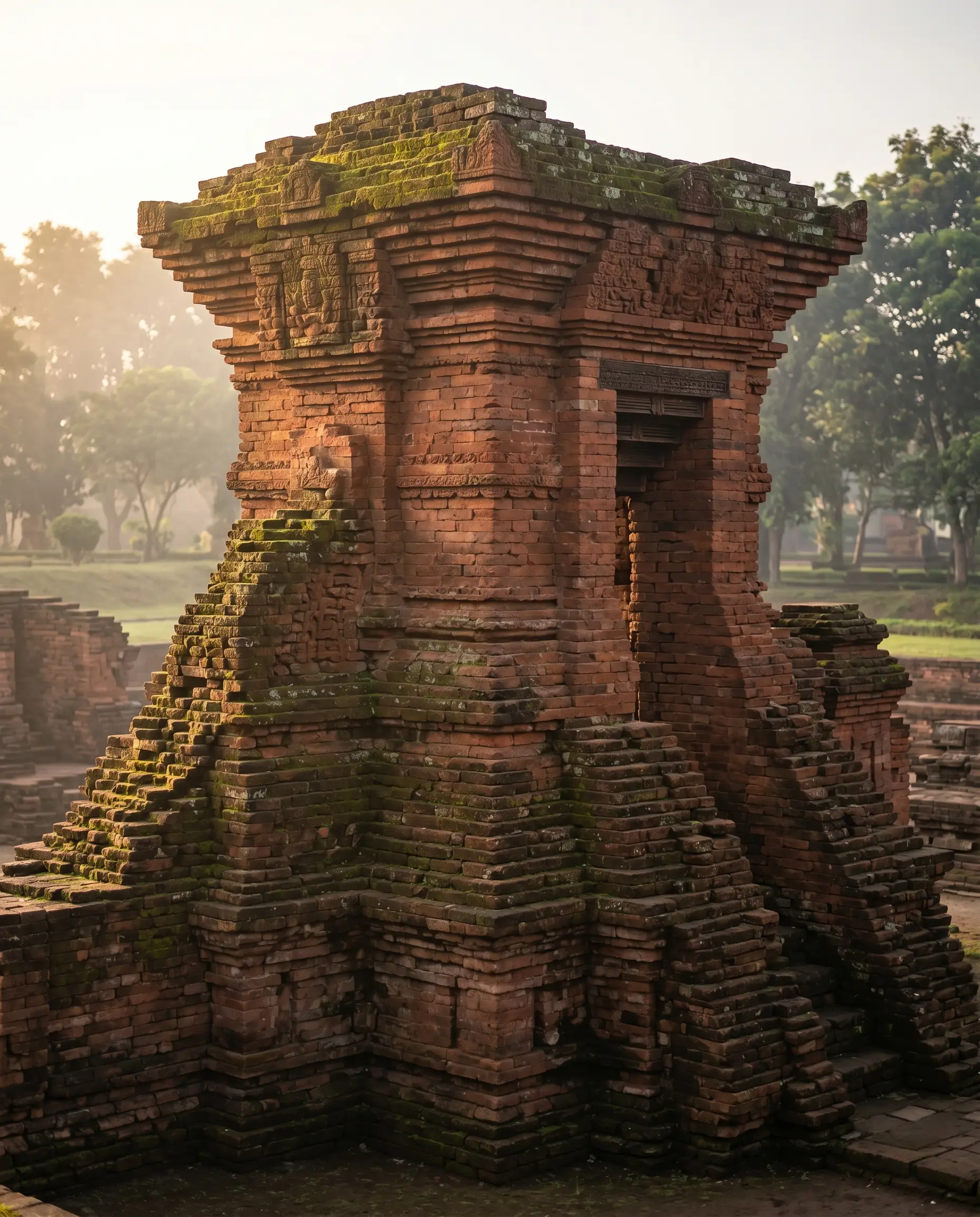
When people imagine Majapahit, many remember red-brick architecture. Gates, pools, structural remains, and the landscape of Trowulan become visual doors into that old civilization. But a heritage site is not only a place for photographs. It is a place for learning.
Trowulan teaches that every civilization leaves traces. Some traces appear as buildings. Others live as language, stories, ceremonies, spatial memory, and the way a society remembers itself. Every remaining brick seems to whisper: whatever human beings build will one day be tested by time.
Because of that, reading Trowulan should not stop at admiration. It also requires responsibility. Cultural heritage should be cared for, not only used as a romantic background. It needs to be protected, studied, and narrated in a way that does not blur reality.
Bhinneka Tunggal Ika and Kakawin Sutasoma
One of the most famous legacies connected with the Majapahit cultural world is Bhinneka Tunggal Ika. This phrase comes from Kakawin Sutasoma by Mpu Tantular. Today, it lives as the national motto of Indonesia.
In simple translation, Bhinneka Tunggal Ika means different, yet one. But its depth does not stop as a slogan of unity. It invites human beings to see that difference does not always need to become a threat. Difference can become a space for mutual recognition, as long as there are values that hold people together.
Museum Nasional explains that the phrase Bhinneka Tunggal Ika appears in pupuh 139 stanza 5 of Kakawin Sutasoma. This matters for modern readers because we do not only inherit the motto. We also need to understand its literary root. Readers can explore Museum Nasional on Kakawin Sutasoma.
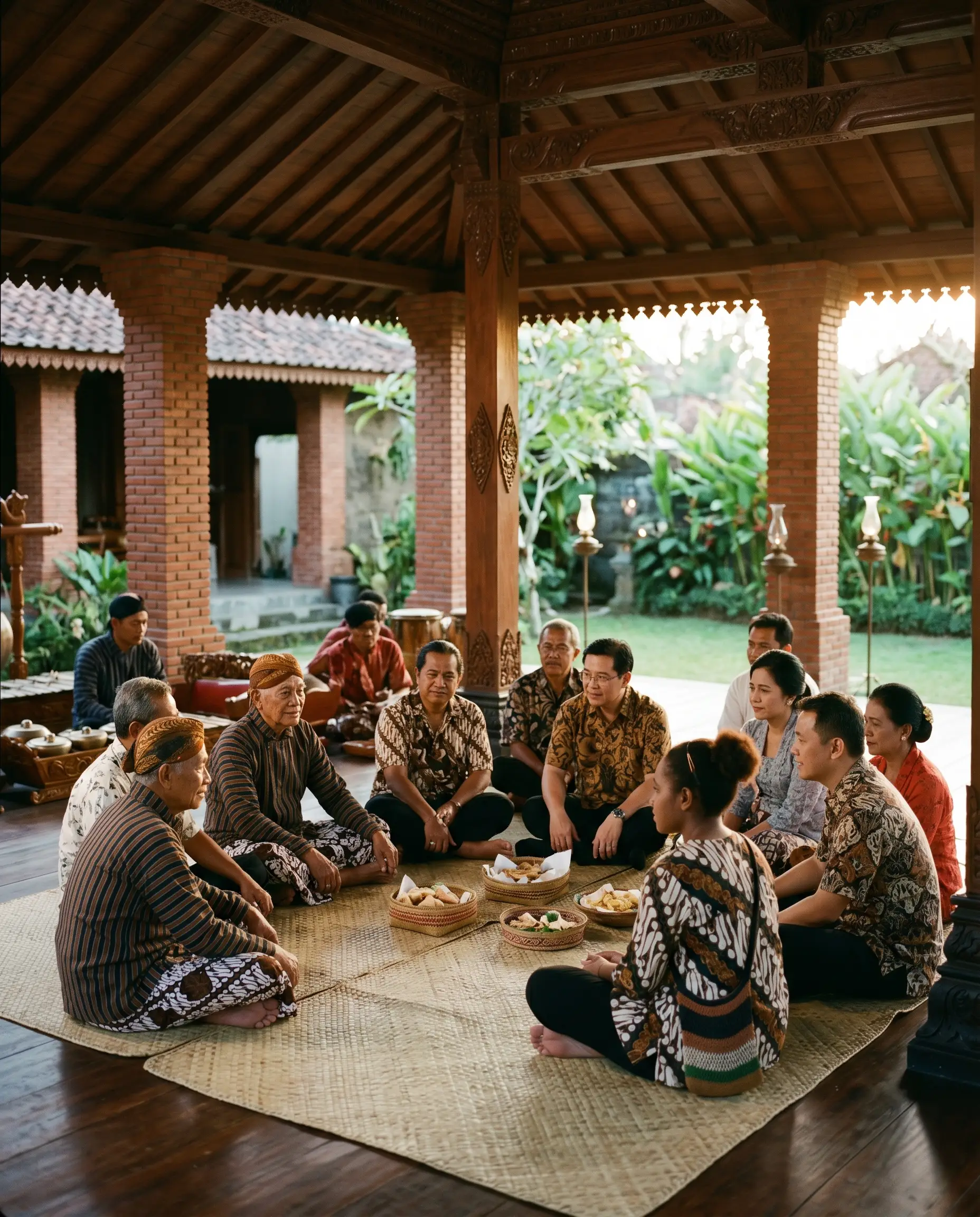
Majapahit as a Symbol of Diversity
Majapahit is often imagined as a wide center of power. Yet the remembered range of Majapahit’s influence should be read carefully. Some claims of territory and influence in old sources may refer to political networks, trade, tribute, geographic knowledge, or symbolic authority, not always direct rule in the sense of a modern state.
Here lies an important lesson. Managing regions, relationships, and diversity cannot rely only on force. It needs diplomacy, trade networks, legal order, cultural exchange, and the ability to maintain balance. A large civilization does not only occupy space. It manages relationships.
For life today, this remains relevant. Families, communities, businesses, and countries cannot survive only through one side’s ego. They need the ability to embrace, listen, arrange interests, and protect shared values.
Gajah Mada and the Danger of Reading Ambition Too Narrowly
The name Gajah Mada almost always appears when Majapahit is discussed. He is often connected with the Palapa oath and the idea of uniting Nusantara. Yet, my child, a major figure should not be read too simply. Ambition can become a force for building, but it can also become fire that must be guided.
If Gajah Mada is read only as a symbol of conquest, the moral lesson becomes narrow. It is clearer to read him as a doorway into discipline, vision, strategy, and also the risks of power. Every large ambition needs wisdom as its companion, because ambition without rasa can harden.
The lesson for modern life is this: having a large goal is not wrong. Building an app, a business, a work, or a movement also requires great energy. But the larger the goal, the more carefully the intention must be guarded. Do not let vision become arrogance. Do not let success make human beings forget how to listen.
Majapahit, Trade, and Maritime Networks
Majapahit can also be read through economy and trade networks. A major kingdom does not stand only on heroic stories. It needs food systems, ports, trade routes, labor, governance, and relationships with other regions.
Trade networks made Majapahit part of a wider world. Goods, people, ideas, technology, and culture moved through these connections. From this, we learn that a living civilization is always connected. It does not fear meeting the outside world, but it also does not lose its roots when receiving new influence.
For modern life, the lesson is clear: openness matters, but roots still need care. Learning from outside is allowed. Using modern technology is allowed. Building global networks is allowed. But all of that should not make people lose the language, rasa, and values that shape the self.
Majapahit in Babad and Cultural Memory
The memory of Majapahit does not appear only in sites and historical studies. It also lives in babad, oral stories, literature, and cultural symbols. In this layer, Majapahit often moves from fact into memory, from event into meaning.
Babad should not always be treated the same as modern history. It may combine events, symbols, genealogy, moral values, and a society’s way of understanding its origin. Because of that, Majapahit in babad needs two attitudes: respect and criticism.
Respect keeps us from cutting the root. Criticism keeps us from swallowing every story as one fixed certainty. With both attitudes, cultural memory can remain alive without turning into blind romanticism.
Majapahit, Keraton, and Symbols of Power
Majapahit also becomes one source of imagination about Javanese power and order. Through it, readers may trace how space, ceremony, symbols, and legitimacy shape the way people understand leadership and centers of authority.
A palace, or keraton, is not only a building. It can become a symbolic space where order, power, art, and tradition meet. But symbols of power must always be read carefully. Not everything grand is automatically just. Not everything sacred should be free from reflection.
A healthy culture allows people to honor heritage while still weighing it with clear reason. This is important because memory of power can either guide responsibility or feed pride. Majapahit should be used for the first, not the second.
Majapahit, Wayang, and Javanese Pitutur
Majapahit cannot be separated from the wider symbolic ecosystem of Javanese culture. Wayang, gunungan, Semar, Punakawan, and Javanese pitutur often become spaces where moral values are stored in subtle forms.
This teaches us that Javanese culture often places values inside stories, not only inside theories. A value does not always arrive as a direct command. Sometimes it arrives as a figure, a symbol, a scene, a joke, a silence, or a feeling.
Through this lens, Majapahit becomes more than a historical subject. It becomes part of a larger cultural way of teaching: showing human beings how power rises, how ambition needs restraint, how diversity needs care, and how memory should become guidance rather than pride alone.
Life Lessons from Majapahit
Majapahit gives many life lessons when read with a clear heart. First, a difficult beginning does not always block a great birth. The name associated with bitterness can remind us that life often begins from uncomfortable conditions.
Second, diversity needs a binding value. Bhinneka Tunggal Ika is not merely a beautiful phrase. It demands conduct: willingness to listen, to restrain ego, and to see other human beings as part of shared life.
Third, power needs ethics. In a kingdom, family, workplace, or community, leadership without ethics easily becomes pressure. A leader should give shade and direction, not merely command.
Fourth, the past should be read as a mirror. Do not turn it into a chain. Do not throw it away as useless either. Take its fire: persistence, courage, order, and the spirit of caring for shared life.
Majapahit in the Modern Age
In the digital age, Majapahit can become a reminder of identity. Information moves quickly. Trends change quickly. Many people feel they must become like others to be considered advanced. Yet progress without roots can make human beings lose direction.
Reading Majapahit does not mean wanting to return to a kingdom age. That would be mistaken. What should be carried is not the old political form, but its inner lessons: building from bitterness, caring for diversity, maintaining networks, arranging power, and not forgetting cultural roots.
In the JavaSense language, Majapahit becomes a mirror. It invites people to ask: what am I building? Is this work only chasing a name, or does it bring benefit? Am I expanding influence, or truly deepening wisdom?
JavaSense and a Clearer Way to Read Cultural Heritage
JavaSense reads Javanese culture as a mirror, not a verdict. Weton, the Javanese calendar, script, primbon, babad, wayang, and kingdom stories should not make human beings afraid or trapped in empty romanticism. They are better used as doors of learning.
If you want to read the rhythm of days in Javanese tradition, open the JavaSense Javanese calendar. If you want to understand weton as cultural reflection, use the JavaSense weton calculator wisely. If you want to train attention through letters, try the JavaSense Javanese script tool.
As a broader public cultural reference, readers may also visit the National Library of Indonesia. References like this help cultural reading stay connected to learning and public knowledge.
The JavaSense path is simple: honor heritage, but keep clear reason. Study symbols, but do not turn them into fear. Remember the past, but do not stop walking in the present.
Closing Reflection: Remembering Majapahit Without Being Trapped by the Past
In the end, Majapahit is not only about a kingdom that was once great. It is a memory that asks to be read maturely. There is history to study. There are symbols to interpret. There are life lessons that can still be carried into the present.
Angger, my child, do not read Majapahit only to boast about the past. Pride without conduct easily becomes empty. Read it to arrange today: how to build something from a bitter process, how to care for diversity, how to use power with ethics, and how to stay rooted when the world changes quickly.
If the past is a lantern, our task is not to stare at the light until we forget to walk. Our task is to carry a little of that light to illuminate the present step.
To learn Javanese culture in a lighter and more modern way, you can download JavaSense on Google Play.
FAQ About Majapahit
What was Majapahit?
Majapahit was a major kingdom based in eastern Java and is remembered as one of the important centers of history and cultural memory in Nusantara.
Why is Majapahit important in Javanese culture?
Majapahit is important because it left legacies in history, literature, symbols, architecture, power, trade, and ideas of living together that are still discussed today.
What is the connection between Majapahit and Bhinneka Tunggal Ika?
Bhinneka Tunggal Ika comes from Kakawin Sutasoma by Mpu Tantular, a literary work connected with the Majapahit cultural world. The phrase later became the national motto of Indonesia.
Did Majapahit directly rule all of Nusantara?
Claims about Majapahit’s territory should be read carefully. Some old sources may show networks of influence, politics, tribute, trade, or geographic knowledge, not always direct rule like a modern state.
What life lessons can be learned from Majapahit?
Majapahit teaches that bitter beginnings can become strength, diversity needs care, power needs ethics, and the past is best read as a mirror, not a chain.
What is the connection between Majapahit and Trowulan?
Trowulan is often read as the former capital area of Majapahit and remains an important space for studying archaeological traces and cultural memory.
How should Majapahit be read clearly today?
Read Majapahit with respect and critical awareness. Respect keeps cultural roots alive, while critical awareness prevents blind romanticism.
Is this article a complete academic history of Majapahit?
No. This article is cultural literacy and popular reflection. For academic study, readers should consult historical, archaeological, philological, and scholarly research.
Learn Majapahit with Clearer Awareness
Majapahit is not only past glory. It is a mirror about roots, diversity, power, and responsibility. To explore the Javanese calendar, weton, script, and cultural heritage more easily, open JavaSense on Google Play.