


Angger, my child…
There is a figure in Javanese wayang who does not sit on a throne, does not wear a grand crown, and does not appear as a handsome knight. Yet when he speaks, knights listen. Kings may be reminded. Even gods, in certain stories, can be corrected. That figure is named Semar.
Ky Tutur Summary
- Semar is an important figure in the Punakawan, often read as a symbol of people’s wisdom, care, humility, and inner conscience.
- The meaning of Semar does not stop at his simple physical form. It lives in the inner conduct he represents: compassion, firmness, and the courage to correct what has gone astray.
- In Javanese culture, Semar teaches that the humble are not always weak, and the humorous are not always shallow.
- For modern life, Semar can become a mirror for leadership, communication, empathy, boundaries, and the courage to protect truth without destroying rasa.
Ky Tutur Note: This article discusses Semar as a wayang figure, cultural symbol, and reflective guide for conduct. Interpretations of Semar may differ across wayang traditions, regions, teachers, and local lineages. Read this as cultural literacy and inner reflection, not as one rigid mystical claim or absolute doctrine.
Semar is one of the deepest figures in Javanese wayang. He is often known as part of the Punakawan, together with Gareng, Petruk, and Bagong. Yet Semar is not merely a comic figure who appears to lighten the scene. Behind his simple face and body that does not look heroic by worldly standards, Semar carries a very subtle teaching: true wisdom does not always appear in grand form.
In wayang stories, Semar often appears as a caretaker and companion of the knights. He speaks in language that feels close to ordinary people, yet his advice often reaches the deepest layer of a problem. He is not dazzled by power. He does not easily bow to arrogance. He serves, but that does not mean he loses his voice. From a position that looks low, he is able to remind those who stand high.
Wayang itself has been recognized as an important cultural heritage. Readers can explore a wider public reference through UNESCO on Wayang Puppet Theatre. In that cultural ecosystem, Semar lives not only as a character, but also as a symbol of care, conscience, and firm compassion.
Who Is Semar?
Simply put, Semar is a Punakawan figure in Javanese wayang who serves as a caretaker, adviser, and moral reminder for the knights. He often accompanies noble figures during journeys filled with conflict, temptation, and inner testing. Semar does not only make people laugh; he helps the main figures look again at their intention, conduct, and direction.
In many interpretations, Semar is described as simple, old, close to ordinary people, yet deeply wise. He stands near the common folk, but his wisdom can reach the problems of kings and gods. This is the paradox of Semar: he appears low, but his value is not low; he appears funny, but his meaning is not shallow.
My child, a figure like Semar teaches that greatness does not always need a grand appearance. There is wisdom that chooses to bow. There is strength that does not need to shout. There is truth delivered simply, yet able to shake arrogance.
Semar in the Javanese Punakawan
The Punakawan are often understood as companions or servants in the world of wayang. But their role should not be underestimated. They become a bridge between the world of knights and the world of ordinary people. They bring humor, but also criticism. They simplify large issues so human beings can understand them more clearly.
Semar stands at the center of that meaning. He is like an elder who does not always answer with long theory, but with a sentence that touches the root. He knows when to calm, when to laugh at arrogance, when to stay silent, and when to correct firmly.
In the Punakawan, humor is not merely entertainment. Humor can be a refined way to soften ego. It lets truth enter without always using the sharpness of anger. Through laughter, people may begin to see their own pride, confusion, and forgetfulness.
That is one reason Semar remains important. He reminds us that wisdom can speak through ordinary language. A deep message does not always need a heavy face. Sometimes the most serious teaching arrives through someone who first makes us smile.
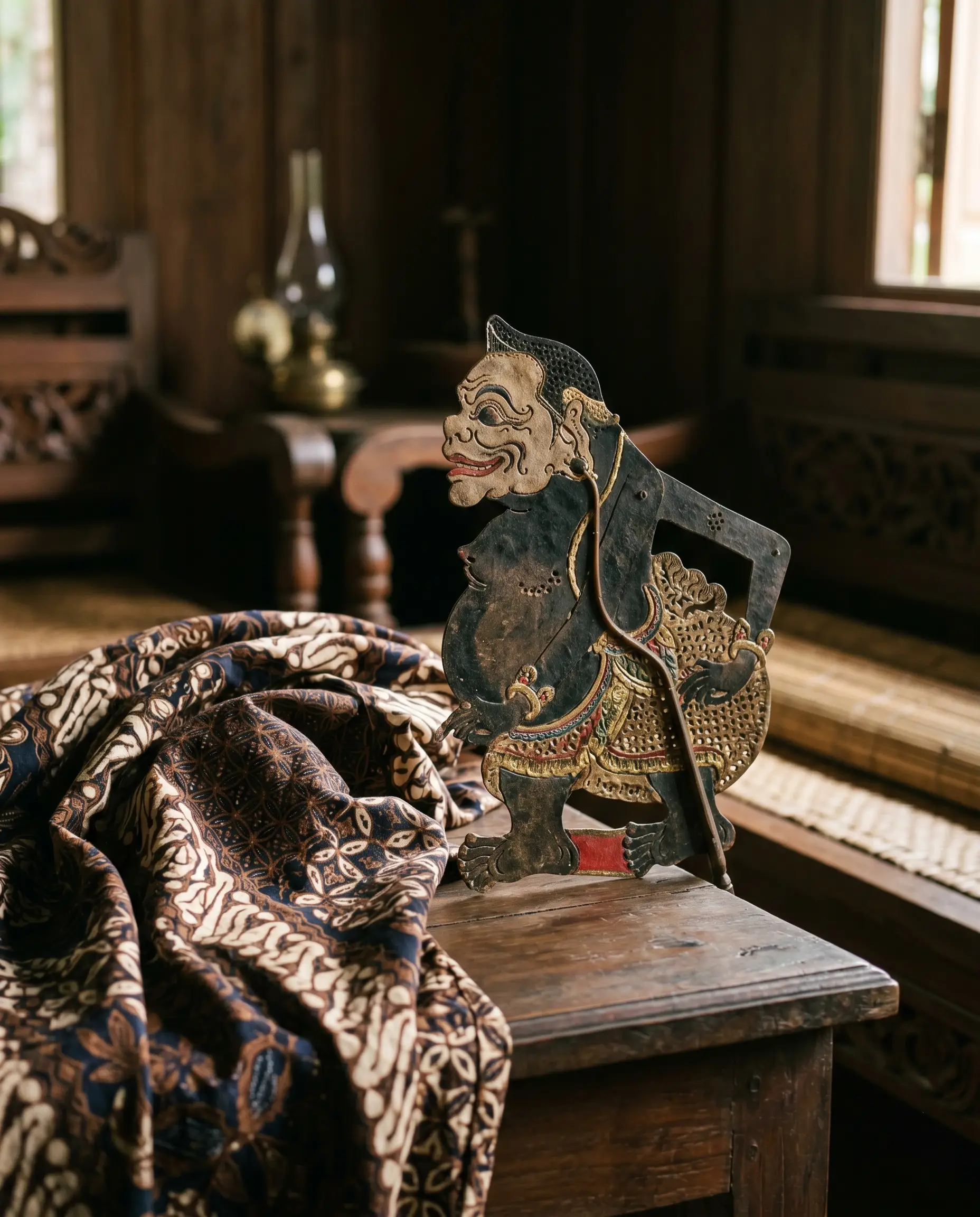
Semar’s Simple, Samar, and Deep Form
Semar is often depicted in a form that is far from the heroic ideal. His body is round, his face is distinctive, his movement is simple, and his expression is easy to recognize. For eyes that only chase grandeur, such a form may appear comic. But in symbolic culture, what appears simple often stores deeper meaning.
The name Semar is often associated by some readers with the rasa of samar: hidden, unclear at the surface, not easily grasped at once. This should not be forced as the only etymological explanation. It is safer to read it as symbolic rasa: Semar is a figure who cannot be understood only from the outer skin.
His form reminds us that life cannot always be read from appearance. What appears weak may store strength. What appears funny may carry serious counsel. What appears low may become the place where wisdom chooses to stand.
Semar’s body becomes a cultural lesson: do not worship appearance too quickly. Do not dismiss simplicity too easily. Do not assume that dignity always comes wearing luxury, title, and visible power.
Firm Compassion: Love That Does Not Spoil
One of the central meanings of Semar is compassion. But Semar’s compassion is not the kind of affection that spoils. He does not always agree. He does not always calm people with sweet words. Sometimes he corrects, reminds, and even shakes the awareness of those who have forgotten their direction.
This makes Semar deeply important for life today. Many people think love means always making others comfortable. But mature love sometimes must dare to say, “This is wrong,” “This needs repair,” or “Your path is beginning to leave the values that should be guarded.”
Semar’s compassion is responsible compassion. He does not want the ones he cares for to feel comfortable for a moment but wander further from truth. He chooses to protect direction, even when his advice is not easy to receive.
This is what can be called firm compassion. It is soft in intention, but not weak in action. It does not humiliate, but it does not flatter falsehood either. It guides with heart, while still daring to straighten the path.
Semar’s Firmness: Gentle but Not Weak
Semar teaches that gentleness is not the same as weakness. A gentle person can still be firm. A humble person can still reject injustice. A person who serves can still speak when truth is forgotten.
Semar’s firmness does not come from ego. He does not correct others in order to look smarter. He does not criticize in order to be praised. His firmness is born from the conduct of caretaking: the desire to keep life from being damaged by arrogance, negligence, or the hunger for power.
In modern life, this teaching is very important. In family, work, community, or digital spaces, we are often faced with a difficult choice: stay silent so the atmosphere remains safe, or speak with the risk of being disliked. Semar teaches a middle path: speak when needed, but guard intention, timing, and language.
Firmness without rasa can become cruelty. Gentleness without courage can become avoidance. Semar teaches both to sit together.
Semar and Tepa Slira
Semar is close to the value of tepa slira. He understands another person’s rasa, reads the atmosphere, and does not carelessly humiliate. But tepa slira in Semar’s conduct does not mean allowing everything. Mature empathy knows when to hold back and when to remind.
In daily relationships, many people struggle between protecting feelings and speaking truth. If one speaks too harshly, a relationship may crack. If one becomes too reluctant, the problem may silently grow. Semar gives an example: truth needs to be wrapped in rasa, but rasa should not erase truth.
Because of this, Semar is not merely a symbol of old wisdom. He is a lesson in communication. How can someone correct without lowering another person? How can someone love without spoiling? How can someone remain refined without losing direction?
The answer is not always simple. But Semar points toward a path: begin from clean intention, speak with measured language, and remember that the goal of correction is repair, not victory.
Semar, Eling lan Waspada, and Inner Conscience
Semar is also close to eling lan waspada. Eling means remembering values, origin, and direction. Waspada means being aware of the effects of words and actions. In many stories, Semar appears when a figure needs to be reminded not to be carried away by victory, revenge, pride, or ambition.
In modern human life, Semar can be read as inner conscience. A voice that is not always the loudest, but often the most honest. It appears when we are about to reply with cruel words. It whispers when we are tempted to take an easy but wrong path. It knocks when we begin to feel that we know everything.
The problem is that inner conscience is often defeated by the noise of the world. Notifications, applause, anger, comparison, and the desire to win can make the subtle voice within harder to hear.
This is why human beings need hening. Not to escape the world, but to hear again what is gentle and clear inside the self. In that quiet space, Semar’s teaching becomes more audible: do not be led by ego, do not lose rasa, and do not let truth be swallowed by pride.
Semar and Humble Leadership
Semar is an example of leadership that does not always stand at the front of the stage. He leads by caring, not by dominating. He gives direction without stealing the light from those he guides.
In work, family, or community life, this kind of leadership is precious. Some people lead with loud voices. Some lead with position. But some lead with presence: arriving when needed, correcting when necessary, and protecting others from losing direction.
Semar’s leadership is close to the value of ngemong. Ngemong is not control. It is guiding, caring, and giving room to grow. Semar cares for the knights not so they depend on him forever, but so they can stand with better conduct.
A leader who learns from Semar does not need to look grand at every moment. They need to stay useful. They need to protect truth without becoming cruel. They need to create space where others can grow, not become smaller.
Semar in Wayang and Javanese Symbolism
To read Semar clearly, we need to see him within the wider ecosystem of wayang. Wayang is not only a story of war, kings, and heroic quests. It is a symbolic world. Inside it are figures, movement, music, language, shadow, light, jokes, warnings, and values that speak together.
Semar’s presence in this world gives balance. He brings the voice of ordinary people into the court of power. He brings laughter into tense moments. He brings conscience into ambition. He brings simple language into complicated conflict.
Some traditions also give Semar deeper symbolic and theological interpretations. Such interpretations may differ across regions and teachers. In a safe cultural reading, it is better not to force one interpretation as the only truth. Semar is rich because he holds many layers: wayang figure, caretaker, critic, symbol of humility, voice of conscience, and mirror of firm compassion.
That richness is what makes him endure. He can be read by a child as a funny figure, by a leader as a reminder of humility, by an elder as a guide of rasa, and by modern readers as a mirror for communication and moral courage.
Semar as a Mirror for Modern Life
My child, what is the use of speaking about Semar today? Precisely because the age moves so quickly, a figure like Semar becomes even more important. The digital world makes people easy to appear, but not always easy to mature. Many want to be heard, but not all are willing to listen. Many want to be right, but few can restrain ego.
Semar reminds us that wisdom often begins with the ability to bow inwardly. Not to belittle oneself, but to stop placing oneself at the center of everything. He also reminds us that humor can soften criticism, that advice does not always need to be wrapped in anger, and that correction does not need to humiliate.
In modern life, Semar can be practiced simply: do not speak when the inner life is burning, do not correct publicly when it can be discussed gently, do not lead through fear, and do not love by letting someone continue to damage themselves.
This is Semar as a mirror: he asks us not only to admire wisdom, but to practice it.

7 Practices of Semar for Daily Life
So Semar does not remain only a figure to admire, his values need to descend into daily conduct. Here are seven simple ways to carry Semar’s teaching into modern life.
1. Bow Without Belittling Yourself
Humility does not mean feeling worthless. Humility means remembering that knowledge, power, and experience always have limits. A person who can bow is easier to teach, easier to listen, and less easily ruled by arrogance.
2. Correct with the Intention to Protect
Before correcting someone, check the intention. Do you want to repair the situation, or only release irritation? Correction born from ego often wounds. Correction born from compassion has a better chance of becoming a way home.
3. Love Without Spoiling
Affection does not mean agreeing with everything. Sometimes love means helping someone see boundaries, consequences, and responsibility. Semar teaches that mature love dares to speak honestly.
4. Use Humor to Soften Ego
Humor in the Punakawan is not only laughter. It often becomes a refined way to lower ego. In daily life, healthy humor can open difficult conversations, as long as it is not used to insult or dismiss someone’s dignity.
5. Guard Rasa Before Guarding Pride
Many relationships are damaged because human beings are busier protecting pride than protecting rasa. Semar reminds us that dignity does not always mean winning an argument. Sometimes dignity appears when someone is able to apologize.
6. Dare to Be Silent Before Speaking
Silence is not always defeat. Silence can become a space for arranging intention. Before saying a sharp sentence, pause. Ask whether the word brings light or only adds another wound.
7. Serve Without Losing Your Voice
Serving does not mean becoming a voiceless shadow. Semar serves, but still corrects. In modern life, this means helping others without losing values, boundaries, and the courage to speak what is true.
JavaSense and a Clearer Way to Read Semar
JavaSense reads Javanese culture as a mirror, not a verdict. Wayang, weton, the Javanese calendar, script, primbon, and pitutur should not make human beings afraid or trapped in empty symbols. They are better used as doors of learning.
If you want to read the rhythm of days in Javanese tradition, open the JavaSense Javanese calendar. If you want to know weton as cultural reflection, use the JavaSense weton calculator wisely. If you want to explore written heritage, try the JavaSense Javanese script tool.
As a broader public cultural reference, readers may also visit the National Library of Indonesia. References like this help cultural reading stay connected to learning and public knowledge.
The JavaSense path is simple: honor old symbols, but do not lose clear reason. Read wayang, but do not stop at the stage. Bring pitutur into conduct, so culture becomes a living mirror.
Closing Reflection: Being Firm Without Losing Compassion
In the end, Semar teaches something difficult but deeply needed: to be gentle without being weak, to be firm without being cruel, and to be humble without losing one’s voice. He does not teach human beings to look great on the surface. He teaches them to become mature inside.
Angger, my child, carry Semar not only as a symbolic figure. Carry him as a question for life. Did I correct someone today with good intention? Did I love without spoiling? Did I bow without losing my values? Did I speak truth without damaging rasa?
In an age that is quick to anger and quick to judge, the conduct of Semar becomes more important. He invites us to return to wisdom rooted among ordinary people: listening more deeply, arranging rasa, guarding truth, and remaining compassionate even when firmness is needed.
To learn Javanese culture in a lighter and more modern way, you can download JavaSense on Google Play.
FAQ About Semar
Who is Semar in Javanese wayang?
Semar is a Punakawan figure in Javanese wayang who often serves as a caretaker, adviser, and voice of conscience for the knights.
What does Semar mean in Javanese culture?
Semar represents humble wisdom, firm compassion, inner conscience, care, and the courage to remind people when important values are being forgotten.
Is Semar only a comic character?
No. Semar often brings humor, but his humor contains criticism, guidance, and a refined way to soften human ego.
How is Semar related to Punakawan?
Semar is an important figure in the Punakawan, together with Gareng, Petruk, and Bagong. The Punakawan bridge the world of knights and ordinary people while carrying advice through accessible language.
Why is Semar called a symbol of firm compassion?
Because Semar loves without spoiling. He cares, guides, and dares to correct when those he accompanies begin to leave the path of truth.
What can Semar teach modern life?
Semar teaches humble leadership, empathetic communication, firmness without cruelty, humor that softens ego, and the courage to guard truth without being ruled by pride.
How can someone practice the values of Semar?
Start by bowing without belittling yourself, correcting with good intention, loving without spoiling, pausing before speaking, and protecting rasa before protecting pride.
Do all Javanese traditions interpret Semar the same way?
No. Interpretations of Semar can differ across wayang lineages, regions, teachers, and traditions. It is safer to read Semar as a rich cultural symbol with many layers of meaning.
Learn Wayang and Javanese Pitutur with Clearer Awareness
Semar is not merely a comic figure. He is a mirror of firm compassion, humble wisdom, and truth that does not lose rasa. To explore the Javanese calendar, weton, script, and cultural heritage more easily, open JavaSense on Google Play.