
Angger, my child…
There is a word that sounds simple, yet carries a long practice within it. That word is rukun. Many people think rukun only means not fighting. Yet in Javanese rasa, rukun is deeper than a calm surface. It is the art of caring for relationships without silencing truth.
Ky Tutur Summary
- Rukun in Javanese culture is the practice of arranging rasa, guarding speech, and caring for relationships so differences do not become hostility.
- Rukun does not mean always staying silent, giving in forever, or allowing injustice to continue without a voice.
- Healthy rukun still gives space for honesty, dialogue, boundaries, and truth spoken with dignity.
- In JavaSense, rukun is read as cultural guidance and a mirror for conduct, not an empty slogan, not a tool for silencing people, and not a demand to lose one’s own voice.
Ky Tutur Note: This article discusses rukun as Javanese cultural heritage and life reflection. Rukun should never be used to justify violence, silence victims, hide injustice, or force someone to keep giving in. Read it as a practice of arranging relationships with clarity, fairness, and humanity.
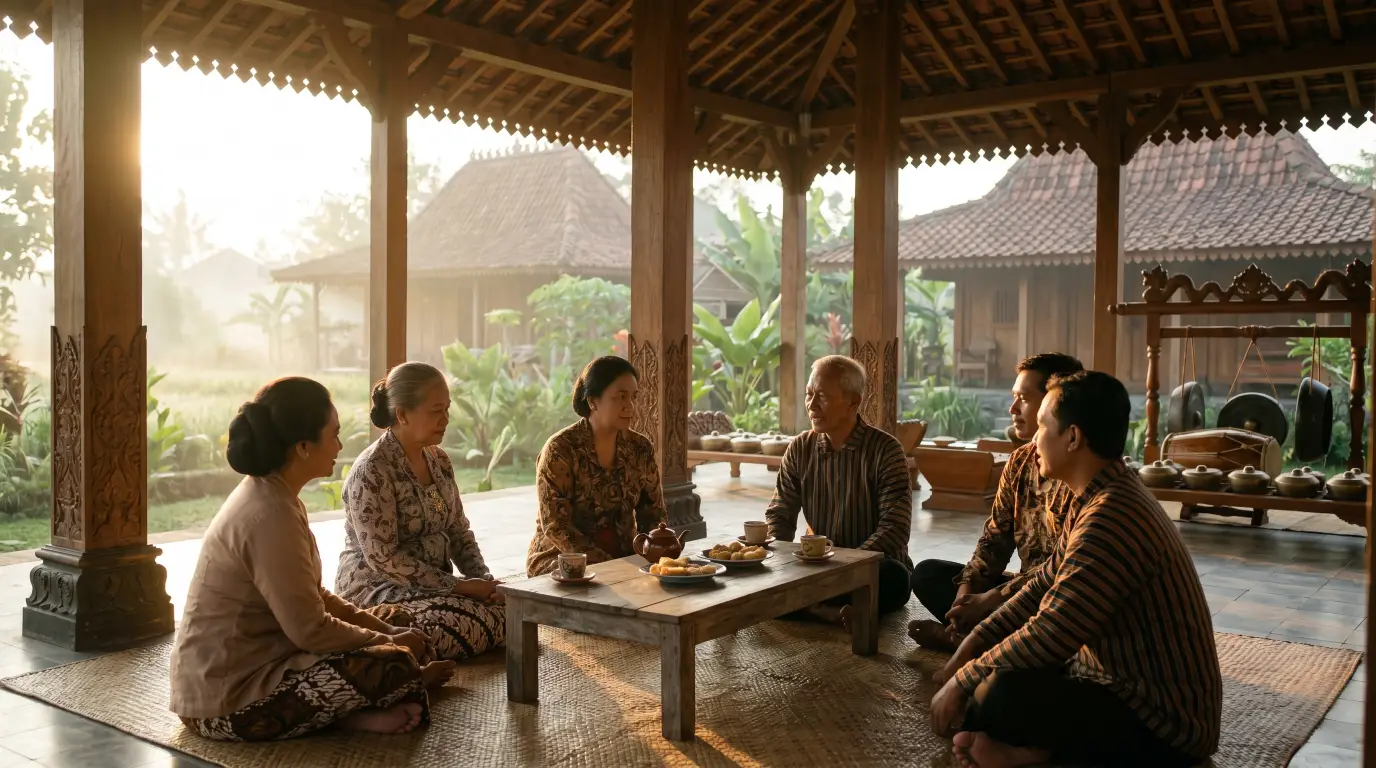
Rukun is one of the most familiar words in Javanese life. It appears in family, neighborhood life, teamwork, village deliberation, sibling relationships, and even in the way people restrain themselves when facing disagreement. Yet because the word is so often used, its meaning can become thin.
Some people understand rukun as “as long as there is no conflict.” If no one argues, it is called rukun. If everything looks calm, the matter is considered finished. But silence is not always harmony. Giving in forever is not always harmony. A relationship that looks peaceful on the outside may still hide wounds, disappointment, or a voice that has never been given room.
So, my child, rukun needs to be read more deeply. Rukun is not merely covering conflict. Rukun is the ability to arrange differences so they do not damage the dignity of relationship. It does not kill the voice. It teaches people how to speak. It does not erase boundaries. It helps people guard boundaries with rasa.
What Is Rukun in Javanese Culture?
In Javanese culture, rukun can be understood as both a condition and a practice that protects harmony in shared life. It is not only a peaceful atmosphere, but also a way of placing oneself, guarding words, respecting others, and seeking a middle path when differences appear.
Rukun is close to the idea that human life is interconnected. A person does not live alone. There are family members, neighbors, coworkers, relatives, surroundings, and communities that shape everyday life. Because of this, every action affects not only the self, but also the circle of relationships around it.
Yet rukun does not mean everyone must be the same. In fact, rukun becomes important because human beings are different. There are differences in age, experience, opinion, interest, wounds, hopes, and ways of seeing life. Without the practice of rukun, difference easily becomes collision. With rukun, difference is given room to be spoken without humiliation.
In Javanese rasa, rukun is also connected with unggah-ungguh. A person is invited to read time, place, atmosphere, and the person being addressed. Not to pretend, but so truth can still be delivered in a way that protects dignity.
Rukun Does Not Mean Staying Silent Forever
One of the biggest misunderstandings about rukun is thinking that it means silence. Some people hold their wounds because they are afraid of being called not rukun. Some keep giving in so the family looks fine. Some hide injustice because they fear the atmosphere will become noisy.
This reading needs to be corrected. Healthy rukun does not demand that human beings lose their voice. Rukun is not an obligation to please everyone. Rukun is also not a reason to allow harmful treatment to continue.
True rukun needs honesty. But that honesty is delivered in a way that does not destroy. There is a time chosen. There are words weighed. There is intention examined. The goal is not to win alone, but to repair the situation.
If someone keeps silent while the inner life is wounded, that is not always rukun. If a family looks calm because one person is always sacrificed, that is also not rukun. If a relationship looks peaceful because the weaker person is too afraid to speak, that is closer to imbalance than harmony.
So rukun needs to walk with fairness. Without fairness, rukun can become a mask. Without the courage to speak, rukun can become the habit of burying pain. Without tepa slira, rukun can become a one-sided demand.
Rukun as the Practice of Arranging Rasa
Rukun is not only an outer matter. It begins within the inner life. A person whose heart is too hot will more easily speak wrongly. A person ruled by pride will struggle to apologize. A person who always feels right will struggle to listen. For that reason, rukun begins with arranging rasa.
Arranging rasa does not mean erasing emotion. Anger, disappointment, sadness, and offense are part of being human. But rasa needs to be guided so it does not immediately become words that wound or actions that extend the problem.
In daily relationships, rukun appears in small things. Not cutting people off while they speak. Not embarrassing others in public. Not spreading family matters where they do not belong. Not answering comments with insults. Not turning difference into a reason to break kinship.
Rukun also appears in the ability to apologize. Many relationships are damaged not because the problem is too large, but because pride is too high. One sentence, “I was wrong,” can sometimes heal more than a thousand defenses.
Rukun and Tepa Slira in Relationships
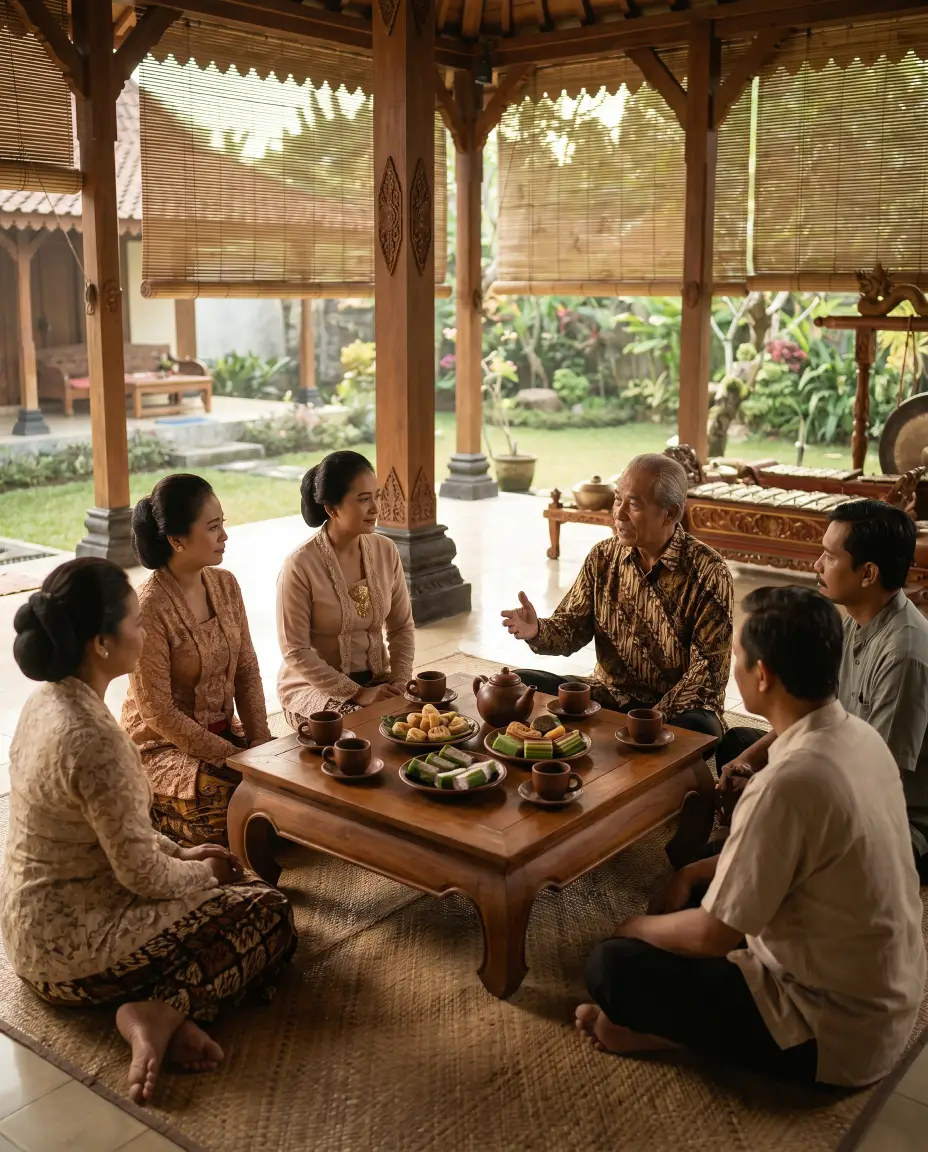
Rukun cannot be separated from tepa slira. Tepa slira is the ability to weigh another person’s rasa. If we do not like being looked down on, we should not look down on others. If we want to be heard, we must learn to listen. If we dislike being forced, we should not force.
But tepa slira does not mean ignoring oneself forever. Considering another person’s feeling still needs to be accompanied by the ability to guard boundaries. A healthy person in a relationship not only understands others, but also knows when to say enough.
Rukun and tepa slira meet in balance. Rukun keeps relationships from breaking. Tepa slira protects rasa from hurting each other. Boundaries prevent rukun from becoming unhealthy sacrifice.
In family life, tepa slira makes parents more willing to listen to children. In friendship, it makes advice feel less judgmental. At work, it helps criticism be delivered without humiliation. In society, it keeps difference from immediately being treated as a threat.
Rukun in Family, Neighbors, and Work
In family, rukun does not mean never having different opinions. A healthy family is able to discuss difference without destroying one another. Children may have voices. Parents may give guidance. Partners may see things differently. What needs to be guarded is the way of speaking and the intention to repair.
Among neighbors, rukun appears as sensitivity. Not every matter should be interfered with, but not every matter should be ignored either. There is a boundary between caring and controlling. There is a boundary between helping and forcing. Rukun needs the sensitivity to read that boundary.
At work, rukun does not mean everyone must agree with the leader. Rukun can make cooperation healthier because differences can be spoken. A rukun team is not a team that stays silent. It is a team that can give input without tearing each other down.
This value is close to aja dumeh. Do not act as if age, position, experience, or strength makes listening unnecessary. Rukun asks every side to protect dignity.
Rukun in the Digital Age
The digital age makes it easier for people to speak, but not always easier for people to listen. Comments can be written in seconds. Misunderstandings can spread quickly. Anger can become a public show. Difference of opinion can turn into hostility.
This is where rukun becomes more relevant. Digital rukun does not mean everyone must agree. It means guarding the way disagreement is carried. Not easily insulting. Not spreading unclear information. Not using comment sections as places to throw hidden wounds.
Before writing something, a person can ask: is this necessary? Is this true? Does the way I say it still protect dignity? Am I trying to repair the situation, or merely trying to win my emotion?
Rukun in the digital age also means knowing when to stop. Not every conversation needs to continue. Not every provocation needs an answer. Not every debate makes people wiser. Sometimes keeping rukun means choosing silence after saying what needs to be said, not because of fear, but because one does not want to extend damage.
This is close to eling lan waspada. Eling keeps a person from forgetting the self. Waspada keeps words from turning into embers.
When Rukun Is Misused to Silence Injustice
This part must be said clearly, my child. There are times when the word rukun is used to silence. When someone speaks about a wound, they are told to be quiet for the sake of harmony. When injustice appears, people are told to give in so the situation does not become noisy. When the strong hurt the weak, the victim is asked to forgive quickly so the family still looks fine.
This is not healthy rukun. This is misuse of rukun.
Rukun should not become a tool to preserve imbalance. Rukun should not be used to hide wrongdoing. Rukun should not force wounded people to keep carrying the burden so others can stay comfortable.
Mature rukun gives room for truth. If there is a mistake, it needs to be acknowledged. If there is a wound, it needs to be cared for. If there is a damaging pattern, it needs to be stopped. If a boundary has been crossed, it needs to be repaired. True peace is not built from denial, but from the courage to rearrange relationships more fairly.
So, when someone says, “Never mind, the important thing is harmony,” while the problem has not been acknowledged, be careful. Rukun is not a broom for hiding dust under the mat. Rukun is the courage to clean the shared room so everyone can breathe more freely.
Gotong Royong, Musyawarah, and Shared Space
In Javanese culture, rukun often appears through gotong royong and musyawarah. Gotong royong teaches that shared burdens become lighter when carried together. Musyawarah teaches that decisions affecting many people should not be born only from one side’s will.
Gotong royong is not only physical work. It is a sense of shared belonging. When neighbors help during a family event, when residents clean the environment together, when relatives support each other during difficult times, there rukun becomes real action.
Musyawarah is not merely a meeting. It is an exercise in lowering ego. People who deliberate learn to listen to opinions that are not always the same. They learn to deliver objections without insulting. They learn to search for the most possible path, not only the path that benefits themselves.
In a fast age, gotong royong and musyawarah may feel slow. But not everything slow is left behind. Sometimes what is slow protects human beings from being uprooted from togetherness.
Practical Ways to Care for Rukun
There are several simple practices for caring for rukun in daily life.
First, listen until the end. Many conflicts grow because people answer before truly hearing. Listening does not mean agreeing. Listening means giving space so the other person’s meaning is not cut off by assumption.
Second, express objections clearly without insulting. A firm sentence does not have to be harsh. Truth delivered with dignity is more likely to open a path than truth thrown as an attack.
Third, do not delay apology too long. If you are wrong, admit it. If you have hurt someone, repair it. Rukun needs the courage to lower pride.
Fourth, keep boundaries. Some things can be tolerated, some need to be discussed, and some must be stopped. Healthy rukun still knows boundaries.
Fifth, care for silence. In stillness, human beings can examine whether they are defending truth or merely defending ego.
Rukun and Javanese Pitutur
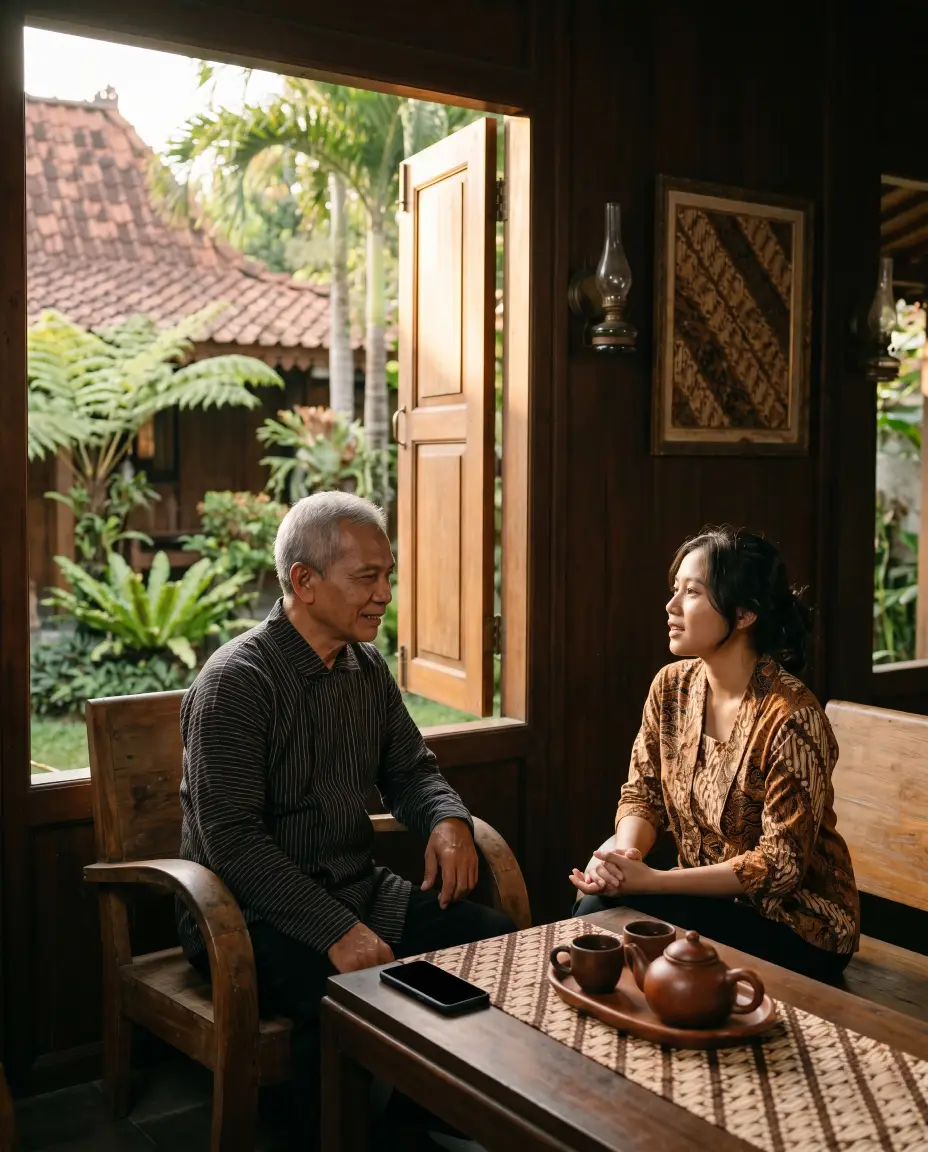
Rukun is one important doorway into reading Javanese pitutur. It is connected with tepa slira, eling lan waspada, aja dumeh, ngendhaleni emosi, and hening. All these values strengthen one another.
With tepa slira, rukun learns to weigh rasa. With eling lan waspada, rukun learns to be careful in speech and action. With aja dumeh, rukun prevents power from becoming arbitrary. With ngendhaleni emosi, rukun learns not to be enslaved by a heated heart. With hening, rukun is given space to examine intention.
Rukun is also close to the awareness of origin and life direction. A person who remembers the deeper journey of life usually becomes more careful in treating others. Life is not only about winning a conversation, but also about guarding the dignity of the journey.
If read clearly, rukun does not become a sweet slogan. It becomes daily conduct: how to listen, how to correct, how to refuse, how to apologize, how to protect boundaries, and how to keep truth from becoming cruelty.
JavaSense and a Clearer Way to Read Rukun
JavaSense reads rukun as cultural heritage that needs to be cared for with common sense. It is not a slogan to paste on a wall. It is not a reason to silence a voice. It is not a demand that human beings must always give in.
If you want to connect rukun with daily life, begin simply: guard speech, listen to others, avoid easy insults, dare to apologize, and keep healthy boundaries. From small things like these, rukun does not stop as a word. It becomes conduct.
Javanese culture is also connected with time and script. To read Javanese dates, pasaran, and cultural rhythm, open the JavaSense Javanese calendar. To explore letters and written heritage, use the JavaSense Javanese script tool.
As a broader public cultural reference, readers may also visit the National Library of Indonesia. References like this help cultural reflection stay connected to learning and public knowledge.
Closing Reflection: Harmony That Does Not Lose Honesty
In the end, rukun teaches human beings to care for relationships without losing the self. To protect peace without hiding truth. To arrange speech without burying the voice. To care for togetherness without allowing injustice.
Angger, my child, carry rukun as a clear practice. Do not make it a mask. Do not make it a reason to keep burying pain. Do not reject rukun only because you have seen it misused.
True rukun does not make human beings smaller. It makes relationships more spacious. It gives room for difference, but still protects adab. It opens a path for honesty, but does not let words become wounds.
To learn Javanese culture in a lighter and more modern way, you can download JavaSense on Google Play.
FAQ About Rukun in Javanese Culture
What does rukun mean in Javanese culture?
Rukun in Javanese culture means the practice of caring for relationships, arranging rasa, and preserving harmony without erasing differences or losing personal dignity.
Does rukun mean always staying silent?
No. Rukun does not mean always staying silent. Healthy rukun still gives space to speak truth clearly, at the right time, and without humiliating others.
What is the difference between rukun and always giving in?
Rukun protects relationships with dignity and fairness. Always giving in can become unhealthy when it makes someone bury pain or lose boundaries.
How can rukun be practiced in family life?
Rukun in family life can be practiced by listening to one another, avoiding humiliation, apologizing when wrong, discussing problems calmly, and respecting each person’s boundaries.
How is rukun practiced at work?
At work, rukun appears in teamwork, giving input without tearing others down, respecting different roles, and resolving conflict professionally.
Is rukun still relevant in the digital age?
Yes. In the digital age, rukun is relevant as a practice of guarding comments, avoiding insults, checking information, and disagreeing without damaging another person’s dignity.
What if rukun is used to silence injustice?
If rukun is used to silence injustice, it is not healthy rukun. Rukun should not become a reason to hide wounds, violence, or mistakes that need to be repaired.
What is a simple practice for caring for rukun?
A simple practice is to listen until the end, guard speech, apologize when wrong, express objections with dignity, and keep healthy boundaries.
Learn Rukun with Clearer Awareness
Rukun is not merely the absence of conflict. It is the practice of arranging rasa, guarding speech, and caring for relationships without silencing honesty. To explore Javanese script, calendar, weton, and daily heritage in a simpler way, open JavaSense on Google Play.