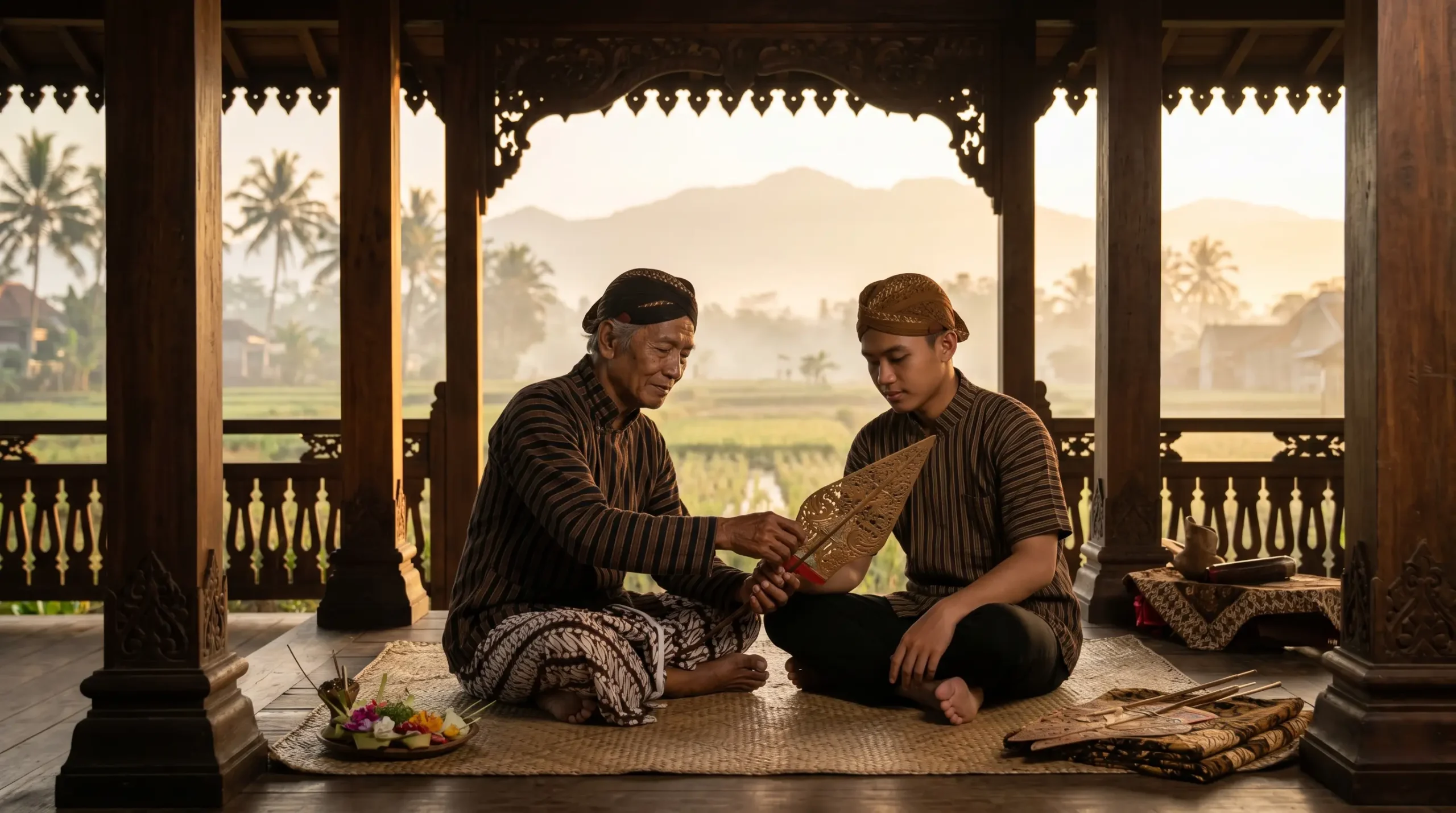
Angger, my child…
There is a Javanese word that sounds gentle, yet carries deep responsibility. It does not come with a loud voice. It does not point fingers. It does not force another person to become exactly what we want. That word is ngemong.
Ky Tutur Summary
- Ngemong means caring for, guiding, nurturing, serving, and protecting with patience.
- In Javanese culture, ngemong is not only about looking after children. It also appears in family, education, friendship, leadership, community life, and self-care.
- Ngemong is different from control. Control tries to dominate, while ngemong gives direction without killing the space to grow.
- The main values of ngemong are patience, compassion, responsibility, sensitivity of rasa, and the ability to guide without belittling.
Ky Tutur Note: This article discusses ngemong as a Javanese cultural term, language, and life guidance. It is not an absolute rule about parenting, not professional psychological advice, and not a justification for relationships that erase personal boundaries. Read it as a cultural mirror and reflective guide.
Ngemong means caring for, guiding, serving, educating, managing, and protecting with patience. In Indonesian dictionary usage, the root emong is connected with caring for, serving, educating, and looking after. In Javanese-Indonesian dictionary usage, emong or ngemong is also connected with guiding, serving, and nurturing. Readers can check the public references through KBBI on emong and KBJI on emong and ngemong.
Yet, my child, the meaning of a word does not always end in a dictionary. In Javanese rasa, ngemong is not only the act of caring for someone. It also carries an inner attitude. A person who ngemong does not only arrive with hands that help, but also with rasa that can read a situation.
Ngemong is not merely feeding, ordering, managing, or instructing. It is the ability to understand the one being cared for, read the condition, weigh the boundary, and guide in a way that does not damage dignity.
This is why ngemong becomes one of the important doors for reading Javanese wisdom. Inside it, there is patience, responsibility, tenderness, and maturity. Not weak tenderness, but tenderness strong enough to protect without pressing too hard.
What Does Ngemong Mean?
In simple terms, ngemong means caring for and guiding someone or something so it can grow well. The one being guided may be a child, family member, student, partner, friend, team, community, or even one’s own inner life.
But the key is not only “caring.” The key is caring with the awareness that the one we guide still has their own life, direction, and space to grow.
A mother calming a frightened child is practicing ngemong. A teacher patiently repeating a lesson without embarrassing the student is practicing ngemong. A leader guiding a team without oppression is practicing ngemong. A friend listening to someone’s pain without rushing to judge is also practicing ngemong.
In a deeper sense, ngemong is the art of protecting life so it does not break in our hands. It requires patience. It asks for a heart that does not easily become harsh. It teaches that guiding another person does not mean taking over their entire path.
The Root of Emong, Momong, and Pamong
The word ngemong is close to emong, momong, and pamong. All of them carry the rasa of nurturing, serving, guiding, and protecting. In Javanese tradition, a pamong is not only someone who holds a formal role. Ideally, a pamong is someone who can ngayomi: to give shade, to protect, and to guide without making smaller people feel more afraid.
This is where the subtle difference can be felt. Managing can be done without love. Ordering can be done without rasa. But ngemong needs sensitivity. There is patience. There is presence. There is the ability to read the atmosphere.
A person who ngemong needs to know when to correct, when to be silent, when to come closer, and when to give space.
So ngemong does not only live at home. It also lives in schools, workplaces, villages, organizations, communities, and digital spaces. Wherever there are human beings who need to be guided without being belittled, the value of ngemong still has a place.
7 Meanings of Ngemong in Javanese Culture
1. Caring Without Owning
The first meaning of ngemong is caring. But caring here does not mean turning another person into property. Many relationships are damaged because people think love gives them the right to control. In the laku of ngemong, caring means helping the one being cared for become more whole, not more dependent.
A child who is properly guided is not only made comfortable, but slowly trained to recognize responsibility. A student who is properly guided is not only given answers, but invited to understand the path of thinking. A team member who is properly guided is not only saved from mistakes, but helped to learn from those mistakes.
2. Guiding Without Dominating
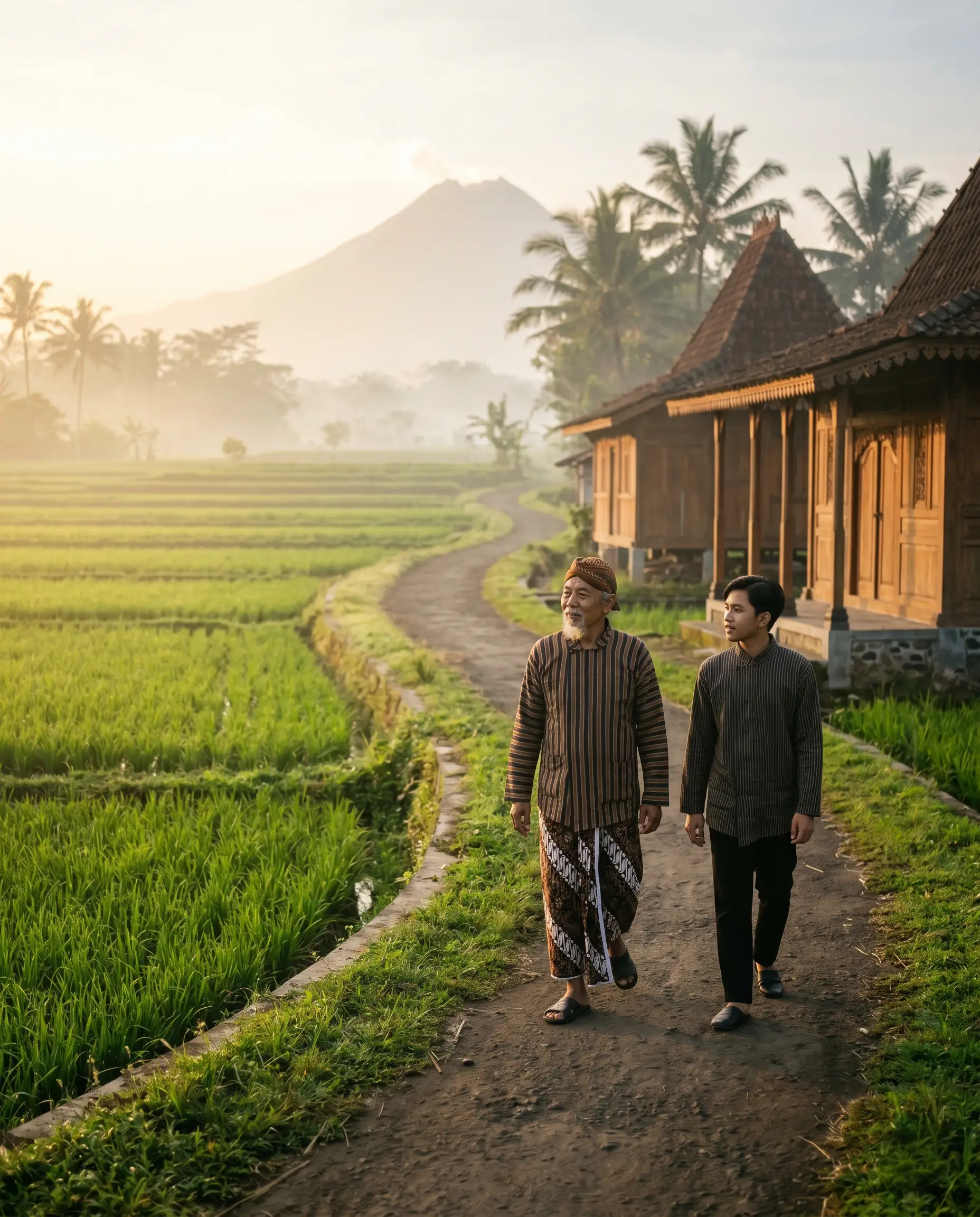
Ngemong is different from domination. Domination presses from above. Ngemong guides from beside. Domination wants others to obey because they are afraid. Ngemong wants others to grow because they understand.
This is where ngemong stands close to tepa slira. To practice ngemong, someone needs the ability to imagine another person’s position. They do not only ask, “Why won’t this person obey?” They also ask, “What are they feeling? What do they not yet understand? How can I guide them without wounding their dignity?”
3. Protecting with Patience
Patience is the breath of ngemong. Without patience, ngemong becomes scolding. Without patience, guidance becomes pressure. Without patience, affection can turn into an exhausting demand.
Patience in ngemong does not mean allowing everything to move without direction. Patience means understanding that growth has its own time. A seed does not become a tree because we scold it. A child does not become mature because they are advised once. A learner does not become skilled because they receive one instruction.
This kind of patience is also close to eling lan waspada. A person who ngemong must remember their intention and remain careful with their method. Do not let the intention to protect become a way of wounding.
4. Giving Room to Grow
Ngemong should not make someone lose their own feet. The purpose of ngemong is not to make someone depend forever, but to slowly help them stand. Because of this, a person who ngemong needs to know when to help and when to trust.
In family life, this means parents do not only protect children from every difficulty, but also teach them how to face difficulty. At work, this means leaders do not take over every decision, but build the courage of team members to think. In friendship, this means being present when needed, but not forcing others to live according to our script.
5. Arranging Rasa in Relationships
Ngemong also means arranging rasa. Javanese culture often reads relationships not only through right and wrong, but also through appropriateness, timing, place, rasa, and atmosphere. This does not mean truth is ignored. It means the way truth is delivered also matters.
This is where ngemong touches ewuh pakewuh. There are moments when reluctance may be read as a sign of respect. But there are also moments when excessive reluctance makes personal boundaries disappear. Mature ngemong does not allow someone to be damaged in the name of avoiding discomfort. It remains gentle, but does not lose clarity.
6. Strengthening Responsibility
Ngemong is not spoiling. This is important, my child. Spoiling often makes people weaker when facing reality. Ngemong strengthens. It gives enough help, offers necessary direction, then invites someone to carry their own responsibility.
A good pangemong does not make themselves the center of all answers. They do not want to be worshiped as a savior. They are pleased when the one being guided can think, choose, and take responsibility. The purpose of ngemong is not to create a shadow of oneself, but to help another life find its own power.
7. Keeping Social Harmony
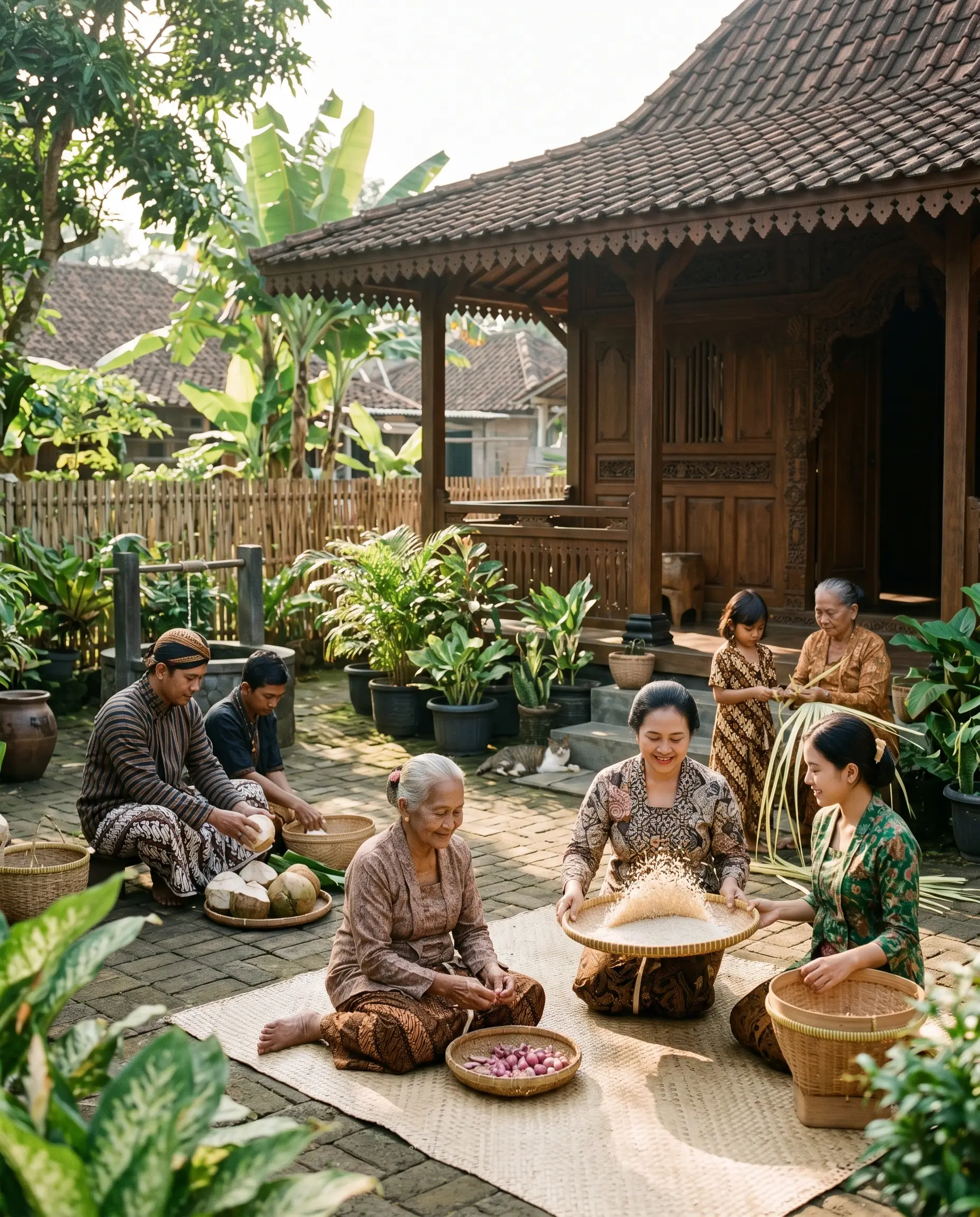
In Javanese society, ngemong also has a social meaning. Elders in a village, community leaders, teachers, family elders, or public figures are often expected to be able to ngemong many people. They should not only be clever in speech. They need to cool heated situations, connect what is cracked, and keep difference from turning into hostility.
This meaning is close to rukun in Javanese culture. Rukun does not mean everyone must be the same. Rukun means differences are managed so they do not destroy one another. In healthy harmony, ngemong becomes a way of keeping relationships humane.
Ngemong Is Not Controlling
This difference must be made clear because many people misunderstand it. Control may look like care, but it often grows from fear of losing power. Ngemong may look simple, but it grows from trust that another person can grow.
Control says, “You must do this because I know better.” Ngemong says, “I will accompany you in understanding this path, then you learn to take your own step.” Control makes people afraid of mistakes. Ngemong helps people learn from mistakes. Control narrows space. Ngemong opens space with wise boundaries.
Because of this, ngemong should not be used as an excuse to force a partner, child, student, or subordinate. If a relationship is full of threats, manipulation, violence, or humiliation, that is not ngemong. That is domination. Noble culture should not make human beings lose their dignity.
Examples of Ngemong in Daily Life
Ngemong can appear in small moments. When a child spills water and the parent does not immediately shout, but invites the child to clean it while giving understanding, that is ngemong. When a teacher sees a student falling behind and explains again without shaming them, that is ngemong. When a leader corrects a team mistake clearly but does not destroy the person’s confidence, that is ngemong.
Ngemong also appears in friendship. Sometimes a friend does not need a long lecture. They only need to be heard first. After the heart becomes calmer, advice can enter. People who rush to advise may feel wise, but perhaps they only want to finish listening to another person’s pain quickly.
In extended family life, ngemong appears when someone can protect the atmosphere. They do not add fuel to gossip. They do not enlarge misunderstanding. They know when to speak and when to hold back. They are not silent because they are afraid, but because they are choosing the way that brings more light.
Ngemong Diri: Caring for the Inner Self
There is one layer often forgotten: ngemong diri, or caring for oneself. Many people are skilled at caring for others, yet harsh toward their own inner life. They easily forgive others, but keep punishing themselves. They can listen to others’ complaints, but never give space to their own tiredness.
Ngemong diri means nurturing one’s inner life with patience and compassion. It is not self-indulgence, not running away from responsibility, and not justifying every desire. Ngemong diri means learning to say to oneself: “I am tired, but I do not have to collapse. I once made a mistake, but I can still learn. I am not perfect, but I am still worthy of being guided with compassion.”
In a fast age, this ability matters. Without ngemong diri, human beings easily become harsh inwardly and explosive outwardly. They look strong, but their inner life is dry. They look productive, but life loses shade.
Ngemong and Reading Patterns
A person who ngemong usually does not only react to events. They learn to read patterns. Why is this child angry? Is this team slow because they are lazy, or because the direction is unclear? Is this relationship distant because there is no love, or because too many small wounds were never discussed?
Here, ngemong stands close to Javanese ilmu titen. Ilmu titen is not fixed prophecy. It is the habit of observing signs, patterns, causes, and effects. A person who ngemong needs to notice patterns. They do not judge carelessly. They learn to understand before taking action.
By reading patterns, ngemong becomes wiser. Correction is not simply harsh. Help is not simply excessive. Silence is not merely avoidance. Everything is weighed according to the condition.
JavaSense and a Clearer Way to Read Ngemong Today
JavaSense reads ngemong not as a sweet slogan, but as laku. In Javanese culture, words such as ngemong, tepa slira, eling, rukun, and narima should not stop as decorative captions. They need to descend into how human beings treat one another.
If you want to read dates, pasaran, and Javanese timing more easily, open the JavaSense Javanese calendar. If you want to calculate your weton as cultural reflection, use the JavaSense weton calculator wisely. If your interest also reaches written heritage, explore the JavaSense Javanese script tool.
As a broader public cultural reference, readers may also visit the National Library of Indonesia. References like this help cultural reading stay connected to learning and public knowledge.
Ngemong reminds us that culture is not only about old terms. Culture is the way human beings protect life so it does not lose rasa. Without rasa, knowledge can become a tool of power. Without rasa, advice can become a blow. Without rasa, closeness can turn into control.
Closing Reflection: Protecting Without Owning
In the end, ngemong is not only caring in a narrow sense. It is the laku of protecting without owning, guiding without belittling, serving without losing boundaries, and leading without killing another person’s life force.
Angger, my child, not everyone who speaks often is practicing ngemong. Not everyone who helps often is truly freeing others. Sometimes help can make someone dependent. Sometimes advice can make someone feel small. Sometimes protection can become a fence that is too tight.
So learn ngemong with a clear heart. If you become a parent, be shade without killing your child’s courage. If you become a teacher, be light without making students feel foolish. If you become a leader, be direction without oppression. If you become a friend, be a safe space. If you are facing yourself, become a patient guide for your own inner life.
The most subtle part of ngemong is not in the hands that protect, but in the heart that knows boundaries. It does not want to own everything. It only wants the life it touches to grow more whole.
To learn Javanese culture in a lighter and more modern way, you can download JavaSense on Google Play.
FAQ About Ngemong
What does ngemong mean in Javanese?
Ngemong means caring for, guiding, serving, nurturing, and protecting with patience. In Javanese rasa, it also means guiding someone without belittling or controlling them.
What is the difference between ngemong and momong?
Both are connected with nurturing. Momong often feels closer to caring for children directly, while ngemong has a wider nuance: guiding, accompanying, serving, and helping someone grow well.
Is ngemong the same as controlling?
No. Control tries to dominate another person’s decisions, while ngemong offers direction, space, and accompaniment. Healthy ngemong helps someone become more independent, not more afraid or dependent.
What is an example of ngemong in daily life?
Examples include parents guiding children without shouting, teachers helping students patiently, leaders correcting teams without oppression, or friends listening without rushing to judge.
What does ngemong diri mean?
Ngemong diri means caring for one’s own inner life with patience and compassion. It is not self-indulgence, but the practice of recognizing tiredness, accepting imperfection, learning from mistakes, and remaining responsible.
Why is ngemong important in Javanese culture?
Ngemong is important because it teaches how to protect relationships with rasa, patience, and responsibility. It helps people guide without harshness, correct without belittling, and preserve harmony without losing boundaries.
Is ngemong still relevant today?
Yes. In family, education, work, community, and digital spaces, people still need a way of guiding that is not harsh, manipulative, or damaging to another person’s room to grow.
How can someone practice ngemong?
Start with small steps: listen before judging, correct without humiliating, help without making others dependent, and give people room to learn from their own process.
Learn Ngemong with Clearer Awareness
Ngemong is not merely an old word. It is Javanese guidance for caring, leading, and protecting with rasa. To explore the Javanese calendar, weton, script, and daily heritage in a simpler way, open JavaSense on Google Play.