
Angger, my child…
There is a name that cannot be understood only as a kingdom. There is a heritage that does not stop at palace walls, royal lists, or stories of power. Mataram Jawa is one of those names: a trace of order, culture, leadership, rasa, and inner conduct that can still help human beings read life more clearly.
Ky Tutur Summary
- Mataram Jawa can be read as Javanese cultural heritage that contains social order, leadership, unggah-ungguh, rukun, and inner conduct.
- Mataram is not only a kingdom or a territory of power, but also a cultural memory of how Javanese society arranged relationship, authority, rasa, and responsibility.
- Values such as rukun, samadya, eling, waspada, unggah-ungguh, and self-restraint can be read as pitutur that remains relevant today.
- In JavaSense, Mataram Jawa is read as a cultural mirror, not as blind nostalgia, not as an absolute spiritual claim, and not as a tool for judging the present.
Ky Tutur Note: This article discusses Mataram Jawa as cultural heritage and reflective guidance. Readings about keraton, cultural order, wahyu keprabon, jagad cilik, jagad gedhe, or inner conduct are placed as symbolic cultural language, not absolute claims. Use this as pitutur for arranging conduct, not for freezing history or glorifying the past without criticism.
Mataram is often mentioned when people speak about Javanese kingdoms, keraton, Yogyakarta, Surakarta, Javanese culture, or inner conduct. Yet the name Mataram is not always easy to understand. Some read it only as a kingdom. Some see it mainly as a symbol of power. Others remember it through ceremonies, clothing, architecture, or palace etiquette.
All of those are not wrong, but they are not complete. Mataram can also be read as a Javanese way of arranging life. Within it there are ideas about leadership that nurtures, speech that is guarded, social relationships that are cared for, rasa that is arranged, and human beings who learn to restrain themselves so they are not ruled by desire.
So, my child, reading Mataram does not need to become empty nostalgia. We are not being asked to return to the past in a raw way. What we seek is the essence: how the heritage of Mataram can help people today become more eling, more ordered, more rukun, and more responsible in shared life.
What Is Mataram Jawa?
Mataram Jawa can be understood as a name for historical and cultural heritage connected with Mataram, including memories of kingdoms, keraton, social order, and Javanese ways of living. The name carries long historical layers, from older memories of Mataram to Islamic Mataram and the continuing cultural legacy of Javanese courts.
But this article does not discuss Mataram only as a chronology of kings and wars. JavaSense reads Mataram as a doorway into cultural order. From that doorway, several questions arise: how should a person place the self? How should authority be carried? How should speech be guarded? How should rukun be cared for? How should the inner life be trained so it does not become dumeh?
Mataram becomes important because it brings together many elements: politics, spirituality, art, literature, architecture, etiquette, agriculture, leadership, and daily life. All of these helped shape Javanese rasa, not only in outer forms, but also in the way people speak, walk, sit, correct, lead, and restrain themselves.
With this kind of reading, Mataram does not become a dead object. It becomes a cultural mirror. From that mirror, modern people can ask: what values still deserve to be cared for, and what parts must be reread with clear judgment?
Mataram Is More Than a Kingdom
One common misunderstanding is seeing Mataram only as a kingdom. If read only that way, Mataram becomes a list of events: who ruled, who fought, who won, and who lost. But in culture, a kingdom does not only leave political records. It also leaves ways of living.
Mataram inherited the idea of tatanan, or order. In that order, life is not seen as a private movement standing alone. Human beings are always in relationship: with family, society, nature, ancestors, leaders, and the Divine. Because of this, each action needs to be weighed so it does not damage the balance of shared life.
Of course, this heritage should not be read naively. Not every old order needs to be repeated exactly as it was. Some parts of history need to be studied with clarity, including power relations, hierarchy, and political dynamics of the time. But this does not mean that the inner values should be thrown away completely.
What matters is taking the essence. From Mataram, we may learn about self-restraint, leadership that is not arbitrary, unggah-ungguh, rukun, samadya, and the awareness that authority always carries responsibility.
Mataram as a Cultural Order
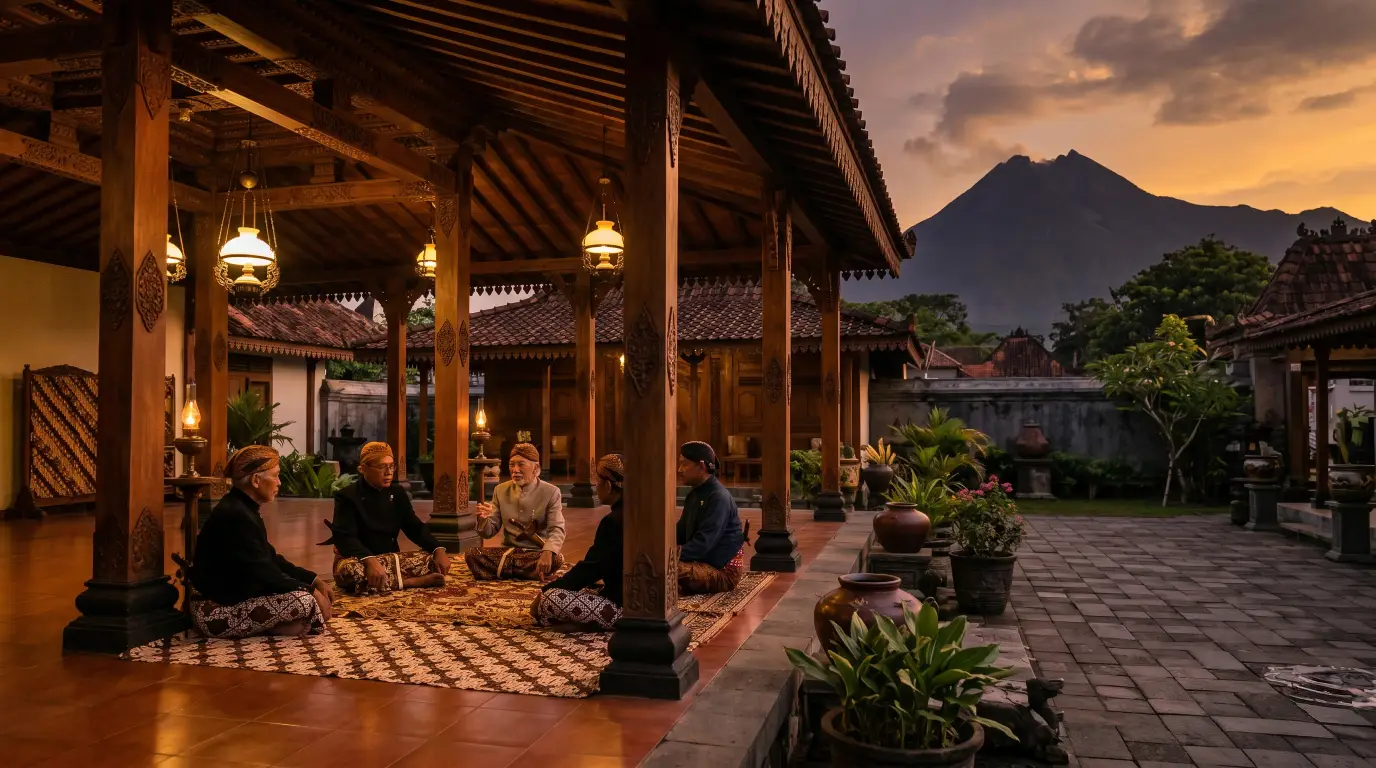
Mataram as cultural order teaches that life needs arrangement. Arrangement is not meant to suppress human beings, but to keep relationships from becoming chaotic. In family, there is respect. In society, there is deliberation. In the keraton, there are symbols and ceremonies. In language, there is unggah-ungguh. In the inner life, there is the practice of restraint.
This kind of order is often misunderstood as stiffness. Yet when read clearly, order is a cultural way of preventing human beings from simply following momentary impulses. Without order, words can become harsh, authority can become arbitrary, and relationships can break easily because of each person’s ego.
In Mataram culture, outer beauty is often connected with inner order. Clothing, space, ceremony, and speech are not merely decoration. They teach a person to become aware of place, time, the person being addressed, and the intention behind action.
Still, healthy order must remain humane. It must not become a tool for lowering others. It must not make the weak lose their voice. Mature order should make shared life more orderly, more just, and more dignified.
Keraton, Leadership, and Responsibility
Mataram cannot be separated from the world of the keraton. The keraton is not only a building. It is also a center of symbols, values, arts, and leadership. In Javanese culture, an ideal leader is not only someone with power. A leader is also expected to have refined rasa, the ability to nurture, and the awareness that position carries moral weight.
A concept such as wahyu keprabon often appears in readings about Javanese leadership. In this article, that term is safer to read as symbolic cultural language: a leader is not made legitimate by force alone, but must also show inner worthiness, responsibility, and the ability to protect shared safety.
A good leader does not only command. A good leader nurtures, listens, protects, and bears the consequence of decisions. If authority is used only to raise the self, the spirit of leadership disappears. If position makes a person dumeh, order turns into pressure.
This value is close to the Javanese reminder aja dumeh. Do not feel free to look down on others just because you have authority. Do not misuse age, wealth, knowledge, or position to stop listening.
Unggah-Ungguh, Rukun, and Samadya
Three values that can be read from the heritage of Mataram are unggah-ungguh, rukun, and samadya. They may look simple, but each contains long practice.
Unggah-ungguh teaches a person to read place and atmosphere. It appears in language, posture, greeting, and the way intention is delivered. Unggah-ungguh is not meant to make people stiff. It helps people avoid acting carelessly.
Rukun teaches that shared life needs to be cared for. Rukun does not mean everyone must remain silent. Healthy rukun still gives room for honesty, criticism, and personal boundaries. It protects difference from immediately becoming hostility.
Samadya teaches enoughness, moderation, and a life not ruled by greed. In modern times, this value feels important. Human beings are easily pushed to keep chasing more: faster, bigger, more famous, richer, until they forget to ask whether all of it makes the inner life more ordered.
When these three are practiced together, Mataram becomes grounded conduct: speech is guarded, relationships are cared for, and desire is restrained.
Mataram as Inner Conduct
Mataram does not live only in keraton or history. It can also be read as inner conduct. Inner conduct means training the self from within: managing emotion, restraining pride, guarding words, practicing patience, and not being easily dragged by passing impulses.
In Javanese culture, a human being is often understood as jagad cilik, the small world. Wider life is sometimes called jagad gedhe, the great world. These terms are best read as symbolic language: the state of a person’s inner life affects how they treat the world around them.
If the inner life is chaotic, speech can become harsh. If the heart is ruled by envy, decisions can become crooked. If ego grows too large, relationships can break. On the other hand, when the inner life is more ordered, a person can listen, weigh, and act with greater rasa.
This value is close to eling lan waspada. Eling keeps a person mindful of direction. Waspada keeps a person alert so they are not easily carried away by desire, praise, anger, or authority.
Common Misunderstandings About Mataram
There are several misunderstandings about Mataram that need to be clarified.
First, Mataram is often treated only as romantic memory. Yet reading Mataram does not mean assuming the past was always better. The past had wisdom, but it also had problems. Our task is not to worship it without criticism, but to take the values that still live.
Second, Mataram is sometimes read too mystically. Terms such as wahyu, jagad cilik, jagad gedhe, or manunggaling kawula Gusti live within tradition, but they need to be understood as rich cultural language. They should not be used to make absolute claims or close reason.
Third, Mataram is often associated with rigid hierarchy. It is true that court heritage has social order, but the values we carry today must be read with modern awareness: respect must not become oppression, unggah-ungguh must not become a tool for silencing, and rukun must not be used to hide injustice.
Fourth, Mataram is sometimes turned into a narrow identity symbol. Mature culture does not make people look down on others. It strengthens roots so a person can meet the world more calmly, not feel higher than everyone else.
Mataram in Modern Life
In modern life, Mataram remains relevant when read as an inner compass. We live in a fast age: information never stops arriving, people are easily angered, comments easily wound, and human beings often measure themselves only by outer achievement. In this condition, the values of Mataram offer a pause.
Unggah-ungguh reminds us not to speak carelessly. Rukun reminds us that difference does not need to turn quickly into hostility. Samadya reminds us that life should not be ruled by excess. Aja dumeh reminds us that power, knowledge, or wealth should not make people lose rasa.
In family life, Mataram appears when parents give example without becoming arbitrary. In work, it appears when leaders listen to their teams. In society, it appears when deliberation happens without humiliating any side. In digital spaces, it appears when people restrain their fingers before writing harsh comments.
So Mataram is not an invitation to move backward. It is an invitation to carry roots into the future.
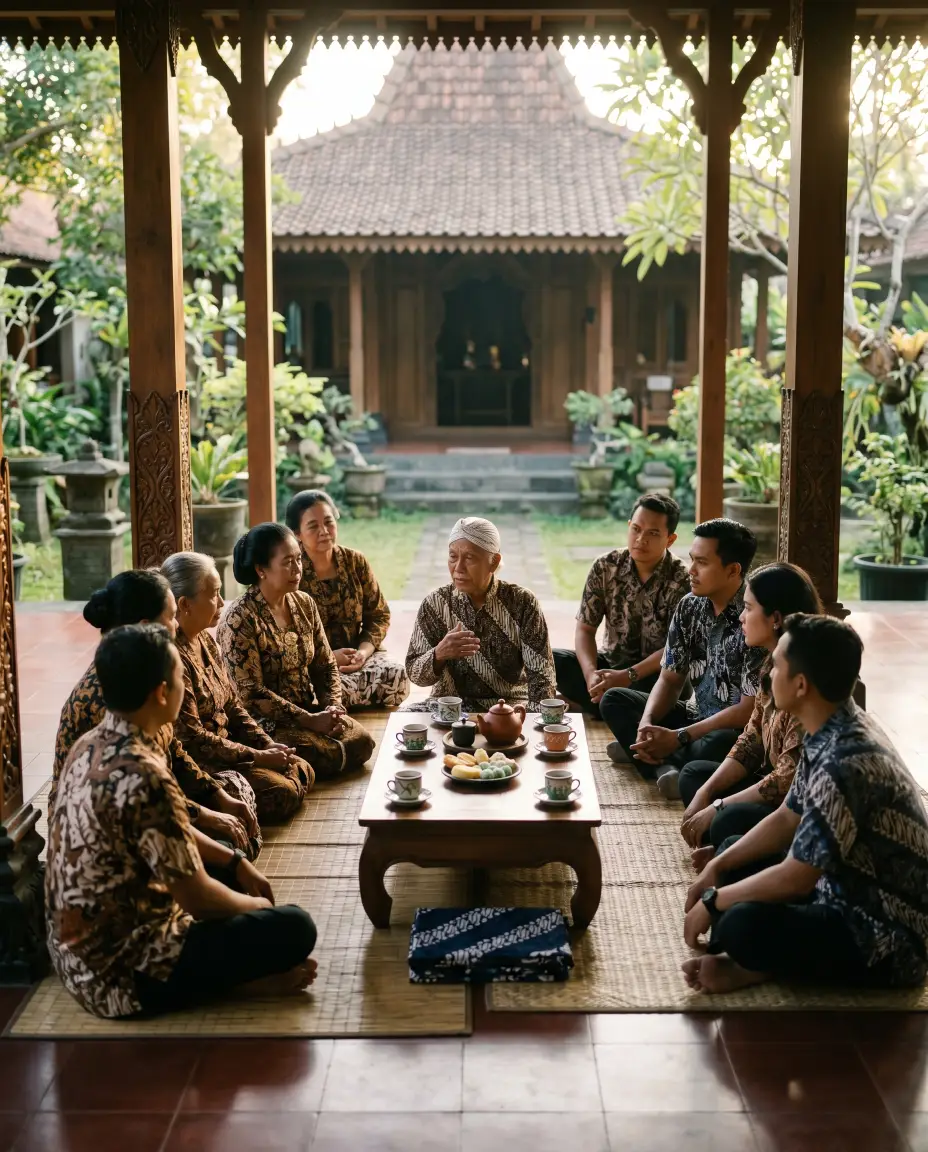
Practical Ways to Read Mataram Today
There are several simple practices that can be carried from the reading of Mataram Jawa.
First, guard speech. Before speaking, ask whether the words are true, necessary, and do not destroy another person’s dignity. Truth still needs to be delivered, but the way of delivering it needs care.
Second, practice samadya. Not every desire needs to be followed. Not every opportunity must be chased. Not everything needs to be owned. A life of enoughness is not a poor life, but a life not enslaved by excess.
Third, care for healthy rukun. Rukun does not mean staying silent forever. Rukun is the ability to protect relationships while still giving room for honesty and justice.
Fourth, do not become dumeh. When you have an advantage, use it to nurture. When trusted to lead, use it to serve. When you know more, use knowledge to illuminate, not to lower others.
Fifth, create stillness. In hening, a person can check whether the step comes from clarity or from the desire to win alone.
Mataram, Pitutur, and Javanese Culture
Mataram is deeply connected with Javanese pitutur. Within it live values such as tepa slira, rukun, aja dumeh, eling lan waspada, basa krama, hening, and self-restraint. These are not only beautiful words. They are practices that need to be lived.
Through rukun, Mataram teaches how to care for relationship. Through basa krama, it teaches refined speech without losing dignity. Through court literature and cultural memory, it teaches inner ethics and the practice of not becoming dumeh.
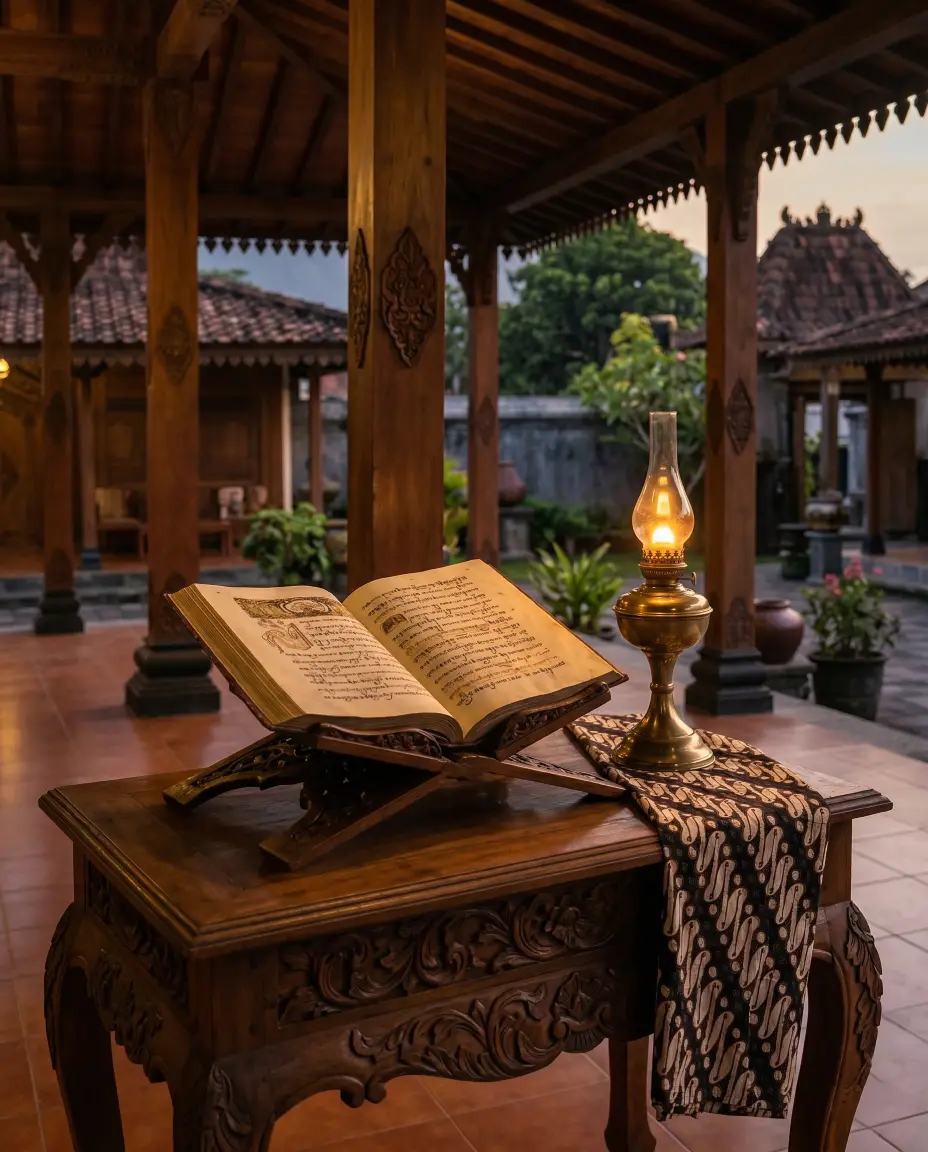
Mataram is also connected with wider historical memory. To read the past clearly, we need to see culture as a network of meanings, not isolated fragments. Keraton, babad, wayang, literature, etiquette, and social practice are all connected in the way Javanese culture remembers and arranges life.
When read together, these layers help us see Mataram not only as a political name, but as a living cultural field.
JavaSense and a Clearer Way to Read Javanese Culture
JavaSense reads Mataram Jawa as cultural heritage that deserves respect without being frozen. Tradition should not make people afraid to ask questions. History should not be used to silence criticism. Symbols should not be turned into absolute claims.
What we seek is clarity. How does Mataram help us understand order? How does the keraton teach responsibility? How does unggah-ungguh care for relationships? How can rukun remain healthy without silencing truth? How does inner conduct keep human beings from being ruled by ego?
If you want to read dates, pasaran, and Javanese timing more easily, open the JavaSense Javanese calendar. If you want to explore Javanese letters and written heritage, use the JavaSense Javanese script tool.
For broader public cultural references, readers may also visit the National Library of Indonesia and the Indonesian Ministry of Culture archive. References like these help cultural reflection stay connected to learning and public knowledge.
Closing Reflection: Reading Mataram as a Mirror of Conduct
In the end, Mataram Jawa is not only a story about the past. It is a mirror for reading how human beings arrange life: how to lead, how to speak, how to care for relationships, how to restrain the self, and how to carry authority so it does not turn into arbitrariness.
Angger, my child, do not read Mataram only as the grandeur of the keraton. Do not reject it only because it was born in another age. Take the essence. Read it with clarity. Keep the values that make life more ordered, and leave behind the readings that make human beings lose common sense.
Mataram teaches that outer order should begin from inner order. When the inner life becomes more eling, speech becomes more refined. When speech becomes more refined, relationships are easier to care for. When relationships are cared for, shared life becomes more worthy to inhabit.
To learn Javanese culture in a lighter and more modern way, you can download JavaSense on Google Play.
FAQ About Mataram Jawa
What is Mataram Jawa?
Mataram Jawa is a term for historical and cultural heritage connected with Mataram, including keraton order, leadership, unggah-ungguh, rukun, and Javanese inner conduct.
Does Mataram only mean a kingdom?
No. Mataram is connected with kingdom history, but in cultural reading it can also be understood as a heritage of order, values, and Javanese ways of living.
How is Mataram connected with Javanese culture?
Mataram is connected with Javanese culture through keraton, etiquette, literature, art, leadership, rukun, deliberation, and values that shape Javanese rasa.
What values can be read from Mataram?
Values that can be read from Mataram include self-restraint, unggah-ungguh, rukun, samadya, aja dumeh, nurturing leadership, and responsibility in shared life.
What is the relationship between Mataram and the keraton?
The keraton became one of the symbolic and cultural centers of Mataram. Through the keraton, leadership, art, language, ceremony, and unggah-ungguh were passed across generations.
Is Mataram still relevant today?
Yes, when read clearly. Values such as rukun, unggah-ungguh, samadya, and aja dumeh remain relevant for family, work, society, and digital spaces.
How can Mataram be read without romanticizing the past?
Read Mataram as a cultural mirror, not as a past that must be worshipped without criticism. Take living values and adjust them with clear judgment and present needs.
What is a simple practice from Mataram heritage?
A simple practice is to guard speech, avoid dumeh, live with enoughness, care for rukun, listen before deciding, and create stillness to examine the inner life.
Learn Mataram Jawa with Clearer Awareness
Mataram Jawa is not merely a kingdom name. It is a mirror of cultural order, leadership, unggah-ungguh, rukun, and inner conduct. To explore Javanese script, calendar, weton, and daily heritage in a simpler way, open JavaSense on Google Play.