
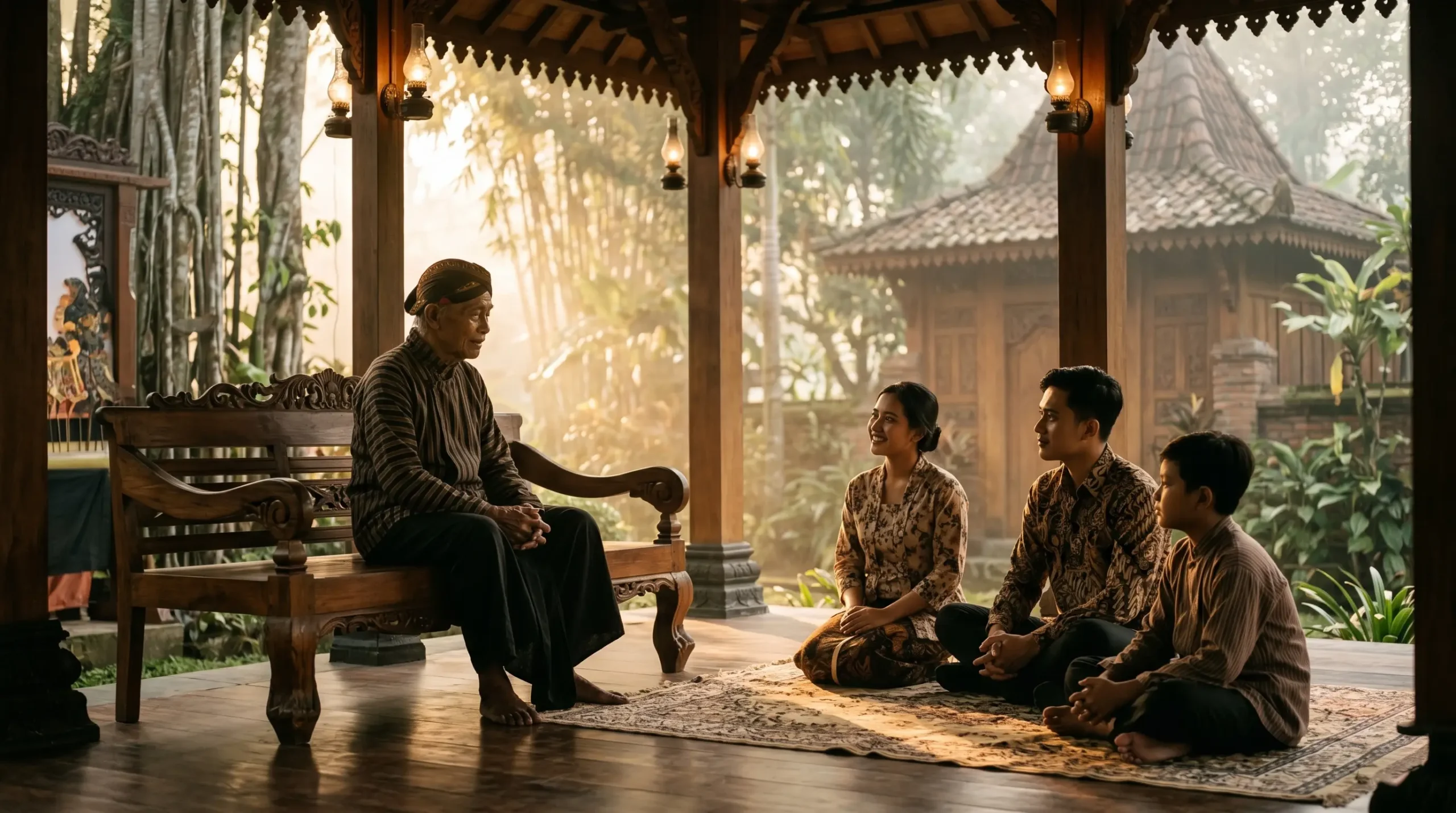
Angger, my child…
There is a Javanese teaching that looks simple from the outside, yet becomes deeper the more slowly it is read. Its name is tepa slira. It asks human beings to pause before judging, to weigh rasa before speaking, and to remember that other people also carry tiredness, wounds, limits, and hopes of their own.
Ky Tutur Summary
- Tepa slira is Javanese wisdom about weighing rasa, understanding another person’s position, and keeping relationships humane without losing healthy boundaries.
- Its meaning is close to empathy, but it does not stop at feeling with others. Tepa slira also guides speech, attitude, correction, and daily conduct.
- Tepa slira does not mean always giving in, burying pain, or allowing unfair treatment. It teaches empathy that remains clear, sane, and dignified.
- In family life, work, leadership, and digital spaces, tepa slira becomes a practice of slowing reaction so human beings do not wound too quickly.
Ky Tutur Note: This article discusses tepa slira as Javanese cultural wisdom and reflective guidance. It is not clinical psychological advice, not an absolute rule, and not a reason to silence people who are wounded or facing injustice. Read it as a mirror for arranging rasa, communication, and relationships with more clarity.
Tepa slira is often translated as empathy, consideration, or the ability to place oneself in another person’s position. That translation is useful, but not complete. In Javanese rasa, tepa slira is deeper than simply saying, “Do not be selfish,” or “Try to understand other people.”
At its heart, tepa slira is a practice of weighing. Before judging another person, we are invited to remember the measure of our own humanity. Before speaking harshly, we are invited to ask: how would this word feel if it were directed at me? Before forcing others to understand us, we are invited to see whether we have truly tried to understand them.
This teaching does not ask human beings to erase themselves. It does not ask people to remain silent forever. It does not teach someone to keep giving in until the self disappears. Tepa slira teaches balance: understanding others without betraying one’s own boundaries, preserving relationships without losing dignity, and choosing words without hiding the truth.
What Is Tepa Slira?
Tepa slira is a Javanese teaching about weighing another person’s rasa through the awareness that we also have rasa, limits, wounds, and weaknesses. The word slira points to the self, body, or human existence. Meanwhile, tepa can be understood as measure, scale, or consideration.
So tepa slira can be read as the ability to measure another person’s condition through the humanity we recognize within ourselves. If we do not like being humiliated, we should not easily humiliate. If we need time to learn, we should not belittle someone who is still learning. If we have made mistakes before, we should not be too quick to turn another person’s mistake into a final judgment.
This is what makes tepa slira different from politeness that only stays on the surface. Politeness may stop at outer form. Tepa slira works more deeply. It arranges the way human beings see one another.
A person may speak softly but still carry contempt. A person may smile while secretly lowering others in the heart. Tepa slira asks for something more honest: not only soft words, but also a clearer inner measure.
The Meaning of Tepa Slira in Javanese Culture
In Javanese culture, human relationships are not guarded only by rules. They are guarded by rasa. People are invited to pay attention to how they speak, when they say something, which tone they use, and what effect their words may have on others.
Tepa slira becomes one of the foundations of this relational order. It does not only ask, “Is what I say true?” It also asks, “Is the way I say it appropriate?” Truth matters, but the way truth is delivered can decide whether it becomes medicine or another wound.
This is why tepa slira stands close to other Javanese pitutur. It is close to eling lan waspada, because human beings need remembrance and caution before acting. It is also close to aja dumeh, because a person who feels higher than others often struggles to weigh another person’s rasa.
In daily life, tepa slira creates a softer space between impulse and action. It gives the heart time to ask: is this response necessary, measured, and humane?
Tepa Slira Is More Than Holding Back
Many people think tepa slira only means restraint. There is indeed restraint inside it. But if tepa slira is understood only as holding back, it can become a burden. A person may feel forced to stay silent, give in, and swallow every uncomfortable feeling.
That is not the heart of tepa slira. Tepa slira is not self-oppression. It is awareness before reaction. A person may express objection. A person may say no. A person may keep a boundary. What needs to be guarded is the method: do not let objection become humiliation, firmness become violence, or pain become revenge.
This means tepa slira is not weakness. It requires inner strength. It is easy to become angry when offended. It is harder to pause, weigh the condition, and choose a response that preserves one’s own dignity and the dignity of others.
My child, holding back is not always wisdom. Sometimes speaking is needed. Sometimes drawing a boundary is needed. Sometimes distance is needed. Tepa slira does not erase these choices. It only asks that they be carried with clearer rasa.

Directed Empathy, Not Blind Surrender
Tepa slira is close to empathy, but it is not exactly the same. Empathy is the ability to feel or understand another person’s condition. Tepa slira brings that empathy into more directed conduct: how to speak, when to stay quiet, when to correct, when to give space, and when to keep a boundary.
Empathy without direction can sometimes make a person dissolve too deeply into another person’s feeling until clarity is lost. Tepa slira invites human beings to understand another person’s rasa while still standing consciously within their own dignity.
For example, when a coworker makes a mistake, tepa slira does not mean letting the mistake continue. The mistake still needs to be discussed. But the way it is discussed can be chosen: not humiliating them in front of many people, not using words that destroy their confidence, and not turning one mistake into a label for their whole character.
This is directed empathy. It does not allow harm to continue, but it also does not turn correction into punishment. It tries to repair without breaking the human being.
Weighing the Self Before Judging Others
The root of tepa slira is the ability to weigh the self. Human beings are invited to be honest that they too have been mistaken, confused, tired, slow to understand, offended by words, and in need of being heard.
This awareness makes judgment toward others more humane. It does not mean every mistake must be excused. It does not mean harmful conduct should be allowed. But before judging, human beings are invited to see the situation with a more balanced measure.
A person who weighs the self does not easily feel pure and faultless. They know that they also carry weakness. From that awareness, speech becomes more sareh. A correction can still be given, but it does not need to humiliate. Criticism can still be spoken, but it does not need to destroy someone’s dignity.
In this sense, tepa slira is a guard against arrogance. It reminds people that before becoming a judge of others, one must first remember one’s own human measure.
Tepa Slira and Healthy Boundaries
One of the biggest misunderstandings about tepa slira is the idea that it means always giving in. This needs to be made clear. Tepa slira does not mean allowing oneself to be hurt again and again. It does not mean accepting unfair treatment. It does not mean staying silent when a boundary has been crossed.
In a healthy reading, tepa slira actually needs boundaries. A person needs to know when they are tired, when they are hurt, when they need to speak, and when they need distance from a harmful condition. Without boundaries, tepa slira can become forced kindness.
Boundaries keep empathy sane. We can understand another person without letting them step on us. We can care for a relationship without extinguishing our own voice. We can be gentle without losing firmness.
This is the mature form of tepa slira: empathy that does not erase the self, firmness that does not erase compassion, and truth that does not become cruelty.
Tepa Slira in Family Life
In family life, tepa slira often becomes a support that keeps relationships from breaking over small wounds. Parents learn to understand children who grow in a different era. Children learn to understand parents who carry their own worries and past experiences. Partners learn that love is not enough if listening is absent.
Many family conflicts do not begin from large problems. Sometimes they begin from words that are too sharp, tones that are not guarded, or the habit of assuming that close people should automatically understand everything.
Tepa slira reminds us that the people at home also need their rasa to be respected. Being close does not give anyone permission to speak carelessly.
In family life, tepa slira can appear in simple forms: not cutting off someone’s story, not blaming too quickly, giving space when someone is tired, or choosing a better time to discuss sensitive matters. Small acts like these often become large protectors of relationships.
Tepa Slira at Work and in Leadership
In teamwork, tepa slira is important because a healthy team is not built only by technical skill. It is also built by the way people treat one another. A good idea can die if it is delivered with contempt. A correct criticism can be rejected if it is wrapped in humiliation.
Leaders need tepa slira so firmness does not become pressure. Seniors need tepa slira so experience does not turn into arrogance. Juniors need tepa slira so new ideas do not make them look down on older processes.
This is where tepa slira meets ngendhaleni emosi, the practice of guiding emotion. When a meeting becomes heated, when criticism arrives, or when a decision does not match expectation, human beings need a pause. From that pause, a choice appears: will we react from ego, or answer with clearer direction?
At work, tepa slira does not remove accountability. It improves the way accountability is carried. Correction remains correction, but it is delivered in a way that can still grow trust.
Tepa Slira in the Digital Age
The digital age makes human beings react quickly. A short comment can awaken long anger. A cut video can make people feel they already understand the whole event. One post can invite mass judgment before context becomes clear.
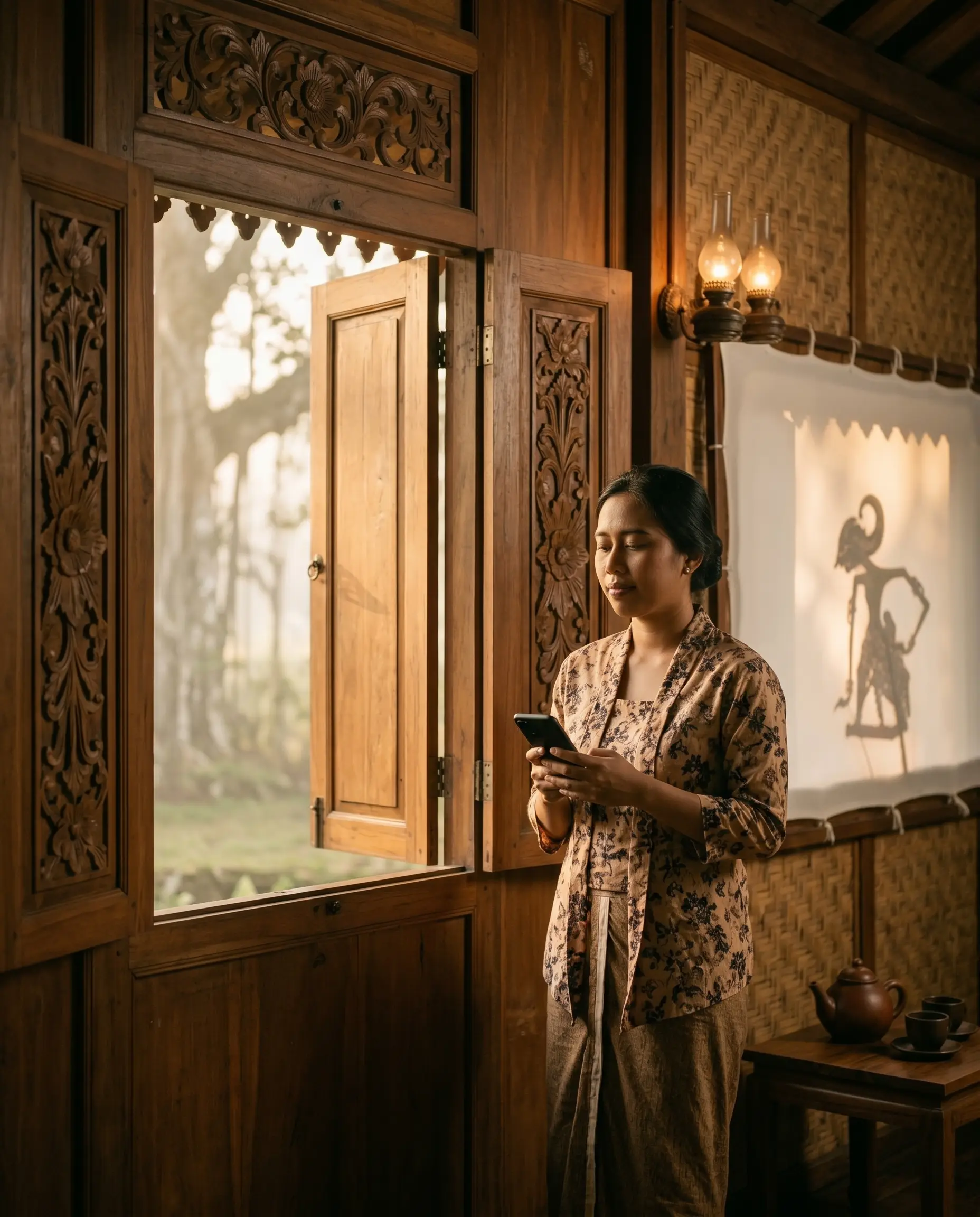
In a space like this, tepa slira becomes increasingly important. It reminds us that behind an account there is a human being. Behind a comment there may be a condition we do not know. Behind disagreement there may be a life experience different from ours.
Tepa slira in the digital age does not mean justifying everything. It does not mean allowing hoaxes, insults, or verbal violence. But it invites human beings to slow judgment: read fully before replying, check information before sharing, and correct without becoming cruel.
A simple pause can protect many things. It can protect someone else’s dignity. It can protect our own clarity. It can also prevent us from becoming part of a crowd that punishes before understanding.
Tepa Slira and Other Javanese Pitutur
Tepa slira does not stand alone. It is part of a wider weaving of values in Javanese culture. With aja dumeh, tepa slira keeps human beings from feeling higher than others. A person who is trapped in dumeh will find it hard to understand another person’s rasa because they are too busy lifting themselves.
With eling lan waspada, tepa slira reminds human beings not to be careless in speech and action. Eling keeps a person remembering their place and responsibility. Waspada keeps a person aware of the effect of words, decisions, and reactions.
With hening, tepa slira finds space to think before reacting. Not everything needs to be answered immediately. Sometimes a little silence saves a relationship from words that leave too quickly.
With ngemong, tepa slira becomes the ability to guide. A person who ngemong does not only give orders. They read the condition of the one being guided. They know when firmness is needed, when patience is needed, and when space is needed.
Tepa slira is also close to ewuh pakewuh. The difference is that ewuh pakewuh often relates to reluctance or hesitation, while tepa slira is broader: it weighs rasa so communication does not lose humanity. If not guarded, ewuh pakewuh can make people afraid to speak. Tepa slira helps speech remain possible, but in a refined and responsible way.
Daily Practices for Tepa Slira
Good wisdom needs to descend into practice. Tepa slira is not enough as a term. It needs to be trained in small repeated moments.
First, pause before reacting. When offended, do not reply immediately. Breathe, then understand the rasa that appears. Are you truly being attacked, or is an old wound being touched?
Second, separate the person from the mistake. A mistake needs to be corrected, but a person’s dignity does not need to be destroyed. Criticize the behavior, not the whole self.
Third, choose the right time to speak. Correct advice can fail if delivered at the wrong moment. Sometimes a person needs calm before they can listen.
Fourth, listen until the end. Many conflicts grow because people only wait for their turn to answer, not truly listen.
Fifth, keep healthy boundaries. If a relationship continues to wound, tepa slira does not ask you to remain voiceless. State your boundary clearly, calmly, and with dignity.
Sixth, close the day with self-reflection. Ask: did I judge too quickly today? Did my words wound someone? Did I give room to another person’s rasa without erasing my own?
JavaSense and a Clearer Way to Read Tepa Slira
JavaSense reads tepa slira as cultural heritage that remains relevant for today’s life. Not as an empty slogan. Not as a demand that everyone must always stay quiet and give in. But as a mirror for refining the way human beings relate to one another.
If you want to explore written heritage and Javanese letters, use the JavaSense Javanese script tool. If you want to read dates, pasaran, and the rhythm of Javanese time, open the JavaSense Javanese calendar.
As a broader public cultural reference, readers may also visit the National Library of Indonesia. References like this help cultural reading stay connected to learning and public knowledge.
The JavaSense path is simple: honor old wisdom, but do not use it to silence people. Care for harmony, but do not bury wounds. Practice empathy, but keep boundaries. Let culture become a mirror for clearer conduct.
Closing Reflection: Keeping Rasa Without Losing the Self
In the end, tepa slira teaches human beings to live with more arranged rasa. Not to always give in. Not to hide wounds. Not to appear kind on the surface while storing anger inside. Tepa slira invites us to weigh: what do I feel, what might the other person feel, and what action can preserve shared dignity?
Angger, my child, the world is not always gentle. Some people speak wrongly. Some conditions offend you. Some decisions do not match your hope. But before answering with the same heat, stop for a moment. In that small pause, wisdom often reveals itself.
If you must correct, correct clearly. If you must say no, say it firmly. If you must take distance, do it without hatred. If you choose to forgive, do not forget to keep learning. That is sane tepa slira: empathy that does not lose healthy boundaries.
To learn Javanese culture in a lighter and more modern way, you can download JavaSense on Google Play.
FAQ About Tepa Slira
What does tepa slira mean?
Tepa slira is Javanese wisdom about weighing rasa, understanding another person’s position, and keeping conduct humane without losing healthy boundaries.
What is the meaning of tepa slira in Javanese culture?
In Javanese culture, tepa slira means an inner practice of guarding speech, considering the effect of words, understanding another person’s rasa, and building more refined relationships.
Is tepa slira the same as empathy?
Tepa slira is close to empathy, but more directed. It does not only understand another person’s feeling, but also guides how to speak, act, correct, and keep boundaries.
Does tepa slira mean always giving in?
No. Tepa slira does not mean always giving in or allowing oneself to be hurt. It teaches empathy that still has boundaries, firmness, and dignity.
What is an example of tepa slira in daily life?
Examples include not interrupting, choosing the right time to correct someone, not humiliating others, listening until the end, and not judging too quickly.
How can tepa slira be practiced at work?
At work, tepa slira can be practiced by giving criticism without belittling, listening to team opinions, respecting learning processes, and arranging emotion during disagreement.
Why is tepa slira important in the digital age?
Tepa slira is important in the digital age because it helps people avoid reacting from a heated heart, judging too quickly, or sharing information before checking context.
How is tepa slira connected with aja dumeh and ngendhaleni emosi?
Tepa slira helps people weigh another person’s rasa, aja dumeh keeps them from feeling superior, and ngendhaleni emosi guides reaction so it does not damage relationships.
Learn Tepa Slira with Clearer Awareness
Tepa slira is not only politeness. It is a Javanese practice of weighing rasa so human beings can understand others without losing healthy boundaries. To explore the Javanese calendar, script, weton, and daily heritage in a simpler way, open JavaSense on Google Play.