
Angger, my child…
There is a language that does not only deliver meaning, but also protects rasa. There is a way of speaking that does not only make people understand, but also keeps the relationship calm. In Javanese culture, this kind of conduct lives in basa krama: refined without begging, respectful without losing the self.
Ky Tutur Summary
- Basa krama is a Javanese speech level used to show respect, arrange rasa, and preserve dignity in conversation.
- Basa krama is not merely a list of polite vocabulary. It is a practice of speech connected with unggah-ungguh, tepa slira, and awareness of the person being addressed.
- Speaking gently does not mean lowering oneself helplessly. It can show inner strength: the ability to restrain ego without losing firmness.
- In JavaSense, basa krama is read as cultural guidance and communication skill, not as a feudal tool, not as an empty status symbol, and not as a way to silence one’s own voice.
Ky Tutur Note: This article discusses basa krama as Javanese cultural heritage and communication practice. Readings about unggah-ungguh, andhap asor, and respectful speech are placed as cultural values, not rigid rules for lowering oneself or justifying unfair relationships.
Basa krama is often understood as polite Javanese. That meaning is not wrong, but it is still too short. If it is read only as “polite language,” basa krama may feel like a list of words to memorize: aku becomes kula, kowe becomes panjenengan, mangan becomes dhahar, lunga becomes tindak, and so on.
Yet behind those word choices lives a deeper practice. Basa krama teaches human beings to read the space of conversation. Who is being addressed? What is the atmosphere? Does this conversation need warmth, formality, caution, or deep respect? From questions like these, language becomes more than a tool for delivering thought. It becomes a way of caring for relationship.
So, my child, basa krama does not need to be read as an old burden. It is clearer to understand it as the art of arranging speech. In a world that often rushes, speaks harshly, and judges quickly, basa krama reminds us that words should not only be correct. They should also carry dignity.
What Is Basa Krama in Javanese?
Basa krama in Javanese is a speech level used to show respect, politeness, and sensitivity toward social relationship. It is commonly used when speaking to elders, respected people, people one does not know well, or in situations that require more ordered speech.
But basa krama is not only about age or status. It is also about rasa. Sometimes someone uses krama with peers because the situation is formal. Sometimes a family member uses a softer mixed form to show respect without making the relationship feel distant.
In Javanese culture, language has levels. There is ngoko, krama madya, krama inggil, and mixed forms that live naturally in everyday conversation. Each level is not merely a difference in vocabulary. It also carries a difference in rasa, distance, and inner atmosphere.
This is why basa krama matters. It helps human beings not speak carelessly. It teaches us to read the situation before words leave the mouth. In Javanese rasa, suitable speech can care for a relationship, while careless speech can leave a wound even when the intention is not bad.
Basa Krama Is More Than Polite Language
One of the biggest misunderstandings is thinking that basa krama is only polite language. If that is all, people may learn it like a dictionary: replace one word with another, make the sentence longer, then finish. But the essence of basa krama is not only changing words. It changes the center of conversation.
In ngoko, someone may speak directly and closely. In krama, someone learns to give space. There is a pause. There is respect. There is awareness that the person being addressed is not merely a receiver of information, but a human being with dignity, rasa, and a place within the relationship.
Because of that, basa krama should not be used mechanically. A person may use krama vocabulary but still insult, belittle, or hurt. On the other hand, someone whose krama is not perfect may still feel respectful if the intention and way of speaking carry sincerity.
Living basa krama is language accompanied by rasa. It is not a mask. It is not decoration. It is an effort to keep words from coming out of rough ego, and instead from a more ordered inner life.
Gentle Does Not Mean Helpless
Many modern people hesitate to use refined language because they fear it will make them look weak. As if being polite means losing. As if gentleness means having no firmness. As if lowering the ego means begging. This reading needs to be clarified.
In Javanese culture, gentleness does not mean powerlessness. Gentleness is the ability to control oneself. A person who can choose words while angry is showing strength. A person who can refuse without insulting is showing maturity. A person who can correct without humiliating is showing wibawa.
Basa krama teaches quiet strength. It does not need to shout in order to be heard. It does not need to lower others in order to feel high. It does not need to dominate the conversation in order to be considered strong.
Gentle does not mean helpless. Gentleness is strength that chooses not to wound, even when it has the ability to strike back.
Here, basa krama becomes inner conduct. It restrains human beings from the desire to win quickly in conversation. It reminds us that the purpose of speaking is not only to make an opinion accepted, but also to keep the relationship from being damaged in vain.
Ngoko, Krama Madya, and Krama Inggil
To understand basa krama, it helps to know several main speech levels in Javanese.
Ngoko is a more familiar, relaxed, and direct form. It is often used with peers, younger people, or people who are very close. Ngoko is not automatically rude. It can be warm when used in the right place.
Krama madya is a middle level. It shows politeness, but not as high as krama inggil. In daily conversation, krama madya can feel flexible because it maintains respect without making the distance too wide.
Krama inggil is a higher level used to honor the person being addressed or spoken about. Words related to the respected person are elevated. For example, eating may become dhahar, sleeping may become sare or tilem depending on context, and going may become tindak.
There is also a form often called ngoko alus, where ngoko is mixed with krama or krama inggil elements to respect the listener. This form lives in family and community conversation because it keeps warmth and respect together.
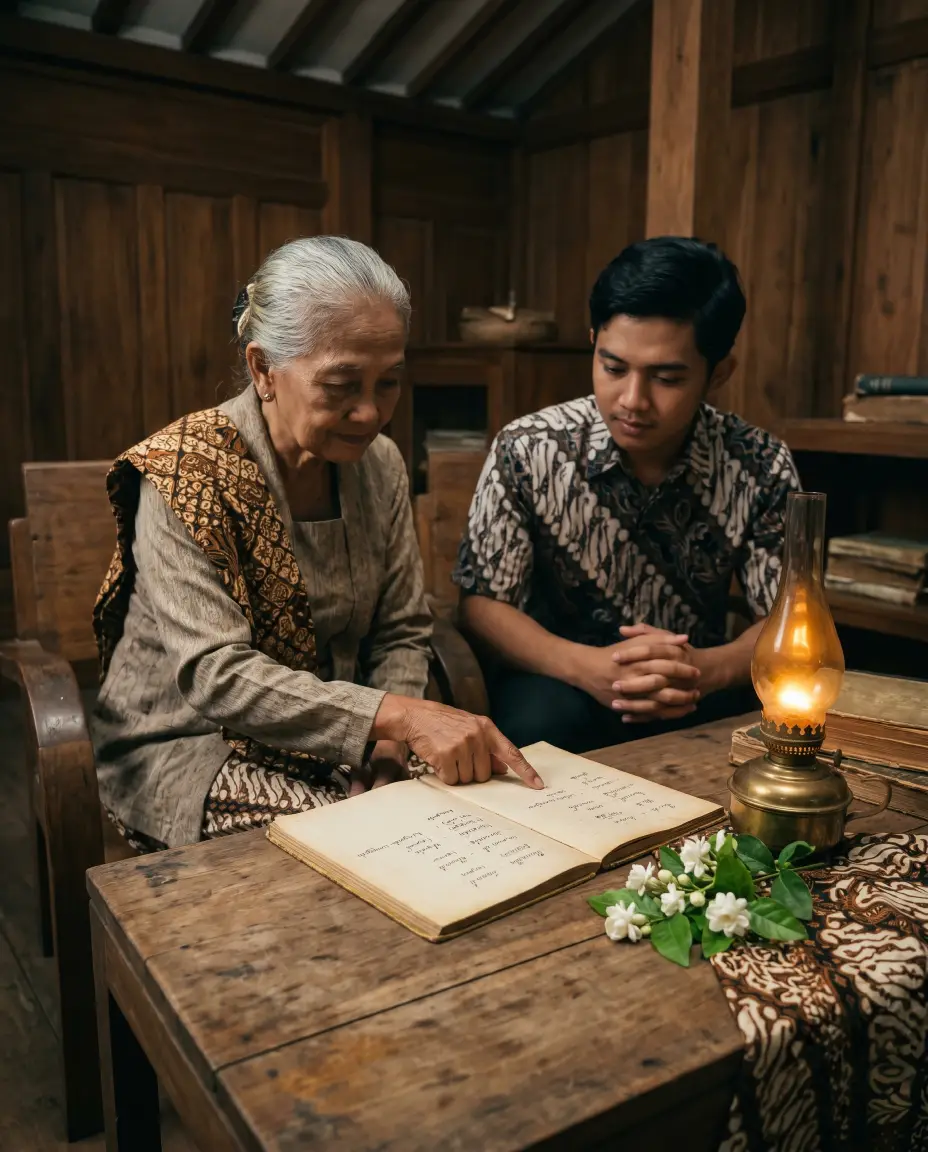
What matters, my child, is not seeing these levels as stairs for lowering human beings. It is better to read them as a map of rasa. This map helps us choose words that fit the relationship, atmosphere, and intention of the conversation.
Andhap Asor: Humility Without Losing Dignity
Basa krama is close to andhap asor, or humility. But andhap asor is not the same as feeling inferior. Humility grows from inner maturity, while inferiority grows from feeling worthless.
When someone says kula, they are not erasing their own dignity. They are arranging the ego so the conversation becomes more spacious. They give room to the other person so the relationship does not begin from self-display.
In Javanese culture, someone who can lower the ego often appears more dignified. They do not always need to prove that they are right, clever, or higher. They simply arrive with ordered speech.
Yet andhap asor must also remain healthy. Humility should not become allowing oneself to be stepped on. Politeness should not make someone unable to express boundaries. Mature basa krama still gives room for firmness.
So humility in basa krama is balanced inner conduct: respecting others without losing self-worth, guarding speech without silencing truth, and giving space without erasing the self.
Basa Krama and Tepa Slira
Basa krama is also close to tepa slira. Tepa slira means considering another person’s rasa. If we do not want to be treated harshly, we should not speak harshly. If we want to be respected, we begin by respecting.
In conversation, tepa slira makes someone more careful. They do not interrupt carelessly. They do not mock. They do not embarrass. They read whether the listener is ready to receive criticism, whether the timing is right, and whether the chosen words preserve dignity.
Basa krama gives form to tepa slira. It provides words, rhythm, and distance that help people deliver meaning more gently. Not to pretend, but to keep truth from becoming a wound.
This value is also close to rukun. Rukun does not mean always staying silent, and basa krama does not mean always yielding. Both teach how to protect relationships without losing honesty.
Basa Krama in Family, Work, and Digital Spaces
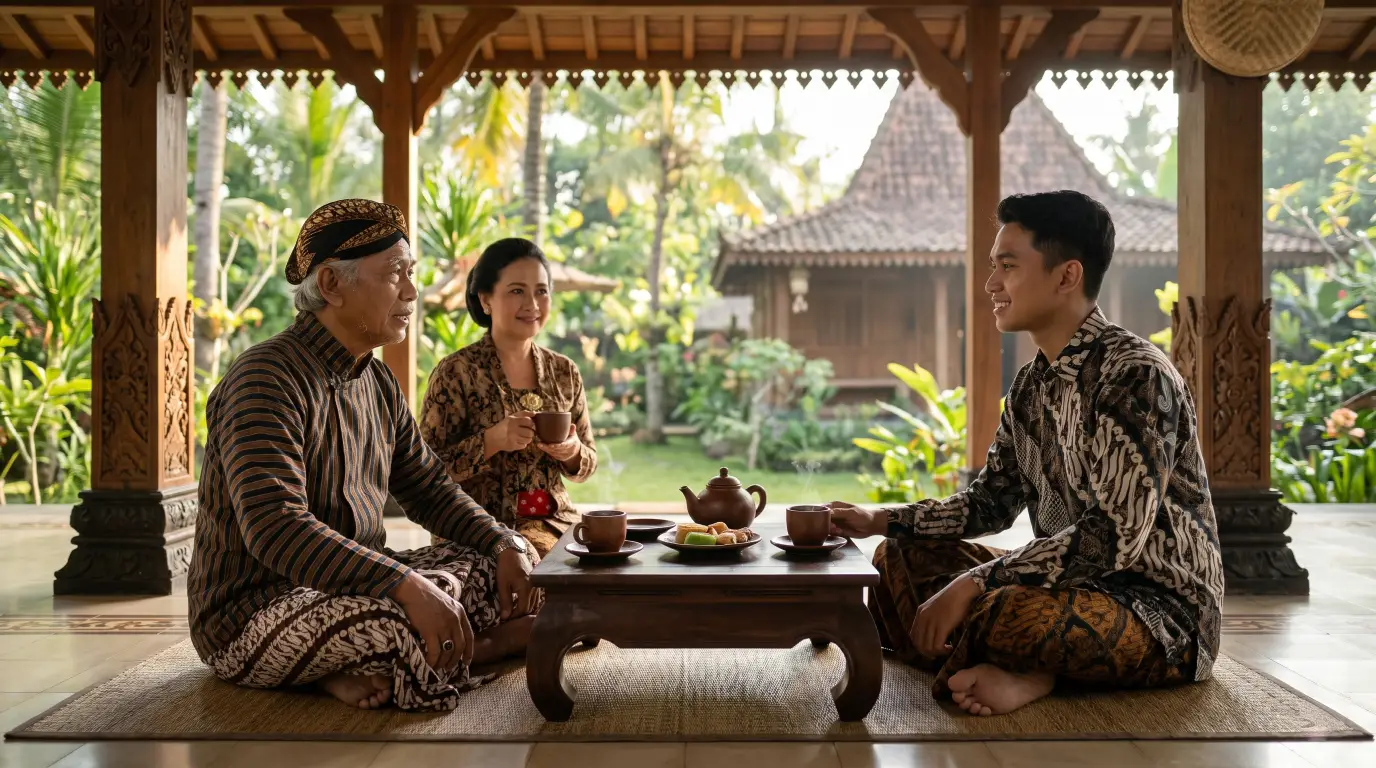
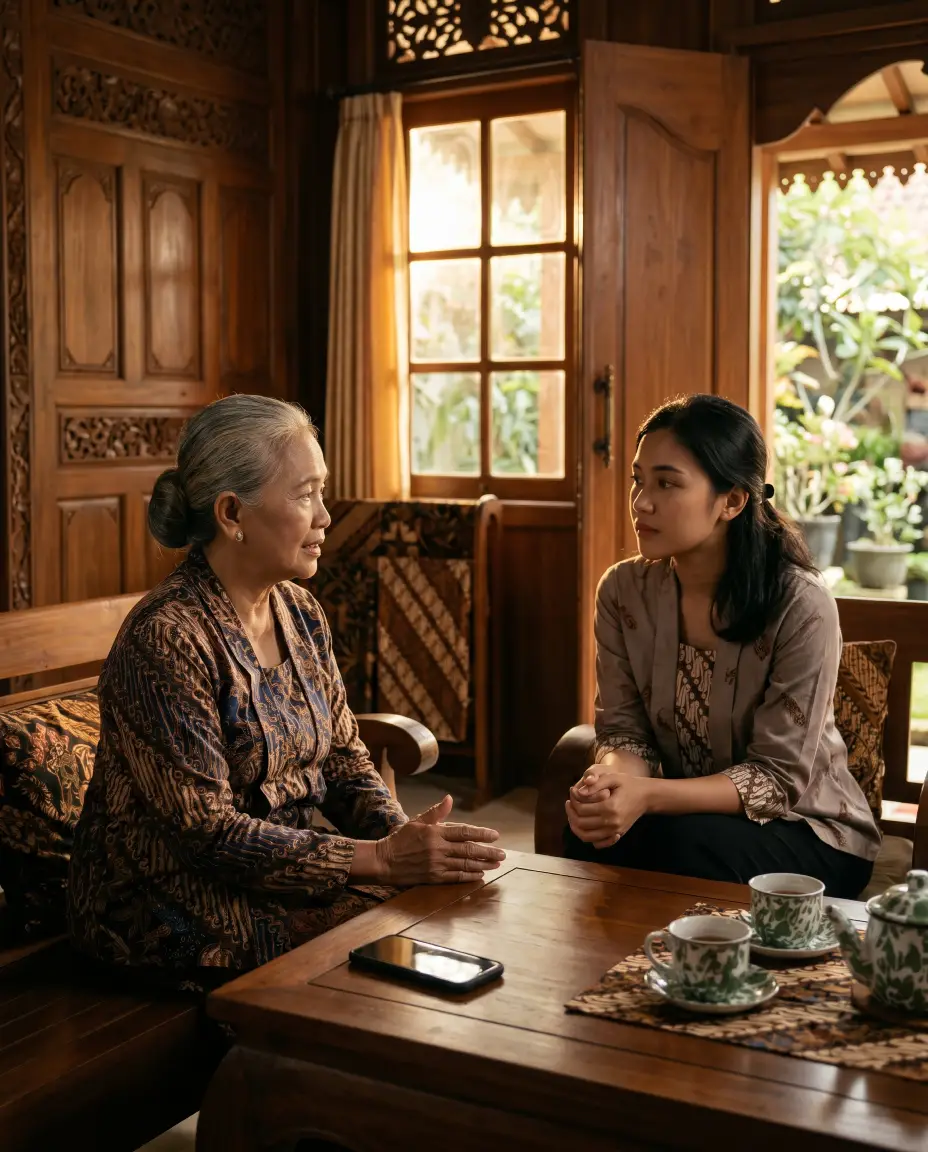
In family life, basa krama can bring respect across generations. A child using krama with parents does not have to mean fear. It can mean acknowledging experience, sacrifice, and the position of parents in life. Parents can also use refined speech toward children so advice does not feel like pressure.
In the workplace, the spirit of basa krama appears in professional communication. A person can reject an idea without belittling. They can give criticism without embarrassing someone. They can state a boundary without making the atmosphere harsh.
In digital spaces, basa krama becomes even more relevant. Comments, short messages, and social media posts make people react quickly. Words are often written while emotion is still hot. Here, the spirit of krama works quietly: hold the fingers for a moment, reread, then ask, “Is this sentence needed? Does the way I say it still preserve dignity?”
This is close to eling lan waspada. Eling reminds us not to forget ourselves when speaking. Waspada reminds us that words can become embers that burn relationships.
When Basa Krama Is Misread as Feudal
There is a criticism that basa krama is feudal because it differentiates people by status. This criticism should be heard. In history, language has indeed been used to mark hierarchy. When used rigidly, basa krama can feel distant and make some people feel lower.
But misuse does not mean the core value must be thrown away. What needs to be reread is how it is used. Healthy basa krama is not a tool to make small people feel smaller. It is not a tool to make younger people afraid to speak. It is not an excuse for those in power to avoid criticism.
Clear basa krama is a way to preserve mutual respect. The younger respect the elder, but the elder also guards speech toward the younger. Workers respect leaders, but leaders must not use position to humiliate. Those who know more language should not shame those who are still learning.
In this way, basa krama does not become a feudal burden. It becomes communication ethics. It teaches that politeness should not be demanded only from the weaker side. Everyone needs to guard speech.
Practical Ways to Use Basa Krama Today
There are several simple practices for bringing the spirit of basa krama into daily life.
First, recognize the space of conversation. Are you speaking with parents, teachers, customers, close friends, or someone you just met? Each space may need a different way of speaking.
Second, do not be afraid to begin simply. You do not need to master krama inggil immediately. Begin with basic respectful words: kula, panjenengan, monggo, matur nuwun, and nyuwun pangapunten.
Third, prioritize intention and rasa. If you choose the wrong vocabulary but your intention is respectful, people often still feel the sincerity. Still, do not stop learning, because language that is cared for makes respect more complete.
Fourth, use gentle language when refusing or correcting. For example, before disagreeing, give recognition first: “That thought is meaningful; may I add another perspective?” In Javanese, the spirit may sound like: Pamikiripun sae, nanging kula nyuwun idin nambah sudut pandang.
Fifth, do not use basa krama to hide dishonesty. Refined speech still needs honest content. Polite but manipulative language loses its soul.
Basa Krama and Javanese Pitutur
Basa krama is one doorway into reading Javanese pitutur. It connects with tepa slira, rukun, eling lan waspada, aja dumeh, ngendhaleni emosi, and hening.
With tepa slira, basa krama learns to consider another person’s rasa. With rukun, it learns to care for relationship. With eling lan waspada, it learns to pause before speaking. With aja dumeh, it learns that a person with power must not become careless in speech. With ngendhaleni emosi, it learns to hold words when the heart is hot.
Basa krama is also close to hening. In stillness, human beings have time to examine intention before speaking. Is this word born from kindness, or only from the desire to win? Does this speech care for relationship, or only release emotion?
From here, it becomes clear that basa krama is not merely a language lesson. It is inner training that descends into the mouth.
JavaSense and a Clearer Way to Care for Javanese Language
JavaSense reads basa krama as cultural heritage that should be cared for with common sense. Not to make people afraid of mistakes. Not to embarrass those who cannot yet speak it well. Not to make Javanese language feel far from younger generations.
A language lives when it is used with affection. Young people do not need to be burdened with perfection from the beginning. Give space to learn. Give examples. Use it in light conversations. Do not turn mistakes into ridicule, because a language taught through fear is difficult to love.
If you want to explore Javanese letters and written heritage, use the JavaSense Javanese script tool. If you want to read dates, pasaran, and living cultural rhythm, open the JavaSense Javanese calendar.
As a broader public cultural reference, readers may also visit the National Library of Indonesia. References like this help cultural reflection stay connected to learning and public knowledge.
Closing Reflection: Refined Speech, Whole Self
In the end, basa krama teaches that human beings can be gentle without losing firmness. Polite without begging. Respectful without erasing themselves. Able to disagree without lowering another person’s dignity.
Angger, my child, carry basa krama as conduct, not only memorized vocabulary. Use it to arrange rasa. To guard speech. To give space to others. To restrain ego when words want to come out too quickly.
Good language does not only make meaning arrive. Good language helps human beings still feel human. That is where basa krama finds its value: not as a rigid relic, but as an art of caring for dignity in conversation.
To learn Javanese culture in a lighter and more modern way, you can download JavaSense on Google Play.
FAQ About Basa Krama in Javanese
What is basa krama in Javanese?
Basa krama is a Javanese speech level used to show respect, politeness, and sensitivity toward rasa in conversation.
What is the difference between ngoko and basa krama?
Ngoko is usually used in close and relaxed situations, while basa krama is used to show respect, maintain polite distance, or speak in a more formal atmosphere.
What are krama madya and krama inggil?
Krama madya is a middle level of polite Javanese, while krama inggil is a higher level used to honor the listener or the person being discussed.
Does basa krama mean lowering yourself?
No. Basa krama teaches humility, not inferiority. It helps people show respect without begging or losing self-worth.
Why is basa krama important in Javanese culture?
Basa krama is important because it is part of unggah-ungguh, tepa slira, and the way Javanese society cares for relationships through refined and dignified speech.
Is basa krama still relevant today?
Yes. Basa krama remains relevant as communication ethics, especially in family, education, work, service, and digital spaces where speech can easily become harsh.
How can I use basa krama without sounding stiff?
Start with basic words such as kula, panjenengan, monggo, matur nuwun, and nyuwun pangapunten. Use them with sincere respect, not as a performance.
How is basa krama connected with unggah-ungguh?
Basa krama is part of Javanese unggah-ungguh. It helps people choose speech that fits age, relationship, atmosphere, and respect for the person being addressed.
Learn Basa Krama with Clearer Awareness
Basa krama is not helpless language. It is a practice of speech that protects respect, rasa, and dignity in relationships. To explore Javanese script, calendar, weton, and daily heritage in a simpler way, open JavaSense on Google Play.