
Angger, my child… Please, step inside the pendopo. Sit down and sip your warm jasmine tea slowly. Uncle sees a shadow of anxiety hanging over your brow. Did someone recently tell you that the day of your birth brings bad luck? Are you currently being haunted by the shadows of the mitos weton jelek (the myth of the bad weton)?
In this modern era, where access to information is wide open, ancestral heritage is often served in fragmented pieces. As a result, many of the younger generation suddenly feel anxious, cancel weddings, or believe their future is ruined simply because they read one or two lines of a prophecy on the internet.
Let us set the record straight, Ngger. Know this: our ancestors, the Javanese masters and scholars who formulated the science of titèn (the observation of natural patterns), never created this system to frighten their descendants. The concept of weton was created as a compass, not as handcuffs to imprison your destiny.
Today, in this JavaSense pendopo, we will completely dismantle the mitos weton jelek. We will dissect it using the blade of rationality and spirituality, and discover the 7 best ways to read your life’s map healthily, sanely, and responsibly.
The Root of Misunderstanding: How Did the Mitos Weton Jelek Emerge?
Before we break the myth, we must trace where this fear originated. The ancient records of Javanese Culture and Primbon are essentially the ultimate database or big data of civilization. Our ancestors recorded weather patterns, human characteristics, and the probabilities of events based on time cycles (Weton and Wuku) over hundreds of years.
The problem arises when these statistical records are transformed into fatalistic dogma. Words like “unlucky,” “facing many obstacles,” or “stubborn” in ancient manuscripts are often translated literally by laypeople as a permanent curse. This is the embryo that birthed the mitos weton jelek.
In the lens of JavaSense wisdom, there is not a single day created by God with malicious intent. Every weton has its own light and shadow. A weton deemed “unlucky” is usually just a weton that requires extra caution, emotional maturity, and deeper spiritual effort (laku prihatin) to achieve its designated success.
7 Healthy Ways to Read Weton and Break the Myth
So, how should we treat the information about our weton? If you have just checked your birth date and found a narrative that scares you, take a deep breath. Apply these 7 rational principles:
1. Treat Weton as a Map, Not a Court Verdict
The first secret to breaking the mitos weton jelek is changing your perspective. Imagine your weton is a topographical map. If the map says that the road ahead is steep and full of gravel (symbolizing a hard character or a life full of obstacles), the map is not “cursing” your journey to fail.
On the contrary, the map is kindly informing you: “Prepare thick footwear, bring plenty of water, and walk carefully.” You can start reading your innate “map” objectively and without fear through the Weton Calculator. Use that data as material for evaluation, not as a death sentence that makes you surrender before taking a step.
2. Understand the Concept of “Ruwat” (The Ability to Self-Correct)
Our ancestors deeply believed in the concept of Ruwat, or spiritual and mental cleansing. If indeed in the cosmic calculation you possess an excess of a certain element (for example, being too “hot” or emotional), it can always be balanced.
No character is carved in stone. A harsh character can be redirected into firmness in leadership. A tendency to doubt can be transformed into meticulous caution in analyzing data. The mitos weton jelek shatters into pieces when a human being consciously decides to “ruwat” (correct) themselves through education, emotional maturity, and faith.
3. Beware the “Self-Fulfilling Prophecy” Trap
This is a critically important point, Ngger. In modern psychology, there is a highly dangerous concept known as the Self-Fulfilling Prophecy.
When you believe in the mitos weton jelek—for instance, you believe that your life will always be poor because a weton reading said so—your subconscious mind will sabotage you. You become lazy, give up easily, and hesitate to take opportunities. Eventually, you truly become poor. Who destroyed you? Not your weton, but your own negative belief. Reading your weton healthily means you refuse to be sabotaged by pessimistic prophecies.
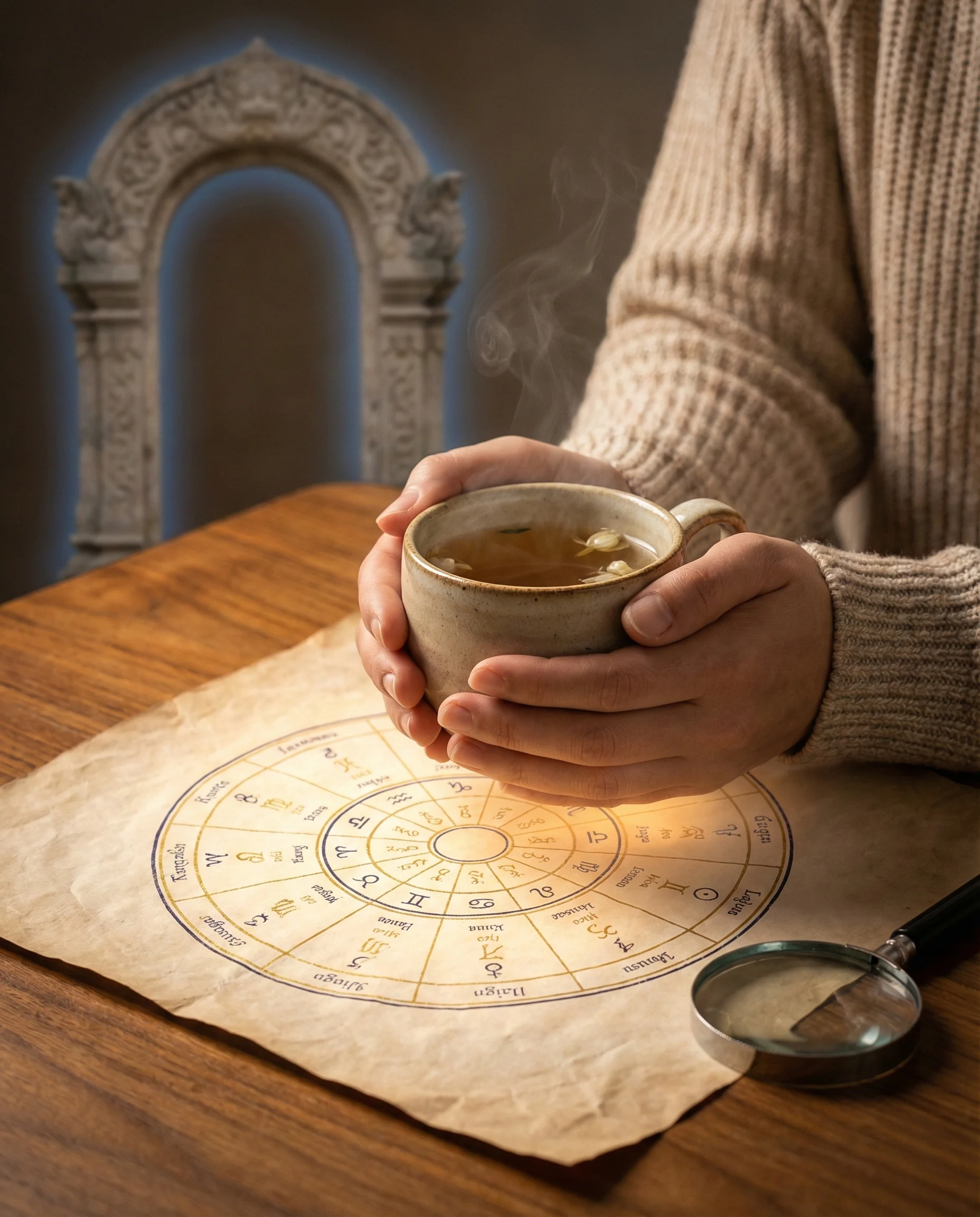
4. Evaluate Relationships Without Judgment (The Art of Tepa Selira)
Very often, the mitos weton jelek appears in matters of romance. Couples cancel their weddings simply because their neptu calculation falls into the “Pegat” (divorce) or “Lara” (sickness) category. This is the tragedy of irresponsible reading.
Tools like Weton Compatibility in the modern era should not be used to reject someone. They are used for the science of Tepa Selira (empathy and tolerance). If the calculation shows a potential for conflict (fire energy meeting fire), the solution is not to separate, but to realize that both of you must learn the art of yielding and subduing the ego. Weton compatibility is an early diagnosis so you can prepare the right “medicine” of patience, not an excuse to run away from commitment.
5. Synchronize with the Cycles of Time (Pranata Mangsa)
Know that human energy fluctuates, following the rotation of the macrocosm. To consider a weton permanently “unlucky” is a massive fallacy.
By aligning yourself through the Javanese Calendar, you will understand that there are days when your energy is ebbing, and there are wuku (weeks) where you are at the peak of your potential. When you know your day is “heavy,” you consciously avoid making major, emotionally driven decisions. This is the intelligence of navigation, not occult superstition.
6. Channeling Potential (The Path of Soul Harmony)
Every innate flaw always provides a secret door to an extraordinary strength. If your weton is said to be “panasan” (easily angered or restless), our ancestors did not tell you to weep. They told you to channel (canalize) that hot energy into a masterpiece.
You can calm the turbulence of your mind through meditation, or practice high-level focus and patience through art, such as learning the Javanese Script. Carving the Hanacaraka strokes requires a steady breathing rhythm and precision. It will mechanically cool down your fire element and transform the “curse” of restlessness into a beautiful work of art.
7. Return to the Highest Authority: Sangkan Paraning Dumadi
This is the ultimate secret, the highest pillar that absolutely destroys all forms of the mitos weton jelek. Javanese ancestors firmly held onto the concept of the Oneness of God. Primbon, weton, wuku, and neptu are merely human-made statistical records attempting to read the patterns of nature. They are not God, and they do not possess the absolute authority to determine your fate.
Prayer, continuous effort (ikhtiar), and charity are three heirlooms believed by our ancestors to be capable of piercing and altering even the darkest weton calculations. Never hand over the authority of your future to a piece of paper. Hand it only to the Owner of Life.
Maintaining Sanity Amidst Cultural Heritage
Angger, my child…
Taking pride in Javanese culture does not mean we must swallow everything raw without chewing it with common sense. Believing in the mitos weton jelek to the point of despair is an insult to the intellect God has bestowed upon you.
Use JavaSense as a mirror to see your weak points so you can improve them, and to see your strong points so you can maximize them. If you need a rational medium to dissect your potential, the doors of our pendopo are always open. Please stop by and utilize the JavaSense Tools that Uncle has prepared with a touch of modern algorithms.
Do not be afraid of your birth date. Rise, become the master of your own destiny, and step forward bravely.
Mugi Rahayu Sagung Dumadi. (May safety, peace, and prosperity always encompass your life’s journey).