Angger… let’s sit with the gunungan wayang meaning using two lenses at once: feeling and reason. Your choices remain yours—take this as a mirror, or simply as knowledge. A gentle note as we begin: this is cultural literacy and reflection, not a substitute for medical, legal, or financial advice.
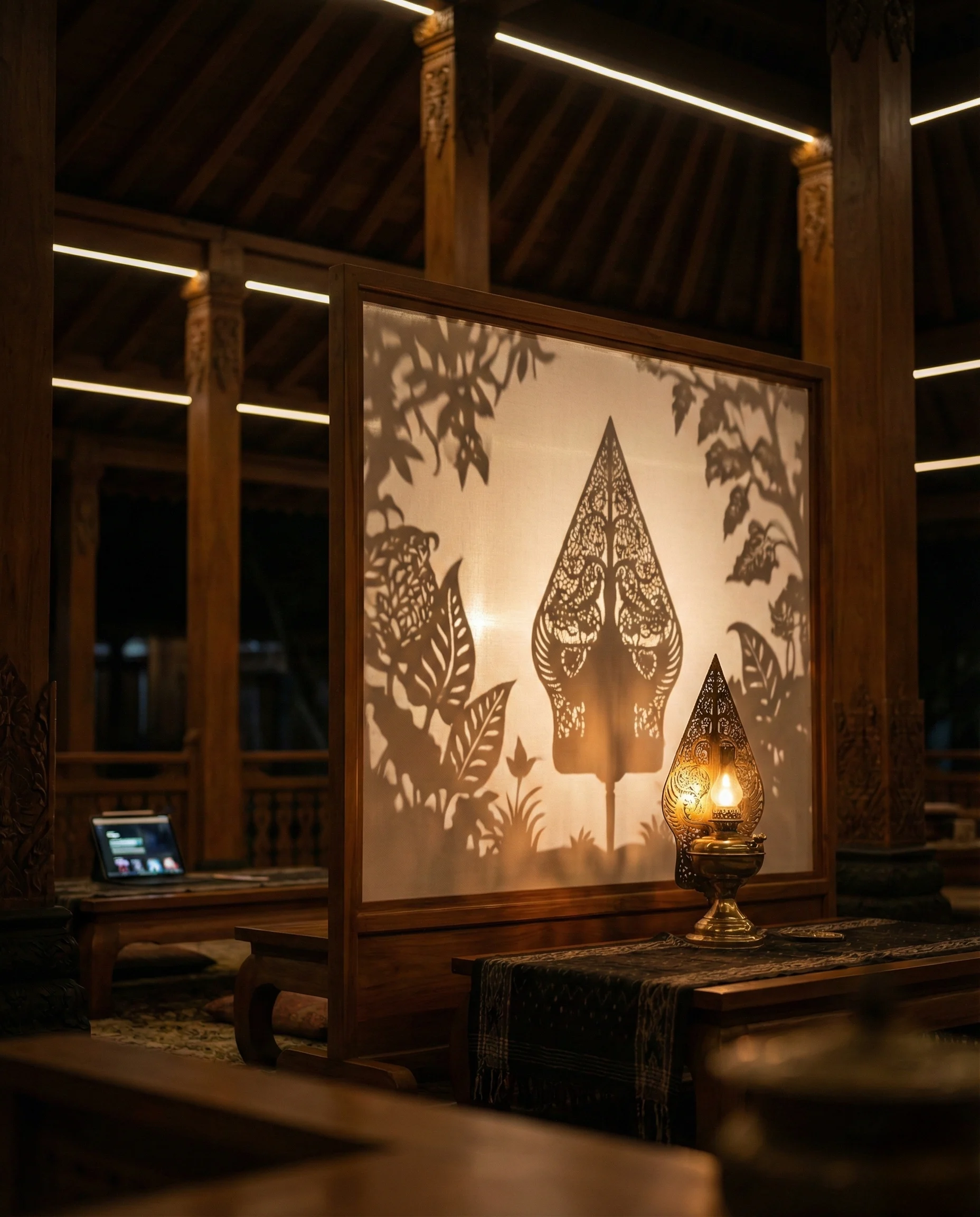
Table of Contents
- Gunungan: A Quiet Gate That Still Works
- The Function of Gunungan on the Wayang Stage
- The Structure of Gunungan
- Javanese Cosmology Inside the Gunungan
- Gunungan and Blencong: Shadow, Light, Awareness
- Reframing the Stigma: From “Klenik” to Symbol Literacy
- A Modern Analogy: Gunungan as “State” in Pattern Thinking
- How to Use This Meaning in Everyday Life
- Trusted References
- FAQ
Gunungan: A Quiet Gate That Still Works
In wayang kulit (Javanese shadow puppet theatre), there is a “character” with no dialogue, no personal fame—yet it controls the rhythm of everything. That is gunungan—often called kayon. It’s the pause that gives shape to motion. It’s the hinge that makes the door meaningful.
In simple terms, gunungan can be understood as a compressed map of the world: a whole universe—peak to roots—held in one form. But this is not decorative theory. It functions on stage. The dalang (puppeteer-narrator) plants the gunungan, removes it, shifts it—and the audience understands without explanation:
- “The story is beginning.”
- “A chapter is changing.”
- “The journey is closing.”
That’s the beauty of symbol done well: it doesn’t need to be loud to be essential.
In short, Angger
- Gunungan acts as the gateway of the lakon: it opens, closes, and carries transitions.
- It’s often read as a cosmic symbol: peak–middle–root; above–middle–below.
- Its structure commonly features nature motifs (forest, trees) and guardian creatures.
- “Sacred” here can be understood as rhythm and order—a cultural way to tidy experience.
- Much stigma appears when symbols are treated as absolute prediction, not reflective language.
- A modern analogy: gunungan works like a state marker—a checkpoint when a system changes phase.
- Its meaning can support daily reflection: pause, intention, and direction.
The Function of Gunungan on the Wayang Stage
If you’ve ever watched wayang—even briefly—some moments are felt before they’re explained. Gunungan helps those moments become readable.
Opening and closing a lakon: a small ritual that settles the mind
At the beginning of a performance, gunungan is like a breath in—a quiet gathering before the story moves. At the end, it becomes a breath out—a settling after the long walk.
This isn’t only tradition. It’s dramaturgy. Audiences need a way in and a way home. Without a clear opening, the story feels abrupt. Without a clear closing, it lingers like an unfinished sentence.
If it helps, consider gunungan as a gentle reminder: life also needs openings and closings—small, honest ones.
Marking transitions in mood and place
Across many traditions and styles, gunungan is used to signal transitions: from keraton (palace life) to alas (forest), from calm to tense, from bright to uncertain. Its shape partially “covers” the kelir, telling the eye: something is being prepared.
A simple lesson lives here:
- Good change often needs a marker.
- Without a marker, change feels like chaos.
- Not because chaos is always bad—but because the heart likes to know what’s happening.
The Structure of Gunungan
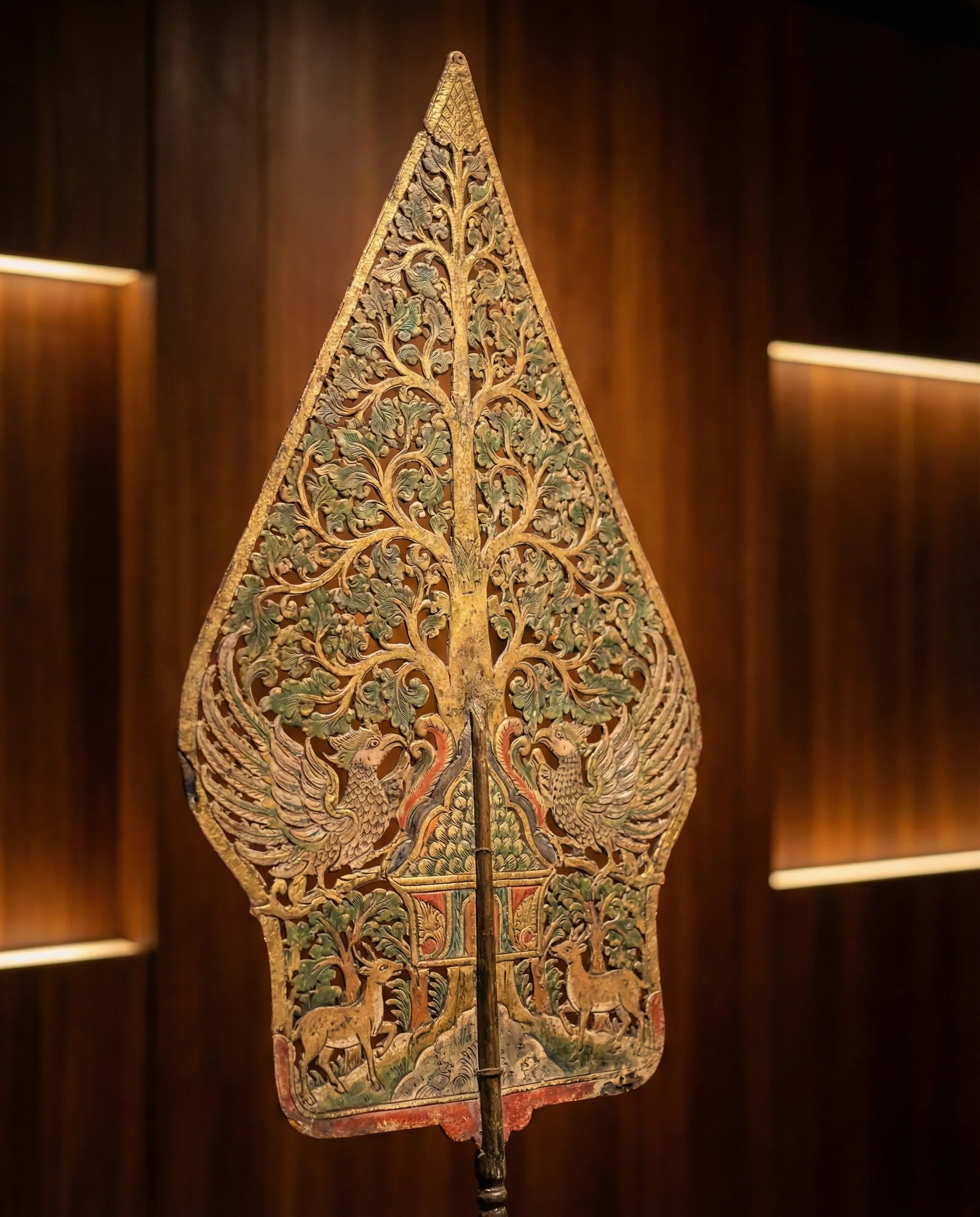
Gunungan looks like a tall triangle—but it isn’t an empty triangle. It’s a dense image that “speaks” through pattern. If you want to understand the gunungan wayang meaning beyond the surface, structure matters.
Peak, body, and base
Many readers of symbolism view gunungan in three parts:
- Peak: the “upward” direction—values, order, stillness, a sense of higher alignment.
- Body: the living territory—forest, creatures, movement, human struggle, human play.
- Base: foundations—roots, earth, gates, guardians, what holds the whole form steady.
Of course, motifs differ across regions and workshop styles. So we use careful language: often, commonly, in many readings—not “always” and not “everyone agrees.”
Still, this three-part reading remains useful because it’s intuitive: most human lives also have a peak (what we believe), a body (what we do), and a base (what we repeatedly practice).
Nature motifs and guardian figures: a “complete world”
Why so much nature? Because wayang is not only about characters—it’s about life, and life includes environment, season, appetite, consequence.
Gunungan gathers that into one image: not separating humans from the forest, not separating mind from earth. It’s a compact reminder that we’re never just “a personal story.” We are also a relational story.
Angger… if your days feel fragmented, gunungan can be a simple prompt:
- Reconnect your peak (values),
- your middle (actions),
- and your root (habits).
No mysticism required—just honest mapping.
Javanese Cosmology Inside the Gunungan
In Javanese thought, cosmology is often shared not as cold formulas, but as tata rasa—a way of sensing relationships: human–nature–the unseen (in the sense of what isn’t always visible, measurable, or fully explainable). This is where the gunungan wayang meaning becomes more than stage equipment.
Three layers: above–middle–below
Many Nusantara traditions hold layered views of reality—above, middle, below. Gunungan is often read as a symbolic map: a movement from “lower” to “higher”—from raw impulse to awareness, from disorder to order.
Important: this is not a scientific claim about the physical universe. It’s symbolic language—crafted to organize inner experience.
If it helps, you can read “above–middle–below” as:
- Above: principles and clarity,
- Middle: daily life and choices,
- Below: instincts, fears, patterns that quietly steer us.
Gunungan doesn’t demand belief. It offers a structure for reflection.
The tree of life as an axis
The tree motif—often associated with a “tree of life” idea within broader traditions—can be seen as an axis that connects: roots anchoring, trunk stabilizing, branches expanding.
In modern terms, think of it as a clean system architecture:
- Roots = the base layer,
- Trunk = the main path,
- Branches = options and variations.
Options can be many. But without roots, the system collapses into noise.
Gunungan and Blencong: Shadow, Light, Awareness
Wayang kulit lives through light. Traditionally, blencong (an oil lamp used to cast the shadow) was not merely illumination—it shaped mood and depth. Shadows on the kelir aren’t accidental; they’re the result of distance, direction, and intention.
So when people say “gunungan blencong,” you can read it like this: gunungan is the symbol, blencong is the light—and together they teach one lesson:
Meaning doesn’t arise from an object alone, but from how we shine light on experience.
Some people look at gunungan and feel fear, treating it as absolute prediction. Others feel calm, reading it as a reflective map. The difference is not the gunungan itself. The difference is the light—the mindset, the framing, the purpose.
Let’s keep it grounded: symbols can be powerful without being coercive.
Reframing the Stigma: From “Klenik” to Symbol Literacy
Today, stigma tends to swing between extremes:
“Wayang is klenik (superstition).”
Or the opposite: “Wayang must be magical and must be right.”
Both are heavy-handed. Both miss the heart of the matter.
A healthier reframing
- Wayang as symbol literacy: Like novels, films, or theatre, wayang carries knowledge about humans: ambition, love, anger, ethics, consequence.
- Primbon and calendrical practice as pattern-reading traditions: Some lineages use calendrical considerations to choose auspicious timing. This can be read as a cultural attempt to manage uncertainty. But it’s wise to remember: important decisions should not rest on a single sign.
- Respect, with discernment: Respecting culture doesn’t require turning off reason. Reason isn’t here to “ruin” tradition; it’s here to protect tradition from becoming an instrument of fear.
If someone sells you “certainty” through a symbol, pause. Culture should strengthen humans—not shrink them.
If you want a practical, gentle entry point into Javanese time patterns (without forcing belief), the Javanese Calendar page can help as a reference.
A Modern Analogy: Gunungan as “State” in Pattern Thinking
Let’s use a light analogy.
In technology, there’s the concept of state: the system’s current condition. When state changes, the interface changes, the flow changes, decisions change. We rely on markers: checkpoints, logs, status flags.
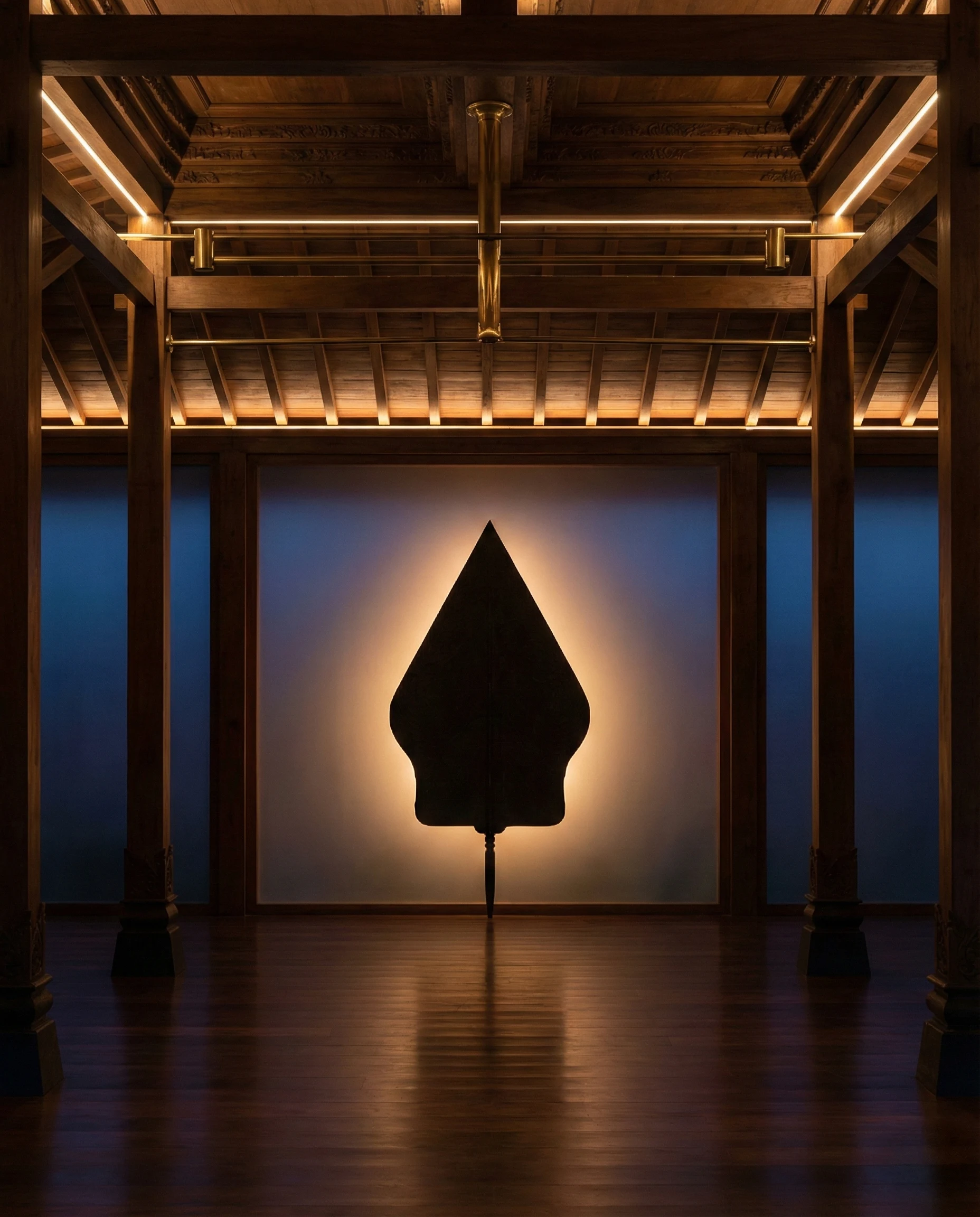
Gunungan works similarly—a phase marker inside the narrative. It tells you: “We are entering,” “We are shifting,” “We are closing.”
Now, how does this relate to forecasting and patterns?
- Pranata mangsa (a Javanese seasonal framework used to read agrarian seasons and natural signs) is often discussed as a cultural way of organizing seasonal knowledge—sometimes compared with modern seasonal forecasting, while also acknowledging that environmental change can complicate patterns.
- Research on the Javanese calendar highlights multiple cycles used for cultural and spiritual purposes, including timing considerations for ceremonies.
So the analogy becomes:
Gunungan = a narrative phase marker (state).
Time cycles = a framework for reading rhythm.
But keep the boundary clear: even the best forecasting speaks in probabilities, not guarantees. In the same way, cultural symbols offer reflective language, not verdicts.
If you want to explore Javanese rhythm practically, JavaSense keeps a simple entry point on the tools hub.
How to Use This Wisely (Practical Steps)
- Take a 30-second pause before a big decision—treat it as a “small gunungan” inside your day.
- Write one sentence: “What phase am I in—opening, transition, or closing?”
- Choose three “peak words” (values) for this week—e.g., clarity, patience, steadiness.
- Check the base layer: sleep, food, emotion—roots often decide outcomes quietly.
- Use tools as support, not as a single compass. If you’re curious, try a weton calculator (a Javanese day–market-day birth combination) overview as a lens for pattern reflection.
- For relationships, keep it dialog-based, not fate-based. If helpful, use weton compatibility as conversation material.
- If you write a pepeling (a short moral reminder) in script, keep transliteration careful—especially in digital contexts: Javanese Script Tool.
- Close with one small action today—because every gunungan returns to laku (practice).
How to Use the Gunungan Wayang Meaning in Everyday Life
Let’s bring the cosmos down to something you can carry in your pocket.
1) Gunungan as practice: closing well
Many people aren’t tired because they can’t start—they’re tired because they don’t close.
Messages left hanging. Work left without summary. Wounds left unnamed. The mind keeps tabs, and the tab list grows.
Gunungan teaches a simple ethic: close with care, then open the new.
A small nightly practice:
- Before sleep, write two lines: What did I finish today? What remains open—and what is my next small step?
That’s enough. Not to judge yourself—just to close a chapter gently.
2) Gunungan as a “map of integrity”
Peak–middle–base.
Values–actions–habits.
If the peak says “honesty” but daily actions are full of excuses, then peak and body aren’t aligned. Gunungan invites alignment—slowly, without drama.
Consider this as a compass:
- Peak: what do I claim to value?
- Body: what did I do this week?
- Base: what pattern kept repeating?
This is reflective, not punitive.
3) Gunungan as a bridge across generations
Older generations may speak in symbols. Younger generations often ask for data. You can bridge both without belittling either side:
- “Symbols are how elders compact experience.”
- “Data is how we test and map again.”
Both can sit together—like a pendopo: open, airy, grounded.
If you’re introducing friends or family to JavaSense, the tools page is designed to be accessible.
Trusted References
These sources are included for cultural and textual context—used as references, not as proof of absolute claims:
- WBTB Kemendikdasmen (Javanese Script entry)
https://referensi.data.kemendikdasmen.go.id/budayakita/wbtb/objek/AA001691 - Kraton Jogja (guidance on Javanese script transliteration to Latin)
https://www.kratonjogja.id/ragam/52-pedoman-transliterasi-aksara-jawa-latin/ - Unicode chart (Javanese block, A980–A9DF) for digital representation context
https://www.unicode.org/charts/PDF/UA980.pdf - Jurnal Budaya Nusantara (Unipasby) on pranata mangsa and seasonal knowledge framing
https://jurnal.unipasby.ac.id/jurnal_budaya_nusantara/article/download/1719/1563/4901 - ResearchGate paper on ethnoarithmetic aspects of Javanese calendar cycles
https://www.researchgate.net/publication/347515399_An_ethnoarithmetic_excursion_into_the_Javanese_calendar - Perpusnas Pro-Ideas article on tanggalan Jawa (site access may vary)
https://presensi.perpusnas.go.id/pro-ideas/tanggalan-jawa-unraveling-its-mystical-secrets-1764802891 - Primbon Betaljemur Adammakna (Indonesian translation PDF; public repository)
https://upload.wikimedia.org/wikipedia/commons/2/2a/Kitab_Primbon_Betaljemur_Adammakna_%28Bahasa_Indonesia%29.pdf
FAQ
1) What is gunungan in wayang kulit?
Gunungan is a symbolic stage element used to open and close a lakon (story arc) and to mark transitions between scenes.
2) Why is gunungan often described as a “cosmic symbol”?
Because its form and motifs are commonly read as a compact “world map”: peak–middle–base; nature–creatures–human life. It’s symbolic language, not a scientific claim.
3) Is the gunungan wayang meaning the same everywhere?
Not necessarily. Motifs and interpretations can vary across regions, performance styles, and workshops. It’s safer to read it as “often understood as,” not “universally fixed.”
4) What does blencong have to do with gunungan?
Blencong (an oil lamp used to cast shadows) brings the wayang world to life through light and shadow. Together, gunungan and blencong help the audience feel transitions.
5) Is gunungan “mystical”?
Some people experience it as sacred, but “sacred” doesn’t have to mean mystical. It can also be understood as a cultural method for shaping rhythm, attention, and meaning.
6) Can I use gunungan’s symbolism for personal reflection?
Yes—if you treat it as a mirror: pausing, closing chapters, setting intention. It’s wiser not to treat it as an absolute verdict about fate.
7) Is this related to weton and the Javanese calendar?
They sit within a broader tradition of reading time patterns. If you explore weton (a Javanese day–market-day birth combination), keep it as reflective context, not a single basis for life decisions.
8) Does this replace professional advice?
No. This is cultural literacy and reflection. For medical, legal, or financial matters, consult qualified professionals.